Verticillium wilt: how to recognize it and what to plant instead
Verticillium wilt is a soil fungus that clogs the water-carrying wood of trees, shrubs and some vegetables. Leaves yellow, wilt and die one branch at a time, and the wood under the bark shows dark streaks. Maples, smoke bush, tomatoes and potatoes are common hosts.
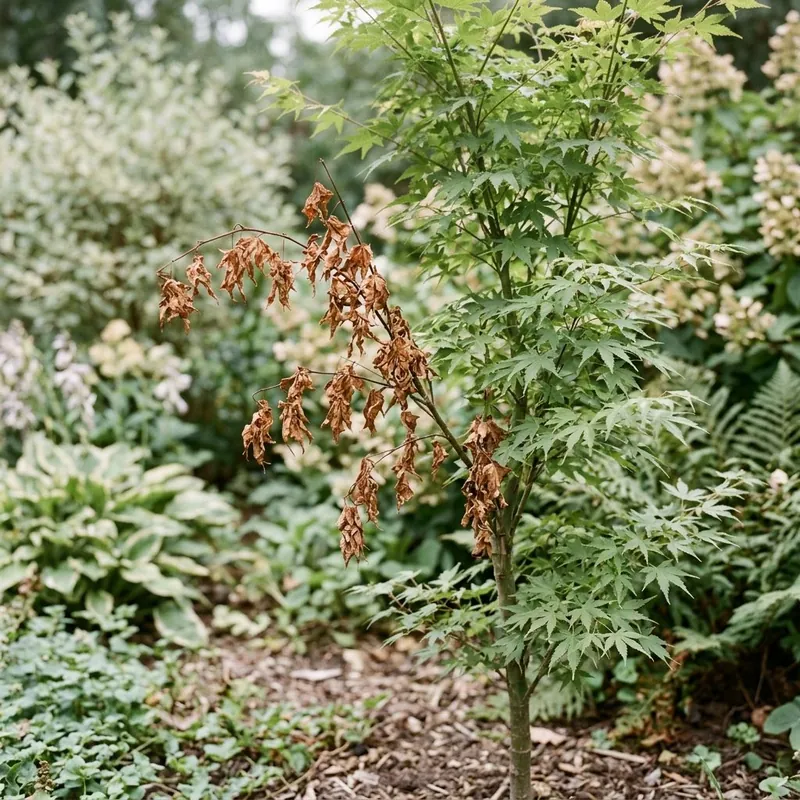
Short answer: Verticillium wilt is a fungal disease that enters through the roots and blocks the plant's water-carrying tissue. The giveaway is a single branch or one side of a tree wilting and dying, with brown or green streaks in the wood under the bark. Cut wilted branches back to clean wood, disinfect your pruners between cuts and water deeply in dry spells.
What it looks like
- Leaves on one branch or one side of the tree suddenly wilting, yellowing and dying while the rest stays green
- Dead branches scattered through the crown, appearing over one or several seasons
- Brown or greenish streaks in the wood when you peel back the bark of an affected branch
- Leaves that brown at the edges and drop early from affected branches
- Thin, slow growth in the years after the first branch dies
- On tomatoes and potatoes, lower leaves that yellow, wilt and die as the plant slowly declines
Is it verticillium wilt or something else?
| Could also be | How to tell |
|---|---|
| Fusarium wilt | Fusarium wilt is mostly a problem of vegetables and flowers, where it often yellows one side of the plant fast. On trees and shrubs, wilting branches with streaked wood are far more likely to be verticillium. |
| Honey fungus | Honey fungus rots the roots and trunk base, leaving creamy white fungal sheets under the bark near the ground and clumps of honey-colored mushrooms in fall. Verticillium leaves no fungus you can see, only streaks inside the wood. |
| Underwatering | Drought makes the whole tree droop or scorch evenly, and the wood under the bark stays clean. Verticillium picks off single branches, even when the soil is moist. |
Why it happens
Verticillium wilt is caused by soil fungi that get into the roots and grow up through the xylem, the tissue that carries water. As they block it, the leaves above can't get enough water and wilt.
The fungi are common in garden soils and stay there for years. They also live in infected roots, branches and leaves. Pruning tools can carry them from branch to branch or tree to tree, and wood chips or mulch made from infected trees can bring them into new beds.
Maples are among the most often and most badly affected trees. Ash, smoke bush, redbud, lilac, catalpa, elm and linden get it too, along with many flowers and vegetables.
How to fix it
- Cut wilted branches back to healthy wood. Cut each dead or wilting branch back until the wood at the cut shows no dark streaks. Peel a little bark to check. Bag the branches for the trash; don't compost them or chip them for mulch.
- Disinfect your pruners between every cut. Wipe or dip the blades in rubbing alcohol before each new cut so you don't move the fungus into healthy branches. Alcohol is gentler on tools than bleach.
- Water deeply when the soil is dry, and mulch. In dry spells, check the soil and give a slow, deep soak over the root zone when it is dry. Replace lawn grass under the tree with a layer of shredded wood mulch, keeping it a few inches away from the trunk.
- Feed only if a soil test says so. Skip routine fertilizer. Add nutrients only when a soil test shows the tree is short of something.
- Replant only with resistant plants. If the tree dies, replace it with something verticillium can't harm, such as pines, spruces, firs and other conifers. Oak, birch, honeylocust, hawthorn and ginkgo are resistant broadleaf choices.
Watch out: There is no cure, and the fungus stays in the soil for years. Don't plant a maple or another prone plant in the same spot.
How to prevent it
- Plant resistant trees and shrubs where verticillium has killed something before
- Avoid mulch made from infected trees or of unknown origin
- Pick up fallen leaves from trees with symptoms and throw them away
- Keep trees well watered in long dry spells so they aren't stressed
- Clean pruning tools between plants
Plants it often affects
- Japanese maple single branches wilt and die, with streaks in the wood
- Norway maple sudden branch dieback on one side of the crown
- Smoke bush stems wilt and die back one by one
- Redbud dying branches, often with clear streaks under the bark
- Tomato lower leaves yellow and wilt as the plant slowly declines
- Potato foliage yellows and dies back early
Questions people ask
Can a tree recover from verticillium wilt?
It can't be cured, and an infected tree will most likely decline over time. Some trees live on for years with good care: deep watering in dry spells, mulch over the roots and prompt removal of dead branches. Remove the tree when it is mostly dead or its dead branches become a hazard.
Can I use wood chips from a tree with verticillium wilt?
No. The fungus survives in the wood and can infect plants wherever the chips are spread. Bag or haul away branches and logs, and don't compost or bury them in the garden.
What can I plant where a maple died of verticillium wilt?
Choose a plant the fungus can't infect. Conifers such as pine, spruce and fir appear to be immune, and many broadleaf trees resist it, including oak, birch, honeylocust, hawthorn, crabapple and ginkgo.

Not sure it's verticillium wilt?
Take a photo in Liana and the health check names the problem and tells you what to do first. Liana also reminds you to check the soil, so watering mistakes don't start. Get Liana for iPhone.
Sources
- University of Wisconsin-Madison Extension, Verticillium Wilt of Trees and Shrubs