Bacterial blight on plants: how to spot it and limit the damage
Bacterial blight on plants starts as dark, water-soaked patches that spread quickly through leaves and sometimes into the stems. It is caused by bacteria, and it is harder to stop than fungal spotting. Acting fast matters, mostly to keep it away from your other plants.
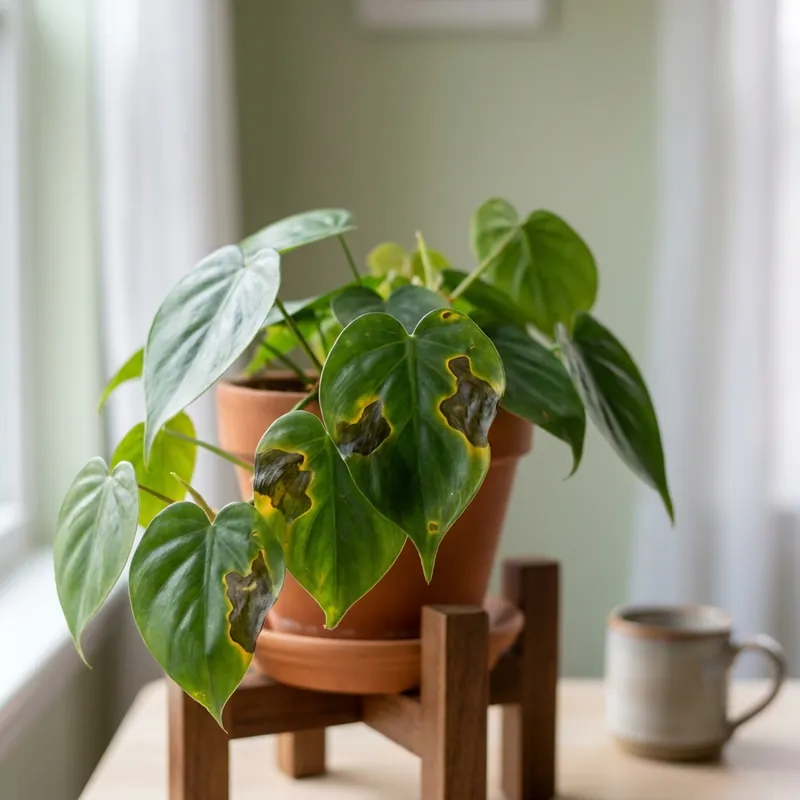
Short answer: Bacterial blight is an infection that causes dark, wet-looking patches on leaves and stems, often with a yellow edge, that spread fast and may smell unpleasant. Isolate the plant right away. Then cut well below the affected area with clean tools and keep the foliage completely dry.
What it looks like
- Dark patches that look water-soaked or greasy, often showing first on the underside of the leaf
- Spots that turn brown or black, sometimes with a yellow halo
- Patches that spread quickly and merge until a whole leaf or shoot dies
- A sticky ooze from spots or stems, especially in damp weather
- An unpleasant smell from soft, rotting tissue
- Shoots that wilt and blacken as if scorched, sometimes bending over at the tip
- Stems that turn dark and soft, followed by the plant drooping or collapsing
Is it bacterial blight or something else?
| Could also be | How to tell |
|---|---|
| Leaf spot | Fungal leaf spots are usually dry, may show rings or tiny black dots and grow slowly. Bacterial patches look wet or greasy at first and spread much faster. |
| Cold damage | Cold damage also looks dark and water-soaked, but it shows up all at once after a chilly night or a cold window and stops spreading once the plant is warm. Bacterial blight keeps moving into healthy tissue. |
| Root rot | Root rot starts below the soil, so the roots are brown and mushy and the plant wilts in wet soil. Blight starts on leaves or shoots above ground. |
Why it happens
The bacteria behind blight travel in splashing water, on hands, on pruning tools and on infected cuttings or new plants. They get in through wounds or natural openings in the leaf, and they multiply fastest when leaves stay wet.
Warm, humid conditions favor most of them, though some kinds prefer cool, moist weather. Overhead watering, misting, rain on outdoor pots and crowded plants all keep leaves wet long enough for infection to take hold.
On fruit trees and shrubs in the rose family, such as pear and hawthorn, the most common bacterial blight is fire blight. Rain, irrigation water and insects, including bees visiting blossoms, carry it in spring.
How to fix it
- Isolate the plant immediately. Move a potted plant away from all your others today, ideally to another room. Water it last and wash your hands after touching it.
- Cut well below the affected area. Wait until the leaves are dry, then cut back to healthy growth well below the lowest dark patch, at a joint or branch. Disinfect the blades with rubbing alcohol or a household disinfectant between every cut.
- Keep the foliage completely dry. Water only the soil, stop misting and keep the plant out of the rain. Give it space so any moisture on the leaves dries quickly.
- Dispose of the plant if it reaches the stem. If the dark, soft tissue keeps moving down the main stem or into the base, bag the whole plant, soil included, and put it in the trash. Don't compost it.
- Clean up after yourself. Scrub the pot and saucer, wipe down the surface it stood on and disinfect your tools. Wash your hands before you handle healthy plants.
Watch out: There's no home cure for a bacterial infection that has spread through the plant. Protecting your other plants matters more than saving this one.
How to prevent it
- Water at the soil and keep leaves dry, especially in warm, humid weather
- Check new plants and cuttings closely before putting them next to the rest
- Space plants so air can dry their leaves
- Clean pruning tools between plants, and between cuts on plants that have had blight before
- Pick up and throw away fallen infected leaves instead of leaving them in pots or beds
Plants it often affects
- Pear fire blight blackens blossoms and shoots and leaves them looking scorched
- Hawthorn can get fire blight, with wilting, browned shoot tips
- Mountain ash another rose-family tree that can get fire blight
- Bearded iris bacterial soft rot turns leaf bases and rhizomes mushy and foul-smelling
- Calla lily soft rot can turn the base of the plant soft and wet
- Cherry dark spots on leaves and gummy ooze from cankers on branches
Questions people ask
Can a plant recover from bacterial blight?
If you catch it while it is only on a few leaves or shoot tips, cutting well below the damage and keeping the plant dry can stop it. Once it has moved through the main stem, the plant usually can't be saved. Sprays only help prevent new infections; they don't cure tissue that is already infected.
Is bacterial blight contagious to other plants?
Yes. The bacteria spread in splashing water, on hands and on tools, and they can survive in plant debris. Keep the sick plant apart, handle it last and clean everything that touched it.
How can I tell bacterial blight from a fungal leaf spot?
Bacterial patches tend to look wet or greasy and spread fast, while fungal spots are usually drier and slower. Even experts find them hard to tell apart by eye. If you aren't sure, a plant disease clinic at your local extension office can test a sample.

Not sure it's bacterial blight?
Take a photo in Liana and the health check names the problem and tells you what to do first. Liana also reminds you to check the soil, so watering mistakes don't start. Get Liana for iPhone.
Sources
- NC State Extension, Bacterial Leaf Spot on Greenhouse Ornamentals
- University of California IPM, Fire Blight