Armillaria root rot: how to confirm it and what to do
Armillaria root rot is a fungus that attacks the roots of trees and shrubs and slowly kills them. In Britain it is known as honey fungus, after the honey-colored mushrooms it sends up. It spreads through the soil from dead roots to living ones, so a confirmed case needs action before it reaches the plants next door.
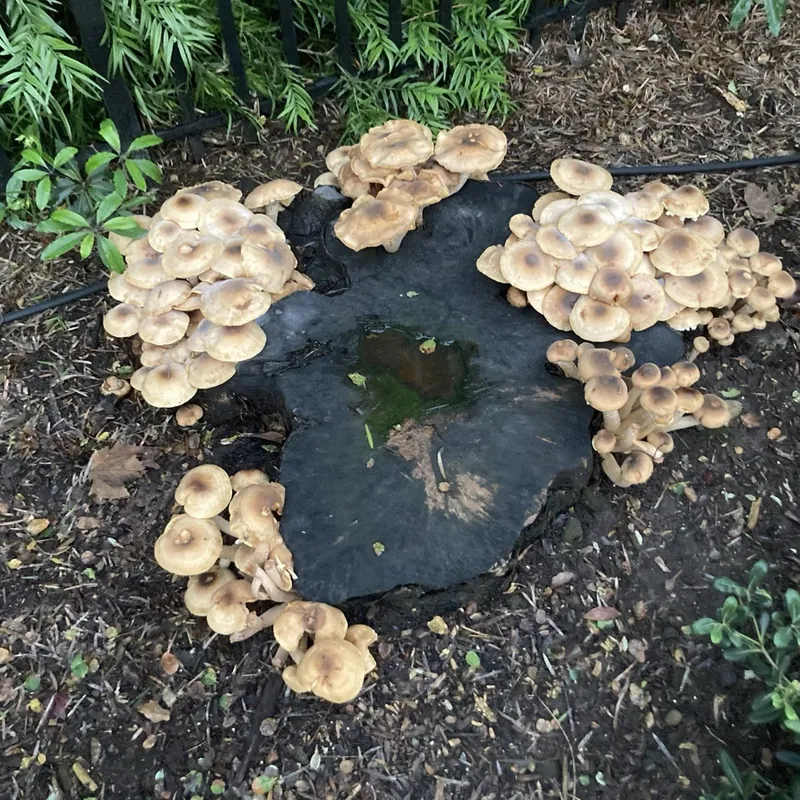
Short answer: Armillaria root rot is a soil fungus that rots the roots and lower trunk of woody plants, which then die back or fail to leaf out in spring. To confirm it, peel back the bark at the base: a white sheet of fungus between bark and wood that smells of mushrooms is the giveaway. There is no cure, so dig out the plant with as much root as you can and replant with resistant kinds.
What it looks like
- White, paper-thin sheets of fungus between the bark and the wood at the base of the trunk or on large roots, smelling strongly of mushrooms
- A tree or shrub that dies back, sometimes suddenly in hot, dry weather, or that fails to leaf out in spring
- Smaller, paler leaves than usual, early fall color, or an unusually heavy crop of flowers or fruit just before decline
- Clumps of honey-colored mushrooms at the base of the plant in late summer or fall, often with a pale ring on the stem below the cap
- Black, string-like strands like bootlaces under the bark or in the soil around the roots
- Cracked bark or sap oozing near the base of the trunk
Is it armillaria root rot or something else?
| Could also be | How to tell |
|---|---|
| Root rot from waterlogged soil | Root rot from soggy soil turns roots brown and mushy, and there is no white fungal sheet under the bark of the trunk base. Armillaria leaves those white sheets and, often, black bootlace strands. |
| Verticillium wilt | Verticillium wilt causes branches to wilt one at a time, and a cut branch shows dark streaks in the wood. The roots and trunk base look normal, with no white fungus under the bark. |
| Drought stress | A thirsty tree droops and scorches all over during dry spells and usually leafs out again the next spring. With Armillaria the decline keeps going, and the bark at the base hides white fungus. |
Why it happens
Armillaria lives in old stumps and dead roots, where it can survive for decades. From there it grows through the soil along black, bootlace-like strands, mostly in the top 6 inches or so, and infects living roots it touches. Roots of a healthy plant that grow into an infected one can pick it up too.
Plants under stress are the most at risk. Root damage, compacted soil, soil piled over the root zone and wet, poorly drained ground all help it along. In dry-summer climates, watering established trees that have never been watered in summer, such as native oaks, invites it.
Several kinds of Armillaria exist. Some attack healthy plants, while others only finish off plants that are already weak. Thousands of woody plants can be infected, and no variety is completely immune, though some are far more resistant than others.
How to fix it
- Dig out the infected plant. Remove the whole tree or shrub along with as much of the stump and root as you can reach. Old roots left in the ground keep feeding the fungus, so this matters more than anything else.
- Bag it or burn it. Put the wood and roots in the trash or burn them where that is allowed. Don't compost them and don't turn them into wood chips for mulch, or you spread the fungus around the garden.
- Put a barrier in the soil. To protect nearby plants, bury a sturdy vertical sheet of heavy plastic or pond liner about 18 inches deep around the infected spot. It blocks the bootlace strands from growing through the soil to new roots.
- Look after the plants nearby. Leave the roots of healthy neighbors in place and keep them unstressed. Fix drainage problems, avoid piling soil over their roots and don't dig around them more than you need to.
- Replant with resistant plants. If you can, wait about a year before replanting the spot. Then choose plants known to resist the fungus, such as hydrangea, and avoid highly prone ones like privet and birch.
Watch out: There is no cure once it's in the soil. Black bootlace strands carry it to the roots of nearby plants, so act quickly.
How to prevent it
- Remove old stumps and large dead roots when you take out a tree or shrub
- Plant trees and shrubs in well-drained soil and avoid damaging their roots or piling soil over them
- Don't plant prone species where a tree has died of Armillaria, especially if dead roots are still in the ground
- Keep the base of the trunk dry and free of turf, and don't overwater established trees
- Give new plantings extra care while they settle in, since young and stressed plants are the most vulnerable
Plants it often affects
- Privet one of the most prone hedges; whole sections die back in turn
- Birch dies back from the top or fails to leaf out, with fungus under the bark at the base
- Lilac stems wilt and die back one after another
- Walnut canopy thins over a few years before the tree declines
- Peach highly prone; trees can collapse quickly, often with sap oozing from the trunk
- Butterfly bush highly prone; branches die back over a season
Questions people ask
Can a tree recover from Armillaria root rot?
Not once the fungus has rotted the base of the trunk. In early cases, removing soil from around the base of the trunk so the root flare stays dry, and fixing overwatering, can slow it down. Badly infected trees should come out before they fall or spread it further.
Are honey fungus mushrooms a sure sign of trouble?
They show the fungus is there, but some kinds only feed on dead wood and weak plants. Mushrooms also don't appear every year, so their absence proves nothing. Peeling the bark at the base of a declining plant and finding white, mushroom-scented sheets is the surer test.
How far can Armillaria spread?
Its bootlace strands can grow about 3 feet a year through the soil, and it can reach plants up to about 100 feet from where it started. That is why a barrier and the removal of old roots matter.

Not sure it's armillaria root rot?
Take a photo in Liana and the health check names the problem and tells you what to do first. Liana also reminds you to check the soil, so watering mistakes don't start. Get Liana for iPhone.
Sources
- Royal Horticultural Society, Honey fungus
- University of California IPM, Armillaria Root Rot