How often to water houseplants: check the soil, not the calendar
"Water once a week" is the most common houseplant advice, and a common reason houseplants end up with root rot. How often to water houseplants depends on the plant, the pot, the light and the season. The same pothos can need water every week in summer and only every two or three weeks in winter. Below are typical numbers for 20 common houseplants, and the simple test that tells you when your plant is actually ready.
Short answer: most houseplants need water every one to two weeks in spring and summer, and less often in fall and winter. Succulents, snake plants and ZZ plants go two to four weeks or more. Ferns and calatheas want water every few days. In every case, the soil decides: water when the top inch or two is dry for most plants, and when it is dry all the way down for succulents.
Watering chart for 20 houseplants
These are typical days between waterings in a medium pot in an ordinary home. Treat them as a guide for when to start checking, not as a schedule. The last column is the part that matters.
| Plant | Spring and summer | Winter | Water when |
|---|---|---|---|
| Golden pothos | 7 to 14 days | 10 to 20 days | Top 2 inches are dry |
| Monstera | 7 to 10 days | 10 to 14 days | Top 2 inches are dry |
| Snake plant | 14 to 28 days | 20 to 39 days | Soil is dry all the way down |
| ZZ plant | 14 to 21 days | 20 to 29 days | Soil is dry all the way down |
| Spider plant | 7 to 10 days | 10 to 14 days | Top inch is dry |
| Peace lily | 5 to 8 days | 7 to 11 days | Top inch is dry |
| Heartleaf philodendron | 7 to 10 days | 10 to 14 days | Top inch or two is dry |
| Fiddle-leaf fig | 7 to 12 days | 10 to 17 days | Top 2 inches are dry |
| Rubber plant | 7 to 14 days | 10 to 20 days | Top 2 inches are dry |
| Chinese evergreen | 7 to 12 days | 10 to 17 days | Top inch or two is dry |
| Corn plant (Dracaena) | 10 to 14 days | 14 to 20 days | Top 2 inches are dry |
| Arrowhead vine | 6 to 10 days | 8 to 14 days | Top inch is dry |
| Chinese money plant | 7 to 10 days | 10 to 14 days | Top inch is dry |
| Baby rubber plant (Peperomia) | 7 to 12 days | 10 to 17 days | Top half of the soil is dry |
| Wax plant (Hoya) | 10 to 18 days | 14 to 25 days | Soil is almost dry |
| Moth orchid | 7 to 10 days | 10 to 14 days | Bark is nearly dry and roots look silvery |
| Prayer plant | 4 to 7 days | 6 to 10 days | Surface is just dry |
| Calathea | 5 to 9 days | 7 to 13 days | Surface is just dry |
| Boston fern | 3 to 5 days | 4 to 7 days | Surface is just dry; never let it dry out |
| Aloe and jade plant | 14 to 21 days | 20 to 29 days | Soil is dry all the way down |
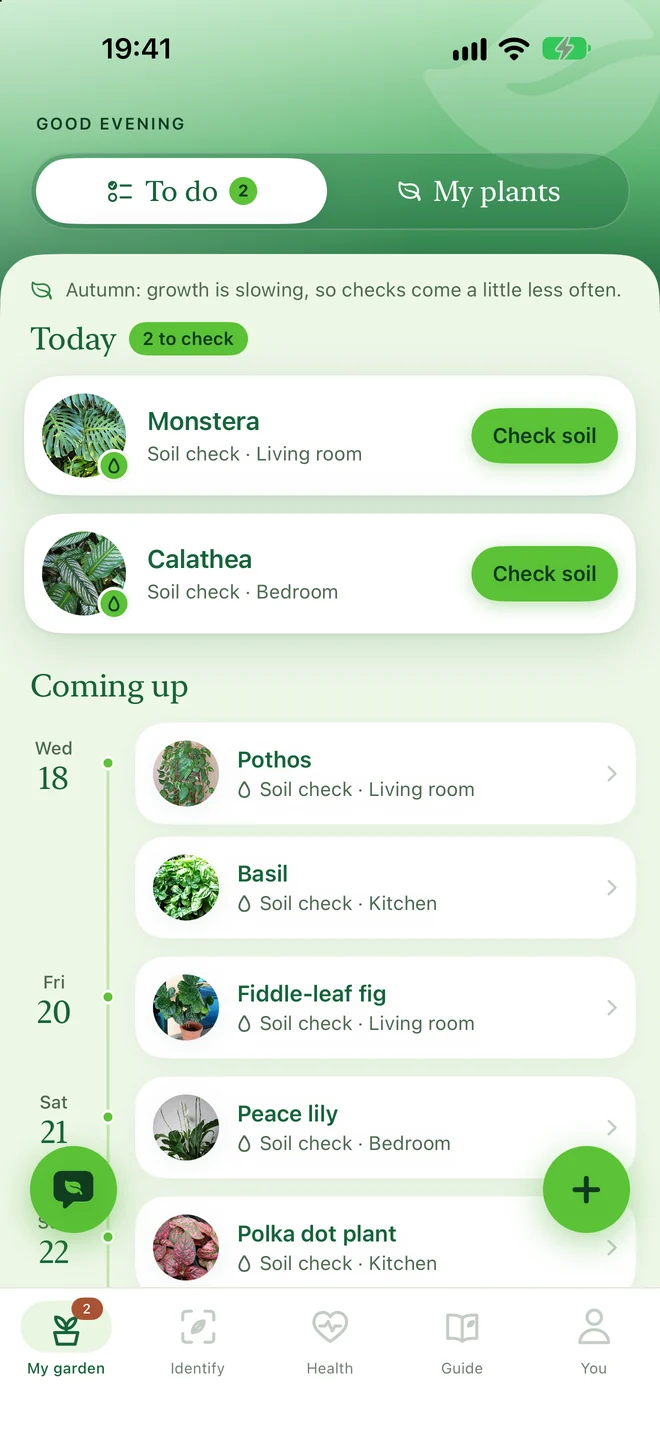
The pot changes these numbers too. Liana shortens the gap by about 15% for a small pot, which dries faster, and lengthens it by about 20% for a large one. In summer it shortens the gap by about 15%, and in fall it lengthens it by about 15%.
Why a fixed schedule fails
A plant uses water to grow and loses it through its leaves. Anything that changes how fast it grows or how fast the soil dries changes how often it needs a drink:
- Light. A plant in a bright window drinks far more than the same plant across the room. Less light, less water.
- Season. Short, dim winter days slow growth almost to a stop. Watering on a summer schedule in winter is the classic way to rot roots.
- Pot size and material. A small pot dries in days; a big one holds water for weeks. Terracotta breathes and dries faster than plastic or glazed ceramic.
- Potting mix. Chunky, airy mixes dry quickly. Dense, peaty mixes stay wet much longer.
- Heat and air. Heating dries the air and the soil. A warm, dry room in winter can make the top of the soil dry while the bottom stays wet.
- The plant itself. A plant that has filled its pot with roots drinks faster than one that was just repotted into a bigger pot.
The soil reflects all of these at once, which is why checking it works better than counting days.
How to tell when a plant needs water
The finger test
Push a finger into the soil up to the second knuckle, about two inches. If it feels dry at the depth in the chart, water. If it feels cool and damp, wait and check again in a few days. This works for most pots up to about eight inches across.
Lift the pot
Pick the pot up right after watering, then again when the soil is dry. You'll quickly learn the difference in weight, and after that a quick lift tells you more than a look at the surface.
Use a wooden skewer for big pots
In a large pot, the bottom can stay wet long after the top dries. Push a wooden skewer or chopstick down to the bottom, leave it a minute and pull it out. Damp soil sticks to it and darkens the wood.
Read the plant's hints
Some plants show thirst: a peace lily droops, succulent leaves wrinkle, orchid roots turn silvery. These are useful hints, but a plant that has to wilt before every drink gets stressed and drops its older leaves.
How to water
- Water thoroughly. Pour slowly over the whole surface until water runs out of the drainage hole. A small splash only wets the top, and the roots grow shallow.
- Empty the saucer. Tip out any water left in the saucer or outer pot after 15 to 30 minutes. Roots standing in water rot.
- Use pots with drainage holes. If you love a pot without one, use it as a cover around a plastic pot that has holes, and lift the inner pot out to water.
- Bottom water dry soil. If the soil has shrunk from the sides of the pot, stand it in a bowl of water for 20 to 30 minutes so it soaks up from below.
- Water the soil, not the leaves. Wet leaves in a cool, still room invite fungal spots, especially on African violets and calatheas.
Season by season
Spring: growth picks up and plants start drinking more. Check more often as the days lengthen. This is the best time to repot plants that have filled their pots.
Summer: the busiest season. Small pots in bright windows may need checking every few days. Plants moved outdoors dry out much faster in sun and wind.
Fall: as the light fades, growth slows. Start stretching the gaps between waterings before the plant shows you it is getting too much.
Winter: most houseplants rest. Water much less, and check the soil more carefully, because the surface can dry out in heated air while the root zone stays wet.
Questions people ask
Should I water my houseplants once a week?
Only if the soil says so. Once a week happens to suit some plants in spring and summer, but it is too often for succulents, snake plants and ZZ plants, and too often for almost everything in winter. Check first, then water.
Do houseplants need less water in winter?
Yes. With less light, they grow slowly and use less water, so the soil stays wet longer. Expect the gap between waterings to grow by half or more compared with summer, and let the soil tell you exactly how much.
How much water should I give a houseplant?
Enough that water runs out of the drainage hole, every time. Then empty the saucer. Watering deeply and less often is healthier than small, frequent sips.
How do I know if I'm overwatering?
Soil that is still damp days after watering, soft yellow lower leaves, fungus gnats and a sour smell are the signs. Our guide to overwatered vs underwatered plants shows how to tell them apart, and plant leaves turning yellow covers the other causes of yellowing.
Are moisture meters accurate?
They help in large pots where a finger can't reach the roots. Compare the reading with the finger or skewer test for a few weeks before you rely on it, and wipe the probe after each use.

Let each plant set its own rhythm
Liana starts each plant on the ranges above, then asks you to check the soil. Answer damp, dry on top or bone dry, and it moves the next check earlier or later, with seasons and pot size built in. Get Liana for iPhone.
Sources
- Iowa State University Extension, How often should houseplants be watered during the winter months?
- University of Maryland Extension, Overwatered indoor plants
- Watering ranges: Liana's care guides for each species, with Liana's seasonal and pot size adjustments.