Overwatered plant: signs and how to save it
An overwatered plant is the most common way houseplants die, and it is easy to miss because the plant looks thirsty. Roots sitting in wet soil can't take up oxygen, so they drown and start to rot. The leaves wilt even though the pot is still damp.
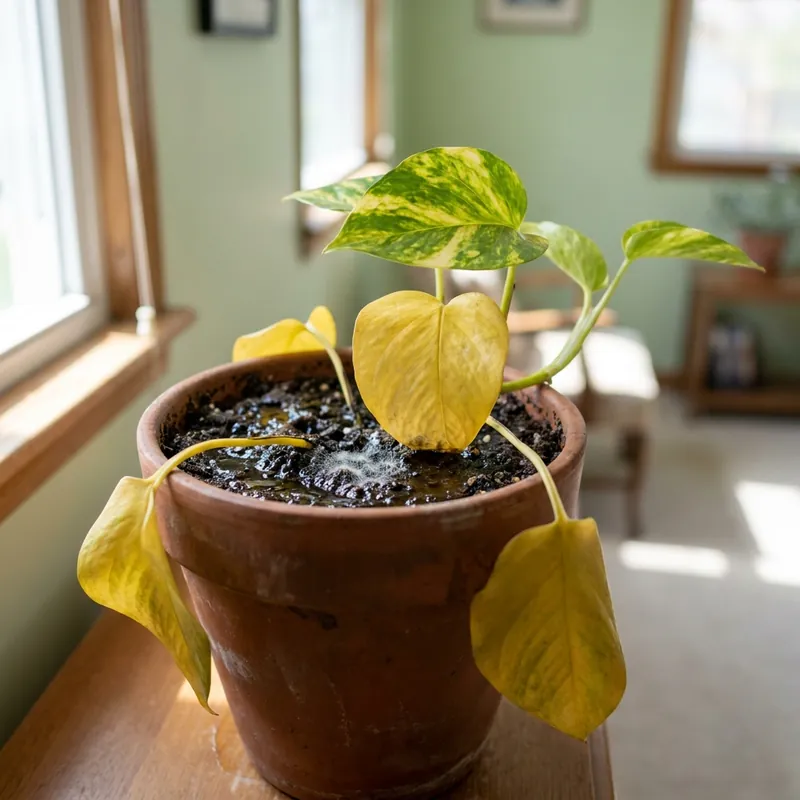
Short answer: Overwatering means the roots have been wet for so long that they are short of air. The giveaway is a plant that droops or yellows while the soil still feels wet. Stop watering today, tip out any water in the saucer, and let the top 2 inches of soil dry out completely before you water again.
What it looks like
- Leaves wilt or droop even though the soil feels wet
- Yellowing leaves, often old and new ones at the same time
- Leaves dropping, including some that still look green
- Soft, dark stems near the soil line
- Brown patches in the middle of leaves
- A sour smell from the pot, or mold on the soil surface
- Soil that stays dark and heavy long after watering
Is it overwatering or something else?
| Could also be | How to tell |
|---|---|
| Underwatering | A thirsty plant droops too, but its soil is dry, light and often pulled away from the edge of the pot. On a dry plant the older leaves at the base usually yellow and fall first, while overwatering tends to hit old and new leaves together. |
| Root rot | Root rot is what overwatering turns into when it goes on. Tip the plant out of its pot: firm, pale roots mean you caught it early, while black, mushy roots mean rot has set in. |
| Natural aging | One or two of the oldest, lowest leaves yellowing slowly while the new growth looks healthy is usually just age. Overwatering yellows several leaves at once, and the soil stays wet. |
Why it happens
Roots need air as well as water. The tiny spaces between soil particles normally hold both, but when the soil stays soaked, water fills those spaces and the roots suffocate. Damaged roots can't move water up to the leaves, which is why an overwatered plant wilts exactly like a thirsty one. Constantly wet soil also favors root diseases.
Most cases start with watering on a fixed day instead of checking the soil first. A pot with no drainage hole, a saucer left full of water, a heavy mix that holds water for too long and a pot far bigger than the root ball all make it worse. Plants grow less in winter and use less water, so a routine that worked in summer can drown them once the days get shorter.
How to fix it
- Stop watering today. Put the watering can away and let the top 2 inches of soil dry out completely. Push a finger into the mix to check. If it still feels cool and damp, wait, even if that takes longer than you expect in a big pot or a cool room.
- Check that the pot drains. Make sure the pot has a drainage hole and that roots or packed soil aren't blocking it. Tip out any water sitting in the saucer or in a decorative outer pot, and empty it again after every watering from now on.
- Repot if the soil smells sour. A sour or rotten smell means the soil has gone stale and airless. Slide the plant out, shake off the old soil and repot it into fresh, dry potting mix. Use a pot the same size as before, with a drainage hole.
- Remove black or mushy roots. While the plant is out of its pot, look at the roots. Healthy ones are firm and usually pale. Cut away any that are black, soft or slimy with clean scissors. If almost all of them are gone, the plant is unlikely to recover, and a healthy stem cutting may be a better bet.
- Snip off collapsed leaves. Yellow or mushy leaves won't turn green again. Cut them off at the base so the weakened roots have fewer leaves to supply, and keep the plant in bright, indirect light while it recovers.
Watch out: A wilting overwatered plant looks thirsty, and watering it again is what finishes it off. Feel the soil before you reach for the watering can.
How to prevent it
- Feel the soil before every watering, and water only when the top layer is dry.
- Use pots with drainage holes, and empty saucers after you water.
- Give plants that like to dry out a free-draining mix, such as a cactus and succulent mix with grit or sand.
- Expect most plants to need less water in winter, when growth slows down.
- When you repot, move up only one pot size so there's no large mass of soil the roots can't reach.
Plants it often affects
- Snake plant stores water in its leaves, which turn soft and collapse at the base
- ZZ plant its thick underground stems rot quickly in soil that stays wet
- Fiddle-leaf fig drops lower leaves and gets brown patches when its roots stay soggy
- Monstera lower leaves turn yellow when a large pot of soil never dries out
- English lavender a Mediterranean herb that wants dry, gritty soil and rots in heavy, wet mix
- Heartleaf philodendron leaves yellow and stems go soft at the soil line
Questions people ask
Can an overwatered plant recover?
Yes, as long as enough healthy roots are left. Let the soil dry, fix the drainage and cut away any rotten roots. New growth is the sign it's on the mend, though leaves that have already turned yellow won't go green again.
How do I know if my plant is overwatered or underwatered?
Feel the soil. A drooping plant in wet soil is overwatered, and a drooping plant in dry soil that has shrunk away from the pot is underwatered. Lifting the pot helps too, because a dry pot feels much lighter than a wet one.
Should I repot an overwatered plant?
Only if the soil smells sour, stays soggy long after you stop watering, or you find rotten roots. In that case use fresh, dry mix in a pot the same size with a drainage hole. Otherwise, letting the old soil dry out is gentler on the plant.

Not sure it's overwatering?
Take a photo in Liana and the health check names the problem and tells you what to do first. Liana also reminds you to check the soil, so watering mistakes don't start. Get Liana for iPhone.
Sources
- Clemson Cooperative Extension, Home & Garden Information Center, Houseplant Diseases & Disorders
- Royal Horticultural Society, How to Help a Poorly Houseplant