Fungus gnats: why they appear and how to stop them
Fungus gnats are small, dark flies that hover around houseplant soil and drift up when you water. The adults are only a nuisance, but their larvae live in damp soil and can chew on roots. Seeing them usually means the soil is staying wet for too long.
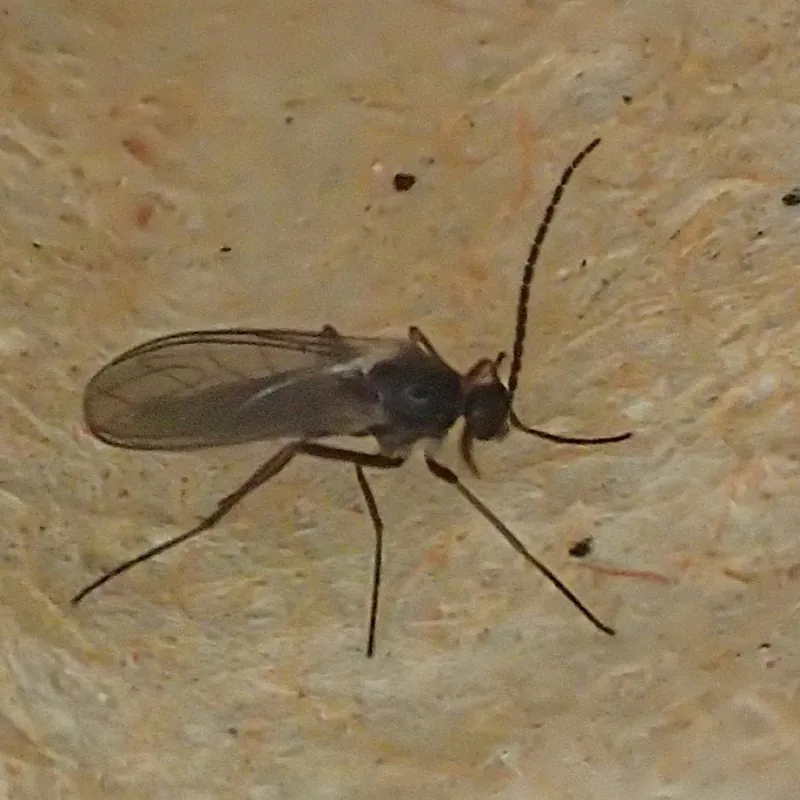
Short answer: Fungus gnats are tiny dark flies that breed in moist potting soil. You'll see them walking on the soil surface or flying slowly near pots and windows. Let the top inch or so of soil dry out fully before you water again, and put up yellow sticky traps to catch the adults.
What it looks like
- Small dark flies on the soil surface or flitting around the pot
- Gnats rising from the soil when you water or brush the plant
- Weak, slow fliers gathering near windows
- Tiny clear or whitish larvae with shiny black heads in the top of the soil
- Soil that stays damp for days after watering
- Seedlings and young plants that stall or wilt
Is it fungus gnats or something else?
| Could also be | How to tell |
|---|---|
| Fruit flies | Fruit flies gather around ripe fruit, trash and drains, and are usually tan with a stockier body. Fungus gnats are slender, dark and stay close to pots and soil. |
| Shore flies | Shore flies are sturdier, with short, bristly antennae. Fungus gnats are thinner and have long antennae, like a tiny mosquito. |
| Overwatering | Gnats often turn up alongside overwatering, since both come from soil that stays wet. If the leaves are yellowing or drooping while the soil is damp, deal with the watering as well as the gnats. |
Why it happens
Fungus gnat larvae feed on fungi and decaying matter in moist soil, and the adults lay their eggs there. A pot whose surface never dries makes an ideal nursery. Overwatering, poor drainage and saucers left full of water all keep the top of the soil damp.
Potting mixes rich in organic matter, especially compost that hasn't fully broken down, give the larvae plenty to eat. Gnats are often most noticeable in winter and early spring, when soil dries more slowly indoors.
In large numbers the larvae chew fine roots, which matters most for seedlings and young plants.
How to fix it
- Let the top inch of soil dry fully. Push a finger into the soil and water only when the top inch or so feels dry. The larvae need moist soil, so a dry top layer breaks their cycle. Empty any water left in the saucer.
- Add yellow sticky traps. Push a trap into the soil or hang it just above the pot. It catches flying adults before they lay more eggs and shows you whether their numbers are dropping.
- Top the soil with grit or sand. Spread a thin layer of coarse sand or fine grit over the soil surface. It dries quickly and makes the pot a poor place for adults to lay eggs.
- Skip bottom-watering for now. Watering from below keeps the soil damp right up to the surface. Until the gnats are gone, water from the top and let the extra drain away.
- Check for larvae with a slice of potato. Press a piece of raw potato into the soil surface and lift it after a few days. Larvae gather underneath, so you can see whether they're still there. Replace it every few days.
Watch out: Fungus gnats point to a watering problem. If they keep coming back, the soil is staying wet too long, and you're probably watering more often than the plant needs.
How to prevent it
- Check the soil with your finger before you water instead of watering on a schedule.
- Use pots with drainage holes and empty saucers after watering.
- Use fresh, bagged potting mix, and avoid garden soil or compost that isn't fully broken down.
- Expect soil to dry more slowly in winter, and wait for the top to dry before watering.
Plants it often affects
- Chinese money plant gnats appear when its soil stays damp between waterings
- Garden cress seedlings and microgreens on damp mix are an easy target for larvae
- Philodendron rich, moist mixes in large pots can stay wet below the surface
- Anthurium chunky organic mixes that hold moisture can host larvae
Questions people ask
Are fungus gnats harmful to plants?
The adults aren't. They don't bite and don't feed on plants. The larvae can damage fine roots when there are a lot of them, which matters most for seedlings and young plants.
Why do I still have fungus gnats after letting the soil dry?
Eggs and larvae already in the soil take time to finish growing, so adults can keep appearing for a while. Keep the traps up and keep letting the top inch dry before you water. If the soil below stays wet for days, the pot may not be draining well.
What kills fungus gnat larvae?
Drying the top of the soil is the main fix. For a stubborn case, a soil drench made with Bti, a naturally occurring bacterium sold for gnat and mosquito larvae, is very effective. Raw potato slices on the soil show you whether larvae are still there.

Not sure it's fungus gnats?
Take a photo in Liana and the health check names the problem and tells you what to do first. Liana also reminds you to check the soil, so watering mistakes don't start. Get Liana for iPhone.
Sources
- UC Statewide IPM Program, Fungus Gnats
- Colorado State University Extension, Managing Houseplant Pests