Root rot in houseplants: how to spot it and save the plant
Root rot in houseplants is a fungal infection that follows soil staying wet for too long. The roots turn black and soft, the pot smells sour, and the plant wilts and yellows even though it has plenty of water. Caught early, many plants can be saved by cutting out the rot and repotting.
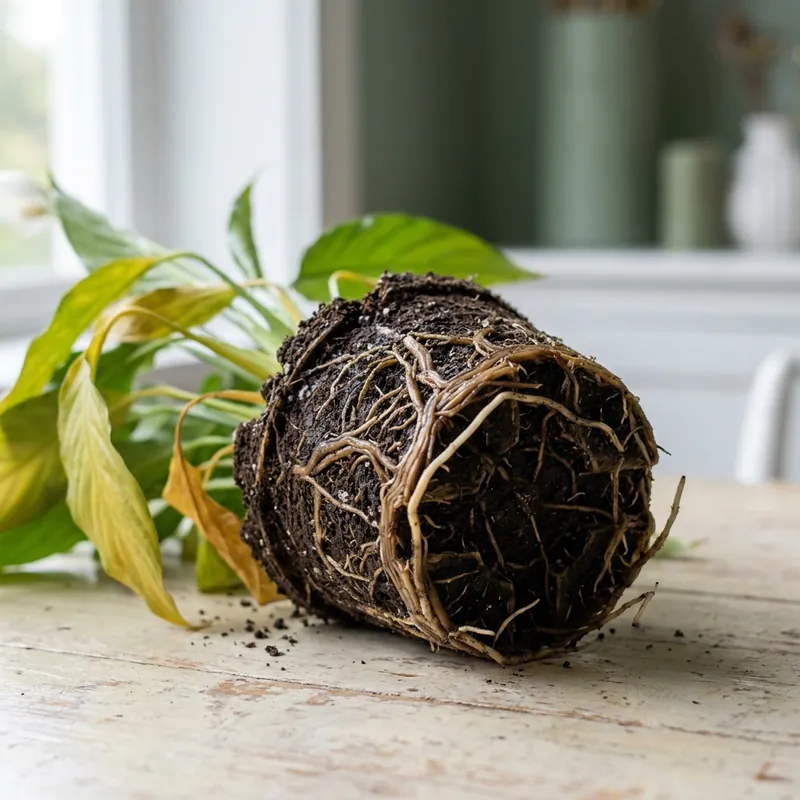
Short answer: Root rot is a soil-borne disease that attacks roots weakened by constantly wet soil. The giveaway is black, mushy roots and a sour smell when you tip the plant out of its pot. Take the plant out today, rinse the roots, cut away every rotten one and repot into fresh, free-draining mix in a clean pot.
What it looks like
- Roots that are black or dark brown and soft, mushy or slimy
- A sour or rotten smell from the pot
- Wilting that doesn't improve after watering, while the soil is still wet
- Yellowing leaves, and leaves dropping
- Brown or black, soft tissue on the stem at the soil line
- Little or no new growth
Is it root rot or something else?
| Could also be | How to tell |
|---|---|
| Overwatering | Overwatering comes first. The soil is soggy and the plant droops, but the roots are still firm and pale. Once the roots turn black and mushy, it has become root rot. |
| Underwatering | A thirsty plant wilts too, but its soil is dry and its roots are dry and wiry rather than soft. It perks up after a good drink, and a plant with root rot doesn't. |
| Naturally dark roots | Some healthy roots are tan, brown or orange. Squeeze one gently: healthy roots feel firm, while rotten ones are soft and come apart in your fingers. |
Why it happens
Root rot is caused by several organisms that live in soil, including Pythium and Phytophthora. They mostly get a hold on roots that are already struggling, and roots struggle when the soil stays soaked and short of air. That's why overwatering is the main trigger.
Anything that keeps soil wet for longer raises the risk: pots without drainage holes, saucers left full, heavy mixes, cool rooms in winter and pots far bigger than the root ball. Reusing old soil or an unwashed pot from a plant that had rot can bring the problem straight back.
How to fix it
- Take the plant out and rinse the roots. Ease the plant out of its pot and shake off the loose soil. Rinse the root ball gently under lukewarm running water so you can see every root clearly.
- Cut away every rotten root. With clean, sharp scissors, remove each root that is black, brown and soft, or that falls apart when you touch it. Cut back to firm, healthy tissue and wipe the blades as you go. If nearly every root is gone, the plant is unlikely to recover, so take healthy stem cuttings to root instead.
- Repot into fresh mix in a clean pot. Throw away the old soil. Use fresh, free-draining potting mix and a clean pot with a drainage hole that fits the roots you have left. If you want to reuse the old pot, scrub and rinse it well first.
- Water sparingly until new growth appears. Water lightly once to settle the mix, then let the top 2 inches dry before you water again. Keep the plant in bright, indirect light, out of hot sun. New leaves are the sign the roots have grown back.
- Trim back damaged leaves. With fewer roots, the plant can't support as many leaves. Snip off yellow or mushy ones at the base so the remaining roots have less to supply.
Watch out: Don't repot into a bigger pot. More soil holds more water, and the problem comes back.
How to prevent it
- Water only when the top of the soil is dry, and use less water in winter.
- Use pots with drainage holes and empty saucers after watering.
- Choose a free-draining potting mix, with extra grit or perlite for plants that like to dry out.
- Move up only one pot size when you repot.
- Start with fresh potting mix and a clean pot, especially after a plant has had rot.
Plants it often affects
- Golden pothos yellow leaves and soft, brown stems near the soil when kept too wet
- Snake plant leaves turn soft and fall over at the base once the roots rot
- Peace lily droops in wet soil, which is easy to mistake for thirst
- Fiddle-leaf fig drops lower leaves, often with brown spots, as the roots fail
- English lavender rots quickly in heavy or wet soil, especially over winter
- Tulip bulbs rot in soggy soil and may not come up at all
Questions people ask
Can a plant recover from root rot?
Often, yes, if some firm, healthy roots are left. After you cut out the rot and repot, give it time, because new roots grow before new leaves show. If nearly all the roots are gone, rooting a healthy cutting is the surest way to keep the plant.
What does root rot smell like?
Rotten roots give off a sour, musty smell, a bit like stagnant water. Healthy potting soil smells earthy. If the pot smells bad, tip the plant out and look at the roots.
Can I reuse the soil after root rot?
It's better not to. The organisms that cause root rot live in the soil, so throw the old mix away and start with fresh potting mix. If you want to reuse the pot, scrub it clean first.

Not sure it's root rot?
Take a photo in Liana and the health check names the problem and tells you what to do first. Liana also reminds you to check the soil, so watering mistakes don't start. Get Liana for iPhone.
Sources
- Clemson Cooperative Extension, Home & Garden Information Center, Houseplant Diseases & Disorders
- University of Illinois Extension, Tips for Repotting Houseplants