Blossom drop: flowers falling off without fruit
Blossom drop on tomatoes, peppers and beans is when flowers open, then yellow at the stem and fall off without setting fruit. Heat, cold nights, dry soil and poor pollination cause it. It is frustrating but rarely lasts: plants usually set fruit again once the weather settles.
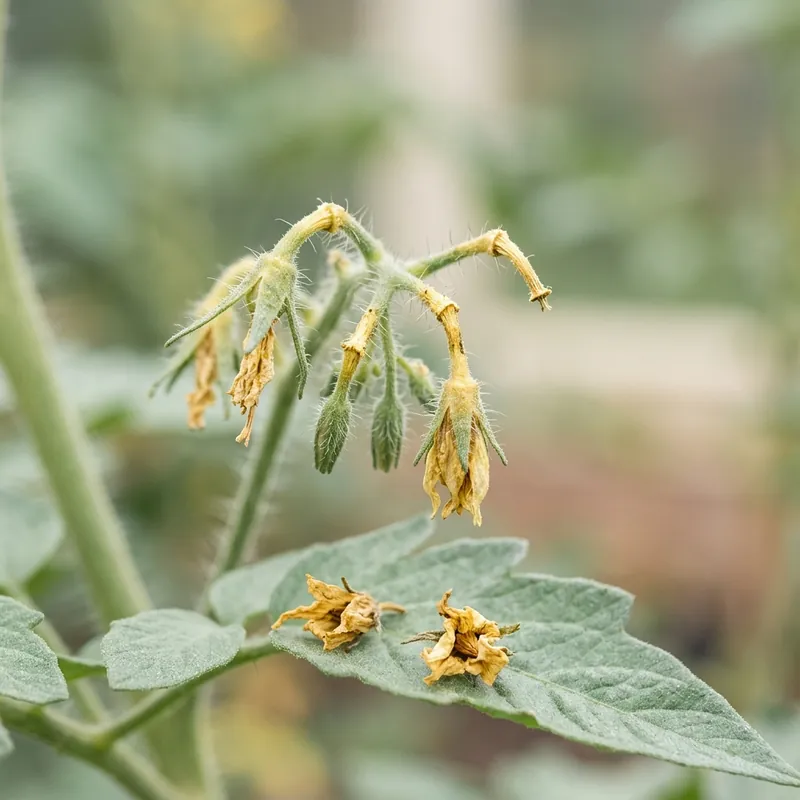
Short answer: If open flowers on tomatoes, peppers or beans fall off with no tiny fruit behind them, the weather is usually to blame. Very hot days, warm nights or cold nights stop pollination. Shade plants in heat waves, open greenhouse vents, tap flower clusters on sunny mornings, and water deeply when the soil is dry, then mulch.
What it looks like
- Open flowers yellowing at the stalk and falling off
- Flower stalks that wither with no small fruit forming
- Plenty of flowers but few or no fruit on the plant
- Drop that follows a heat wave, a run of warm nights or a cold snap
- Healthy-looking leaves, with only the flowers affected
- Plants in a closed greenhouse or a hot, sheltered corner losing the most flowers
Is it blossom drop or something else?
| Could also be | How to tell |
|---|---|
| Bud drop | Bud drop is when buds fall before they open, mostly on flowering houseplants like Christmas cactus and gardenia. Blossom drop is open flowers falling without setting fruit. |
| Blossom end rot | With blossom end rot, fruit does set, then gets a dark, sunken patch on its bottom. Blossom drop means no fruit forms at all. |
| Heat stress | Heat stress covers the whole plant: midday wilting, curled leaves and scorched edges. Blossom drop is often one part of it, and both ease when the heat breaks. |
Why it happens
Tomato flowers need fairly mild weather to pollinate. Iowa State University Extension says daytime highs above 85°F or nights below 55°F interfere with fruit set, and that cherry tomatoes cope with a wider range than large-fruited types. Strong wind can dry the flowers, and dry soil stresses the plant into shedding them.
Peppers, beans, squash and cucumbers drop flowers in long hot spells too. In a closed greenhouse, still air means pollen isn't shaken loose, and the heat builds fast. Plants set out before the nights warm up often lose their first flowers to cold.
How to fix it
- Shade plants in heat waves and open the greenhouse. Rig shade cloth over the hottest beds during a heat wave, held up so air moves underneath. Open greenhouse doors and vents fully on warm days to let heat out.
- Tap flower clusters on sunny mornings. Tomato and pepper flowers pollinate themselves when shaken. Tap the flower stalks or the supporting stake gently on dry, sunny mornings, when the pollen is loose, especially in a greenhouse where there is no wind.
- Water deeply when the soil is dry, and mulch. Check the soil a few inches down before watering. If it is dry, give a slow, deep soak at the base, then lay straw or shredded leaves over the soil to keep moisture even.
- Switch to a high-potassium feed once flowers open. A fertilizer higher in potassium, such as one sold for tomatoes, supports flowering and fruiting better than a leafy, high-nitrogen one. Follow the label.
Watch out: Planting out before the nights warm up costs the first flowers. Harden plants off and wait until nights stay mild.
How to prevent it
- Harden off tomatoes, peppers and beans and plant out only once nights stay mild
- Grow cherry tomatoes or heat-tolerant varieties where summers are very hot
- Ventilate greenhouses well from late spring onward
- Mulch beds to keep soil moisture even
- Avoid heavy high-nitrogen feeding, which favors leaves over flowers
Plants it often affects
- Tomato drops flowers in hot spells and on cold nights, large-fruited types most
- Bell pepper sheds blossoms and tiny fruit when heat lasts
- Hot pepper flowers fall in heat waves and dry soil
- Green bean flowers drop in hot, dry weather
- Runner bean flowers fall without pods in heat and dry soil
- Squash drops blossoms when high temperatures persist
Questions people ask
Why are my tomato flowers falling off?
Usually the weather. Hot days, warm nights, cold nights or strong wind stop the flowers from pollinating, so the plant drops them. Dry soil adds to it. Once the weather settles, new flowers usually set fruit.
Do I need to hand-pollinate tomatoes?
Outdoors, wind and insects usually do it. In a greenhouse, or in still weather, gently tapping or shaking the flower clusters on sunny mornings helps the pollen fall.
Will my pepper plants produce fruit after dropping flowers?
Yes, in most cases. Peppers shed flowers during heat waves and start setting fruit again when temperatures ease. In the meantime, mulch and water deeply whenever the soil is dry.

Not sure it's blossom drop?
Take a photo in Liana and the health check names the problem and tells you what to do first. Liana also reminds you to check the soil, so watering mistakes don't start. Get Liana for iPhone.
Sources
- Iowa State University Extension and Outreach, My tomato plants are flowering, but aren't setting fruit. Why?
- Oregon State University Extension Service, Heat wave in the garden: How to identify and prevent heat stress in plants