Heat stress in plants: how to help them through a heat wave
Heat stress in plants shows as leaves that wilt in the midday heat, curl or scorch at the edges, and flowers and young fruit that drop during a heat wave. Vegetables such as tomatoes, peppers and squash show it fastest. Most plants perk up in the evening and recover once the heat breaks, as long as their roots have water.
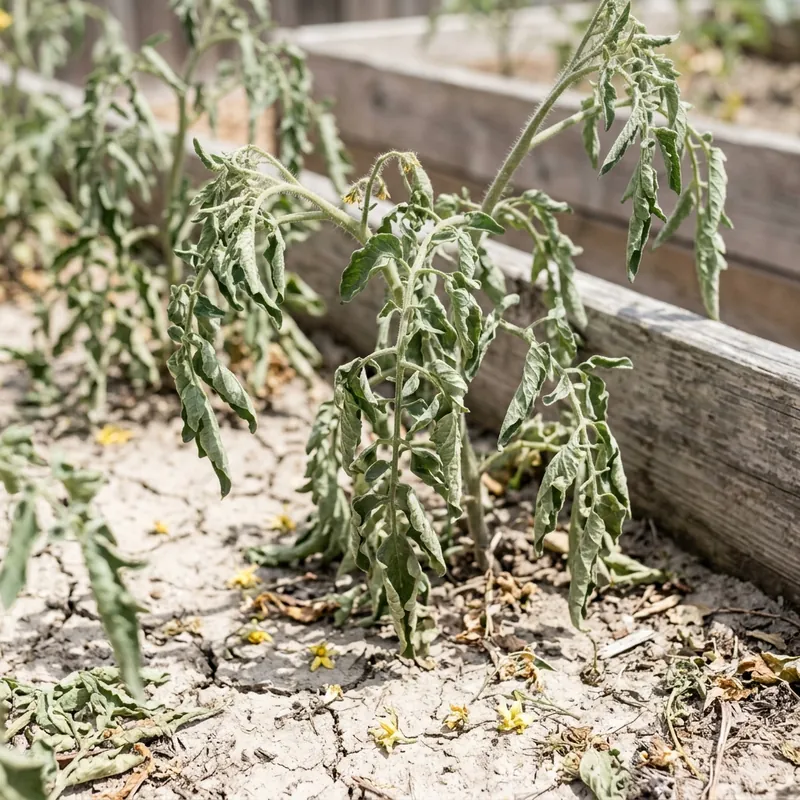
Short answer: A plant that wilts at midday but stands up again by evening is heat stressed. It is protecting itself. Shade it from the afternoon sun, check the soil and water deeply early in the morning only if it is dry, mulch the bed, and hold off on feeding, pruning and repotting until the heat breaks.
What it looks like
- Leaves wilting in the hottest part of the day and recovering by evening
- Tomato and corn leaves rolling or cupping upward
- Dry, brown leaf edges on big-leaved plants such as squash and pumpkins
- Flowers, buds or young fruit dropping during a hot spell
- Pale or papery patches on the sunny side of fruit
- Lettuce, spinach and cilantro running to flower early
Is it heat stress or something else?
| Could also be | How to tell |
|---|---|
| Underwatering | A thirsty plant stays limp in the evening and the next morning too, and its soil is dry a few inches down. A heat-stressed plant recovers overnight in moist soil. |
| Sunscald | Sunscald leaves pale, papery patches on fruit or bark exposed to sudden strong sun. It often comes with heat but is a burn on one side, without the wilting. |
| Leaf scorch | Leaf scorch browns the edges of tree and shrub leaves, often on Japanese maples, when the roots can't keep up with water loss. It stays after the heat passes, while wilting from heat stress comes and goes each day. |
Why it happens
In strong heat, leaves lose water faster than the roots can replace it. Plants close their pores and wilt to save water, which is why leaves droop at midday even when the soil is moist. Hot, dry wind and reflected heat from walls and paving make it worse.
Heat also upsets flowering. Oregon State University Extension notes that peppers, squash and cucumbers often drop blossoms and fruit when high temperatures last, and that most plants return to normal production after the heat wave. Pots, young plants and shallow-rooted plants dry out first, so they suffer before established beds do.
How to fix it
- Shade plants from afternoon sun. Rig shade cloth, light row cover fabric or netting over the hottest beds, held up on stakes or hoops so air can move underneath. Take it down once the heat passes, since fruiting plants need the sun.
- Water deeply when the soil is dry, early in the morning. Push a finger a few inches into the soil first. If it is dry, give a long, slow soak at the base of the plant in the early morning, so the water reaches deep roots before the day heats up.
- Mulch beds and move pots out of the hottest spots. A thick layer of straw, shredded leaves or compost keeps the soil cooler and slows drying. Move containers away from hot walls and paving into afternoon shade, and group them together.
- Don't feed, prune or repot until the heat breaks. These jobs push new growth or disturb roots when the plant can barely keep up with water loss. Pruning can also expose shaded stems and fruit to sunburn. Wait for cooler weather.
Watch out: Midday wilting is the plant protecting itself. If it perks up by evening and the soil is still moist, don't water again.
How to prevent it
- Mulch vegetable beds before summer heat arrives
- Use large pots, which dry out more slowly than small ones
- Water deeply when the soil is dry so roots grow down, where the soil stays cooler
- Plant heat-sensitive crops where they get some afternoon shade
- Pick cool-season crops such as lettuce before a forecast heat wave
Plants it often affects
- Tomato leaves roll or cup, and flowers drop in long hot spells
- Pepper drops blossoms and small fruit when heat lasts
- Squash big leaves wilt at midday and dry at the edges
- Cucumber wilts in afternoon heat and sheds flowers and fruit
- Lettuce bolts to flower and turns bitter in hot weather
Questions people ask
Should I water plants that wilt in the afternoon?
Check the soil first. If it is moist a few inches down and the plant stands up again by evening, it is coping with heat and doesn't need more water. If the soil is dry or the plant is still limp in the morning, water deeply.
Is it better to water in the morning or evening during a heat wave?
Early morning is best, because the water soaks in before the heat and the leaves dry quickly. Aim the water at the soil, not the leaves.
Will my tomatoes set fruit again after the heat?
Usually, yes. Tomatoes and peppers drop flowers during long hot spells, but they start setting fruit again once days and nights cool down.

Not sure it's heat stress?
Take a photo in Liana and the health check names the problem and tells you what to do first. Liana also reminds you to check the soil, so watering mistakes don't start. Get Liana for iPhone.
Sources
- Oregon State University Extension Service, Heat wave in the garden: How to identify and prevent heat stress in plants
- South Dakota State University Extension, Protecting Plants From Heat Stress