Bolting vegetables: why it happens and what to do
Bolting vegetables suddenly send up a tall flower stem before you have finished harvesting them. It happens most to lettuce, spinach, cilantro (coriander in Britain), onions and beets, and the leaves turn bitter and tough as the plant switches to making seed. Heat, dry soil, long days or a cold snap can all set it off.
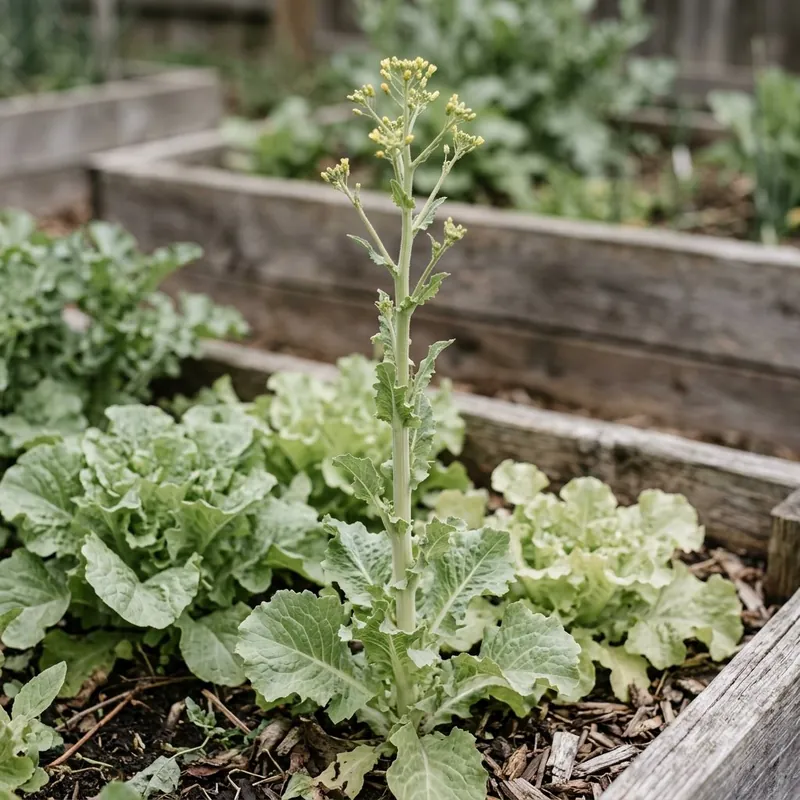
Short answer: A bolting plant grows a tall, often thick stem from its center with flower buds at the top, and its leaves get smaller, bitter and tough. Lettuce, spinach and cilantro bolt in heat and long summer days, while onions and beets usually bolt after a cold spell early in life. Harvest what you can right away, since cutting off the stem won't make leafy crops tender again, and sow more in cooler weather.
What it looks like
- A tall stem shooting up from the center of the plant
- Flower buds or flowers forming at the top of the stem
- Leaves turning bitter, tough or smaller
- Lettuce heads stretching upward instead of filling out
- A thick, hard flower stalk growing from the neck of an onion
- Beets and other root crops that stop swelling
Is it bolting or something else?
| Could also be | How to tell |
|---|---|
| Too little light | Plants in shade stretch into thin, pale, floppy stems with widely spaced leaves and no flower buds. A bolting plant grows one firm, upright stem that ends in flowers. |
| Normal end of season flowering | Crops left in the ground long after harvest, or grown on for seed, flower as part of their normal life. Bolting is the same flowering, only early, before you have had your crop. |
Why it happens
Lettuce and spinach are long-day plants. As days lengthen from late spring into summer, they get the signal to flower, and high temperatures speed things up. Cilantro also bolts quickly once the weather turns hot.
Onions, beets, carrots and leeks normally flower in their second year. A long cold spell early in their life can trigger flowering in their first year instead, so they bolt in the same summer you planted them.
Stress makes all of this more likely. Dry soil, crowded plants and transplants that sat too long in their pots before planting all push crops toward bolting.
How to fix it
- Harvest what you can now. As soon as you see the stem rising, pick the leaves or cut the whole head. Leaves get more bitter the longer you wait, so use them soon.
- Snap off onion flower stems. Break off the flower stalk as soon as it shows so the plant keeps its energy for the bulb. Bolted onions don't store well, so lift those first and use them in the kitchen.
- Shade leafy crops in heat and water deeply when the soil is dry. Cover lettuce, spinach and cilantro with shade cloth during hot spells, or grow them where taller plants cast afternoon shade. Check the soil with a finger and give a deep soak when it feels dry, since dry soil adds to the stress.
- Choose bolt-resistant varieties for summer sowings. For crops that will grow into the long, warm days of summer, look for seed packets marked bolt-resistant or slow-bolting.
- Pull bolted plants and sow again. Compost leafy crops that have bolted and sow a fresh batch. Lettuce, spinach and cilantro grow best in the cool weather of spring and fall.
Watch out: Cutting off the flower stem won't make lettuce or spinach leafy again. Once it bolts, pick it and sow more.
How to prevent it
- Sow lettuce, spinach and cilantro in spring and again for fall, and skip the hottest part of summer
- Sow small batches every few weeks so a fresh crop is always coming on
- Space plants properly, and plant transplants while they are young and growing well
- Mulch to keep the soil evenly moist, and water deeply when it is dry
- Plant onions and beets out once cold spells are over, or protect early sowings with row covers
Plants it often affects
- Lettuce the head stretches up into a stem and the leaves turn bitter
- Spinach bolts as the days lengthen toward summer
- Cilantro runs to flower quickly in hot weather
- Arugula flowers fast in heat and dry soil, and the leaves turn hot and tough
- Onion a thick flower stalk forms after a cold spell early in the season
- Beet early sowings can bolt after cold weather, and the roots stay small
Questions people ask
Can you eat lettuce after it bolts?
Yes. Bolted lettuce is safe to eat, but it gets more bitter as the stem grows. Pick it as soon as you notice and use the youngest leaves.
Does cutting off the flower stalk stop bolting?
For lettuce, spinach and cilantro, no. The plant has already switched to making seed and will keep pushing up stems. For onions, snapping off the stalk helps the bulb, though those onions won't keep as long.
Why does my cilantro bolt so fast?
Cilantro likes cool weather and runs to flower quickly once it gets hot. Sow it in spring and again for a fall crop, choose a slow-bolting variety and give it some afternoon shade.

Not sure it's bolting?
Take a photo in Liana and the health check names the problem and tells you what to do first. Liana also reminds you to check the soil, so watering mistakes don't start. Get Liana for iPhone.
Sources
- University of Maryland Extension, Flower Stalks Form or Bolting of Vegetables
- Royal Horticultural Society, Bolting in Vegetables