Blossom end rot on tomatoes: why it happens and how to stop it
Blossom end rot on tomatoes is a sunken, leathery brown or black patch on the bottom of the fruit, the end where the flower was. Peppers, zucchini, squash and eggplant get it too. The plant itself is healthy: uneven watering stops calcium reaching the growing fruit, even when the soil has plenty.
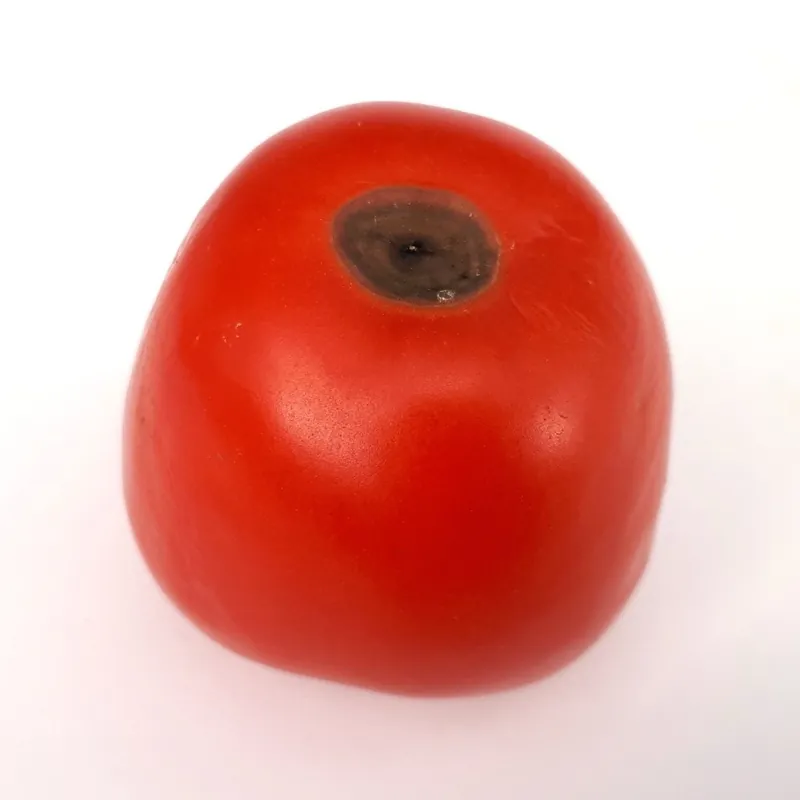
Short answer: Blossom end rot starts as a small, water-soaked spot on the bottom of the fruit that grows into a sunken, leathery brown or black patch. It happens when the soil swings between wet and dry, so the plant can't move enough calcium into the fruit. Pick off the damaged fruit, then keep soil moisture even: check pots daily in hot weather, water deeply when the soil is dry, and mulch beds.
What it looks like
- A water-soaked, light tan spot on the bottom of the fruit, opposite the stem
- The spot growing into a sunken, leathery brown or black patch
- Most common on the first fruits of the season, during fast growth
- Large and paste (Roma-type) tomatoes and long peppers hit more than cherry tomatoes
- Mold or soft rot setting in on the dead patch later
- Leaves and stems that look healthy
Is it blossom end rot or something else?
| Could also be | How to tell |
|---|---|
| Sunscald | Sunscald makes a pale, papery or bleached patch on the side of the fruit that faced the sun. Blossom end rot is always at the bottom tip, and it turns dark and leathery. |
| Late blight | Late blight makes firm, greasy brown patches anywhere on the fruit, and the leaves and stems get dark blotches too. Blossom end rot leaves the foliage healthy. |
| Gray mold | Gray mold is a soft rot covered in fuzzy gray growth, often starting at a wound or where wet petals stick to the fruit. Blossom end rot starts dry and leathery, and any mold comes later, on the dead patch. |
Why it happens
Fruit needs calcium to build its cells as it swells. Calcium travels from the roots in the water the plant draws up, so when the soil dries out, even for a short spell, the supply to the fruit stops. The far end of a fast-growing fruit is the first place to run short.
The soil is rarely short of calcium. Uneven watering is the usual cause: a dry spell, then a soaking, then dry again. Cold or waterlogged soil, roots cut by hoeing close to the plant and heavy nitrogen feeding can also cut the supply.
Pots dry out much faster than garden beds, so tomatoes and peppers in containers get it often, especially in hot weather.
How to fix it
- Pick off affected fruit. A marked fruit won't heal. Remove it so the plant puts its energy into the rest. Fruit that forms once the soil moisture is steady can grow normally.
- In hot weather, check pots every day. Push a finger into the soil each day during hot spells. When the top feels dry, water deeply until it runs from the drainage holes so the whole root ball is wet. Plants in the ground need the same thing: a deep soak when the soil is dry, rather than a daily sprinkle.
- Mulch beds to keep moisture even. Spread a layer of straw, shredded leaves or compost over the soil around the plants. Mulch slows drying and keeps the soil moisture steadier between waterings.
- Grow in bigger pots. A large pot holds more soil and dries out more slowly than a small one. Give tomatoes and peppers the biggest containers you have room for.
- Go easy on nitrogen. Heavy feeding with nitrogen-rich fertilizer is linked to blossom end rot. Feed lightly while the first fruits are forming.
Watch out: Calcium sprays and eggshells rarely help, because the soil is seldom short of calcium. Steady moisture is what stops it.
How to prevent it
- Mulch tomato, pepper and squash beds once the soil has warmed in spring
- Water deeply when the soil is dry, and give a good soak before a forecast hot, dry spell
- Use large containers for tomatoes and peppers
- Don't hoe or dig close to the stems, which cuts the roots
- Test your soil before planting if you never have; it shows whether calcium or pH needs fixing
Plants it often affects
- Tomato the most common victim, especially large and paste types
- Bell pepper a pale, sunken patch at the tip that dries papery or turns dark
- Zucchini the blossom end of young fruit shrivels and blackens
- Pumpkin the base of developing fruit darkens and rots
- Butternut squash dark, sunken patches at the bulb end
- Eggplant a leathery brown patch on the bottom of the fruit
Questions people ask
Do eggshells or Epsom salt help blossom end rot?
Usually not. The soil normally has enough calcium already, so adding more does little, and calcium sprays are poorly taken up by the fruit. Epsom salt adds magnesium, and high magnesium can even get in the way of calcium uptake. Steady watering and mulch are what work.
Will the rest of my tomatoes get blossom end rot?
Fruit that is already marked won't recover, but new fruit can grow normally once the soil moisture is steady. It is most common on the first fruits of the season, so keep checking the soil and watering deeply when it is dry.
Why do my tomatoes in pots get blossom end rot?
Pots dry out much faster than garden soil, and a pot that dries out between waterings gives the fruit uneven moisture. In hot, dry weather, check the soil every day and water deeply whenever the top is dry. A bigger pot helps too.

Not sure it's blossom end rot?
Take a photo in Liana and the health check names the problem and tells you what to do first. Liana also reminds you to check the soil, so watering mistakes don't start. Get Liana for iPhone.
Sources
- University of Illinois Extension, Blossom End Rot
- Iowa State University Extension and Outreach, Blossom End Rot