Clematis wilt: why stems collapse and how to save the plant
Clematis wilt is a fungal disease that makes a stem, or sometimes the whole clematis, droop and turn black within a few days. It often strikes just before the plant flowers, which makes it feel like a disaster. Large-flowered hybrids are hit hardest, and most plants grow back from below ground if you give them time.
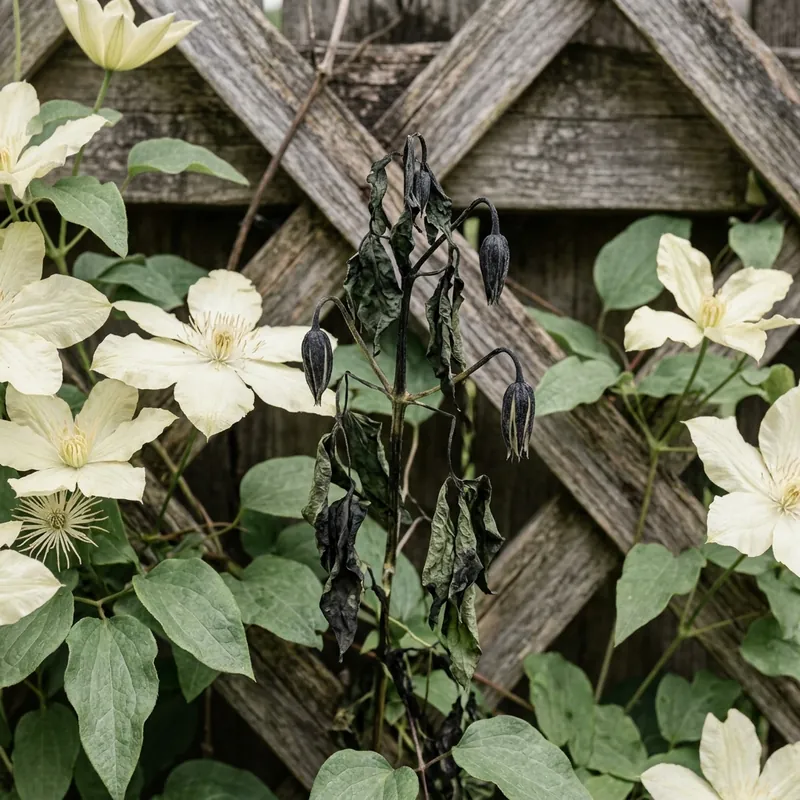
Short answer: Clematis wilt is a fungus that kills stems suddenly, usually on large-flowered hybrids. The giveaway is a healthy-looking stem that collapses in days, with leaves and leaf stalks turning black. Cut the wilted stems back to healthy green growth, even below the soil, and leave the roots in the ground, because new shoots usually come back.
What it looks like
- A stem, or the whole plant, wilts suddenly over a day or two, often just before flowering
- Leaves and leaf stalks turn black and shrivel
- Dark spots on the leaves before the stem collapses
- Black staining inside the stem when you split it open
- Wilting that doesn't recover after watering or in the cool of the evening
- New shoots coming up from the base, sometimes from below the soil, after the old stems die
Is it clematis wilt or something else?
| Could also be | How to tell |
|---|---|
| Slugs and snails | Slugs and snails chew young clematis stems near the ground, and everything above the bite wilts. Look for ragged, gnawed stems at the base and slime trails. Wilt leaves the stem whole but black inside. |
| Underwatering | A thirsty clematis droops all over, the soil is dry a few inches down, and the plant perks up after a deep soak. Wilt hits one stem at a time in moist soil, and the leaves turn black. |
Why it happens
Clematis wilt is caused by a fungus that lives in the soil on dead plant material. Its spores are splashed or carried onto the leaves and young stems, where they cause leaf spots and then work into the stem and block it. Everything above that point collapses.
Large-flowered hybrids are by far the most prone. Small-flowered species such as alpine and anemone clematis are much more resistant, and Italian clematis is tolerant.
True clematis wilt is fairly uncommon in home gardens. Wind damage, root problems, drought stress and slugs can all make clematis wilt too, so check for those before you blame the fungus.
How to fix it
- Cut wilted stems back to healthy green growth. Follow each wilted stem down until the inside is green with no black staining, and cut there. If the damage runs into the base, cut below soil level.
- Throw away the cut stems and clean your pruners. Put the stems in the trash right away so the fungus doesn't end up in the soil or compost. Wipe the blades with rubbing alcohol before you cut anything else.
- Leave the roots in place and watch for new shoots. Keep the plant mulched and the soil from drying out, then wait. Buds below the soil usually send up fresh shoots, sometimes later the same season and sometimes not until the next spring.
- Plant new clematis deeper than they sat in the pot. Set new clematis about 2 to 3 inches deeper than they grew in their nursery pot. Those buried buds give the plant a way to regrow if wilt strikes.
Watch out: Don't dig up a wilted clematis. Buds below the soil usually send up new shoots, sometimes not until the next spring.
How to prevent it
- Plant clematis 2 to 3 inches deeper than they sat in the pot
- Choose small-flowered species, such as alpine, anemone or Italian clematis, where wilt has been a problem
- Mulch the root area and water deeply in dry spells to keep roots unstressed
- Protect young shoots from slugs and tie stems in so wind can't snap them
- Clear away dead clematis stems and leaves around the base
Plants it often affects
- Large-flowered hybrid clematis the most prone group; stems collapse just before the big blooms open
- Jackmanii clematis a popular purple hybrid that is often hit
- Nelly Moser clematis a striped pink hybrid known to be susceptible
- Henryi clematis a white large-flowered hybrid that wilts easily
- Italian clematis tolerant; may get some damage but rarely loses the plant
Questions people ask
Will my clematis come back after wilt?
Usually, yes. Cut the dead stems back to healthy growth and leave the roots alone. New shoots often appear from below the soil later the same season, though some plants wait until the next spring.
Why did my clematis wilt suddenly?
On a large-flowered hybrid, a stem that collapses in a day or two and turns black is most likely clematis wilt. Also check the base for chewed or broken stems and the soil for dryness, since slugs, wind damage and drought cause similar wilting.
Can I plant a new clematis in the same spot?
You can, but plant it 2 to 3 inches deeper than it sat in the pot so buried buds can regrow if it wilts. A small-flowered species such as alpine or anemone clematis is a safer choice where wilt keeps coming back.

Not sure it's clematis wilt?
Take a photo in Liana and the health check names the problem and tells you what to do first. Liana also reminds you to check the soil, so watering mistakes don't start. Get Liana for iPhone.
Sources
- Royal Horticultural Society, Clematis wilt