Slugs and snails in the garden: how to stop the damage
Slugs and snails in the garden chew ragged holes in leaves, eat seedlings down to the soil and tunnel into ripening strawberries. They feed at night and on damp, cloudy days, so you often see the damage and the silvery slime before you see them.
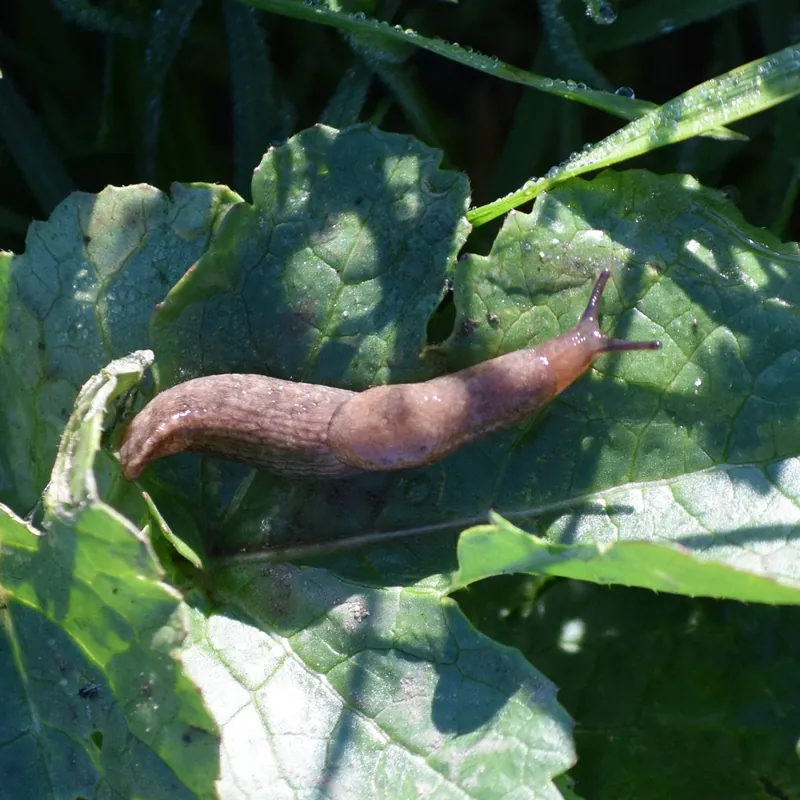
Short answer: Slugs and snails are soft-bodied mollusks that feed at night and hide in damp, shady places by day. The giveaway is ragged holes in leaves or fruit along with shiny, silvery slime trails. Go out after dark with a flashlight and pick them off, and keep tender seedlings in pots until they're big enough to cope.
What it looks like
- Silvery, shiny slime trails on leaves, paths and pots
- Irregular holes with smooth edges in leaves and petals
- Seedlings eaten off at soil level overnight
- Holes and hollows in ripening strawberries and other low fruit
- Damage that's worst after rain or on damp, cloudy days
- Slugs and snails on the plants after dark, or hiding under pots and boards by day
Is it slugs and snails or something else?
| Could also be | How to tell |
|---|---|
| Caterpillars | Caterpillars also chew holes, but they leave small dark droppings on or under the leaves and no slime. You can usually find them on the plant by day. |
| Earwigs | Earwigs feed at night too and leave ragged holes, but no slime trails. Check with a flashlight: earwigs are brown insects with pincers at the tail end. |
| Flea beetles | Flea beetles make many tiny, round holes, like a shotgun blast, mostly on cabbage-family seedlings. Slug holes are larger and ragged, with slime nearby. |
Why it happens
Slugs and snails need moisture. They hide by day under boards, stones, pots, dense ground cover and garden debris, then come out to feed at night and after rain. A damp, sheltered garden suits them well.
Many slugs spend most of their life underground and only come up to feed. They go for soft, young growth first, so seedlings and freshly planted out young plants are hit hardest. Larger, tougher plants cope with a few holes.
Some plants are favorites: lettuce, beans, hostas, dahlias, strawberries and most vegetable seedlings. Plants with tough or aromatic leaves, like lavender, rosemary and sage, are bothered much less.
How to fix it
- Go out after dark and pick them off. On a mild, damp evening, take a flashlight and a container and look over the plants they've been eating. Pick off every slug and snail you find, and check under leaves, pots and boards nearby. A few nights in a row makes a real difference.
- Raise seedlings in pots until they're bigger. Start beans, lettuce, squash and other favorites in pots and plant them out once they're sturdy young plants. Seedlings that come up in the open bed can be eaten overnight; bigger plants usually outgrow a few holes.
- Sink beer traps into the soil. Bury a jar or cup partly filled with beer near the plants you want to protect, with the rim level with or just above the soil. Slugs crawl in and drown. Empty and refill them every morning or two.
- Take away their daytime hiding places. Clear boards, stones, debris and weedy patches near your beds. You can also lay a board on the soil as a trap and scrape off the slugs hiding under it each morning.
- Welcome the animals that eat them. Frogs, toads, birds and ground beetles all eat slugs and snails. A shady corner with a log pile or a small pond helps them settle in, and so does avoiding pesticides that harm them.
Watch out: Most slugs live underground and only come up to feed. Plant out sturdy young plants instead of tiny seedlings.
How to prevent it
- Grow young plants on in pots and plant them out once they're sturdy.
- Cover newly planted out seedlings with cloches until they toughen up.
- Keep beds clear of boards, stones and debris where slugs hide by day.
- Where slugs are bad, favor plants they mostly leave alone, such as lavender, rosemary, sage and ferns.
- Fit copper bands around pots and raised beds as a barrier.
Plants it often affects
- Strawberry hollows eaten into ripening fruit, often with slime nearby
- Lettuce ragged holes and seedlings eaten off overnight
- Hosta leaves riddled with holes by early summer
- Dahlia new shoots eaten as they come up in spring
- Bean young seedlings grazed down to the stem
- Potato some slugs that live underground tunnel into the tubers
Questions people ask
Do beer traps work for slugs?
They catch slugs that live near the trap, so they help most in a small bed or around a few favorite plants. Bury the container near the plants, empty it every morning or two and use them together with evening hand-picking.
What time of day do slugs come out?
Mostly after dark, and on damp, cloudy days. Mild, wet evenings are the best time to look for them with a flashlight. On sunny days they hide in shade under pots, boards and dense plants.
Does copper keep slugs and snails away?
Copper bands and barriers can keep them off pots, raised beds and tree trunks. Bury the edge of a copper strip in the soil so they can't crawl underneath, and make sure no leaves hang over it to give them a bridge.

Not sure it's slugs and snails?
Take a photo in Liana and the health check names the problem and tells you what to do first. Liana also reminds you to check the soil, so watering mistakes don't start. Get Liana for iPhone.
Sources
- UC Statewide IPM Program, Snails and Slugs
- Royal Horticultural Society, Slugs and snails