Fire blight: how to spot it and cut it out
Fire blight is a bacterial disease that makes blossoms and young shoots wilt and turn black or brown, as if scorched by fire. The tips often bend over into a hook. It attacks apples, pears, quince, hawthorn, cotoneaster and firethorn, and spreads fastest in warm, wet weather at flowering time.
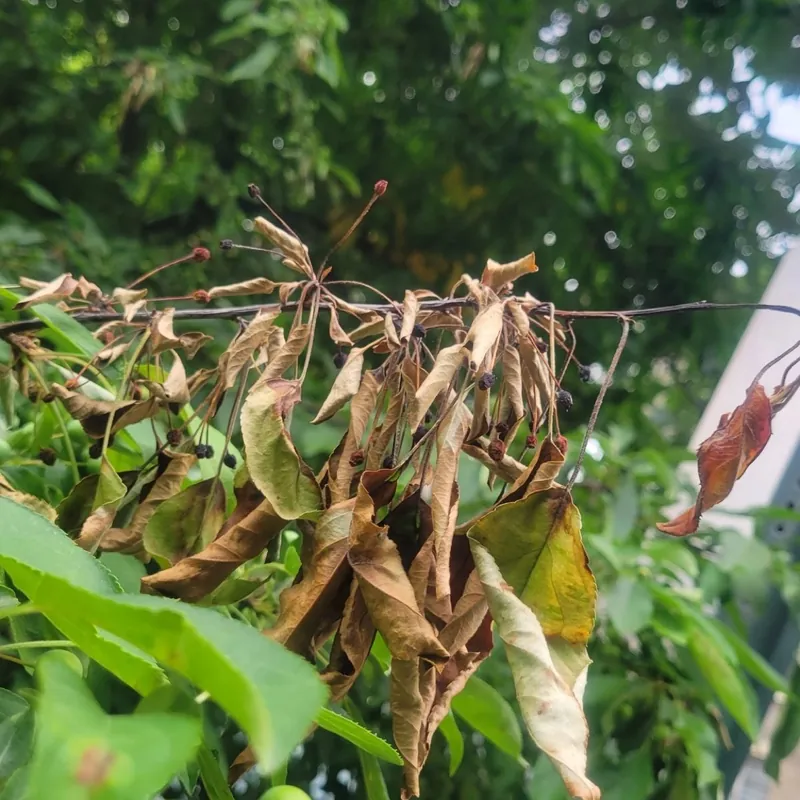
Short answer: Fire blight is a bacterial infection of apples, pears and their relatives. The giveaway is blackened or brown shoots with the tip bent into a shepherd's crook and dead leaves that cling to the branch. Cut infected shoots out 1 to 2 feet below the damage, disinfect your pruners after every cut, and throw the prunings away.
What it looks like
- Blossoms that wilt and die at flowering time
- Young shoots that turn black (on pears) or brown (on apples) and look scorched
- Shoot tips that bend over into a hook, like a shepherd's crook
- Dead leaves and shriveled fruit that stay stuck to the branches
- Drops of creamy or tan ooze on shoots and bark in wet weather
- Sunken, dark, dead patches of bark (cankers), often where an infected shoot meets a bigger branch
- Reddish brown streaks in the wood when you peel back the bark
Is it fire blight or something else?
| Could also be | How to tell |
|---|---|
| Bacterial canker | Bacterial canker mostly hits cherries, plums and other stone fruit, with gummy ooze and holes in the leaves. Fire blight sticks to apples, pears and their relatives and leaves hooked, scorched shoot tips. |
| Cold damage | Frost browns blossoms and soft shoots all at once after a cold night, and the damage stops there. Fire blight keeps moving down the shoot into older wood over the following days and weeks. |
Why it happens
Fire blight is caused by a bacterium that spends the winter at the edges of old cankers. In spring it oozes out, and splashing rain, insects and bees visiting flowers carry it into open blossoms. From there it moves down into the shoots.
Warm, humid or rainy weather during flowering is when it spreads most, especially with days in the 70s to mid 80s and mild nights. Hail and insect bites open wounds that let it into tender shoots.
Soft, fast-growing shoots are the easiest to infect. Heavy nitrogen feeding and hard pruning both push out that kind of growth, and late, stray blossoms that open after the main flowering give the bacteria another way in.
How to fix it
- Cut out infected shoots well into healthy wood. Cut about 1 foot below the lowest visible damage on small shoots and about 2 feet below on larger branches, back to a branch junction. Do it on a dry day.
- Disinfect your pruners after every cut. Wipe the blades with rubbing alcohol or a household disinfectant after each cut, so you don't carry the bacteria into the next branch.
- Bag the prunings for the trash. Put every cut shoot straight into a bag and throw it away. Never compost it or leave it under the tree.
- Prune in dry weather, ideally in winter. Do your main cleanup in winter, when the bacteria aren't spreading and cankers are easy to see. During the season, cut out fast-moving infections as soon as you spot them, but only when the weather is dry.
- Pick off late blossoms. Remove stray blossoms that open after the main flowering. They are an easy way in for the bacteria later in the season.
Watch out: Heavy nitrogen feeding pushes out soft, fast shoots, and that's the growth fire blight infects most easily. Feed fruit trees lightly.
How to prevent it
- Feed fruit trees lightly and avoid hard pruning that triggers lots of soft growth
- Choose less susceptible varieties when planting, since most pears and many popular apples are very prone
- Check trees often during and after flowering in warm, wet weather
- Keep sprinkler water off the blossoms and leaves
- Remove old cankers and dead shoots each winter
Plants it often affects
- Pear very prone; blossoms and shoots turn black
- Quince very prone, with scorched shoots and blossoms
- Apple shoots and blossoms turn brown and hook over
- Crabapple often damaged, with dead shoot tips and blossoms
- Firethorn often damaged; blossoms and shoots brown and die
- Cotoneaster can get dead, scorched shoots
Questions people ask
Can a tree recover from fire blight?
Yes, if you catch it in the shoots and cut it out well into healthy wood. Infections that reach the trunk or main limbs are much more serious, since cankers there can girdle the tree. Very prone trees may need cleanup every year.
Is fire blight a fungus?
No, it is caused by bacteria. That's why the shoots ooze in wet weather and why it spreads on tools, in splashing rain and on insects. The same cleanup applies: cut it out, keep tools clean and get rid of the prunings.
When is the best time to prune out fire blight?
Winter is best for a thorough cleanup, when the tree is bare and the bacteria aren't active. In spring and summer, cut out new infections as soon as you see them, in dry weather, and clean your pruners after every cut.

Not sure it's fire blight?
Take a photo in Liana and the health check names the problem and tells you what to do first. Liana also reminds you to check the soil, so watering mistakes don't start. Get Liana for iPhone.
Sources
- University of California IPM, Fire Blight
- Royal Horticultural Society, Fireblight