Crown rot in plants: how to spot it and save what you can
Crown rot is a decay at the base of a plant, where the stems meet the soil. That spot turns soft, brown and mushy until the plant wilts or falls over. It is common in African violets, succulents and peace lilies, and in garden plants set too deep, and it nearly always starts with a crown that stays wet.
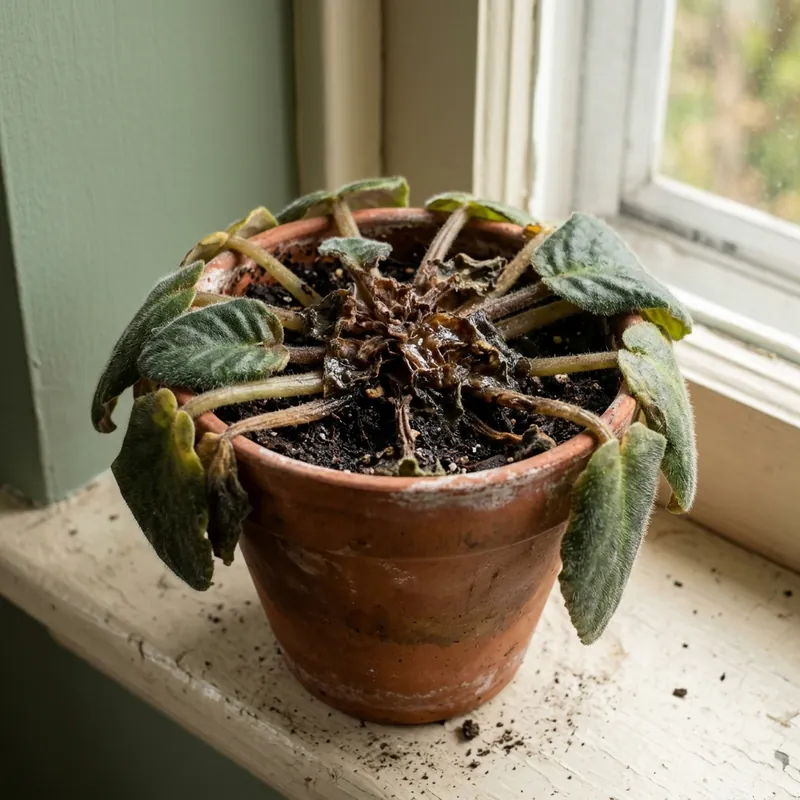
Short answer: Crown rot is a soft, brown decay at the base of the plant, caused by soil fungi and water molds when the crown stays wet. Leaves droop and yellow even though the soil is moist. Check the crown today, cut away soft tissue with a clean blade, and repot in fresh, free-draining mix with the crown level with the soil.
What it looks like
- A soft, brown or black, mushy base where the stems meet the soil
- Drooping leaves that look thirsty even though the soil is damp
- Lower leaves that turn yellow and mushy, then fall off
- A plant that leans, wobbles or falls over at soil level
- Stems that break off easily at the base
- In rosette plants such as African violets, a center that goes dark and water-soaked
Is it crown rot or something else?
| Could also be | How to tell |
|---|---|
| Root rot | Root rot starts below ground, so the base may stay firm at first while the roots turn brown and mushy. Crown rot shows right at the soil line. The two often happen together. |
| Underwatering | A thirsty plant droops in dry soil and perks up within hours of a good drink. With crown rot the soil is damp and the base feels soft. |
| Bacterial soft rot | Bacterial soft rot turns stems and leaves slimy and wet, often with a foul smell, and the plant collapses within days. The treatment is similar: cut away all soft tissue with a clean blade. |
Why it happens
Crown rot is caused by common soil fungi and water molds such as Phytophthora, Pythium, Rhizoctonia and Fusarium. They are in most soils and potting mixes, and they become a problem when the crown stays wet for long stretches.
Overwatering, heavy mix that holds water, pots without drainage or a pot standing in a saucer of water all invite it. So do planting too deep, which buries the crown, and piling mulch against stems outdoors. Pouring water into the center of rosette plants such as African violets leaves it sitting right where the rot starts.
How to fix it
- Check the crown today. Ease the plant out of its pot and look at the base. Cut away all soft, brown tissue with a clean, sharp blade until you reach firm, healthy tissue, and wipe the blade with rubbing alcohol between cuts.
- Take cuttings if the whole crown is mushy. If the rot has gone right through the base, save what you can. Root healthy leaves or offsets in fresh mix, as you would with African violets and succulents, and throw the rest of the plant away.
- Repot in fresh, free-draining mix. Use a clean pot with drainage holes and fresh mix, with extra perlite for houseplants. Set the crown level with the soil surface, never below it.
- Water the soil at the edge of the pot. Pour water around the rim, never into the center of the plant. Water only when the top of the soil feels dry, and empty the saucer afterward.
Watch out: Planting too deep or piling mulch against the stems keeps the crown wet. Outdoors, keep mulch a hand's width away from the base of plants.
How to prevent it
- Check the soil before watering and let the top dry first
- Use a light, well-draining mix and pots with holes
- Plant at the same depth the plant grew before, with the crown at soil level
- Water houseplants at the rim and keep water out of rosettes
- Don't let pots stand in saucers of water
Plants it often affects
- African violet the center rots when water sits in the crown or the mix stays soggy
- Peace lily the base of the stems goes soft when the pot stays waterlogged
- Echeveria the base of the rosette turns black and mushy in wet mix
Questions people ask
Can a plant recover from crown rot?
If only a small part of the crown is soft and you cut it away, repot and water carefully, many plants recover. When the whole crown is mushy the plant usually dies, so take cuttings or offsets from the healthy parts.
What causes crown rot in African violets?
Mostly soil that stays too wet, water poured into the crown, a heavy mix or a pot standing in water. Water at the edge when the soil feels dry to the touch, use a light mix with perlite and let the pot drain fully.
Is crown rot the same as root rot?
They are closely related and caused by the same kinds of soil organisms. Root rot starts in the roots, while crown rot attacks the base of the stems at soil level. A plant often has both.

Not sure it's crown rot?
Take a photo in Liana and the health check names the problem and tells you what to do first. Liana also reminds you to check the soil, so watering mistakes don't start. Get Liana for iPhone.
Sources
- University of California IPM, Root, Stem, and Crown Rots
- Iowa State University Extension and Outreach, Root and Crown Rot of African Violets