Bacterial soft rot: how to spot it and stop it spreading
Bacterial soft rot turns stems, leaves, bulbs or tubers soft, slimy and wet, often with a foul smell. Affected parts can collapse within days. The bacteria get in through wounds when conditions are warm and wet, and succulents, snake plants and potatoes are frequent victims.
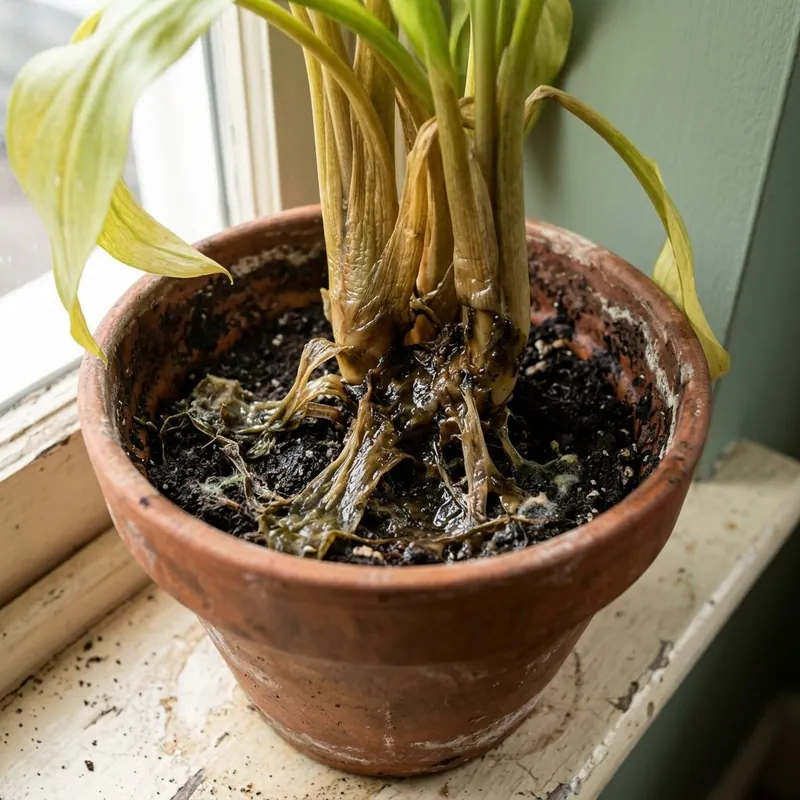
Short answer: Bacterial soft rot is an infection that breaks plant tissue down into a wet, mushy mass that usually smells bad. It often starts at a wound or where water sits in a leaf base or crown. Cut away all soft tissue with a sterilized blade, let the cuts dry before watering again, and throw the plant away if the base or main stem is mushy.
What it looks like
- Water-soaked spots that grow, sink and turn soft
- Tissue that turns mushy and slimy, from cream to brown or black inside
- A strong, unpleasant smell from the rotting part
- Liquid seeping from the soft areas
- Leaves, stems or whole rosettes that collapse within a few days
- Rot that starts at the soil line, at the base of leaves or at a cut or broken spot
- Bulbs and tubers that turn soft and wet in storage
Is it bacterial soft rot or something else?
| Could also be | How to tell |
|---|---|
| Root rot | Root rot starts below the soil, so the roots are brown and mushy while the plant above droops slowly. Soft rot can start anywhere there is a wound, turns tissue slimy within days and usually smells much stronger. |
| Overwatering | An overwatered succulent gets soft, swollen or yellow leaves, but the stem stays firm and nothing smells. Soft rot leaves slimy, collapsing tissue with a foul odor. |
| Cold damage | Cold-damaged leaves turn glassy and mushy all at once after a chill and stop changing once the plant is warm. Soft rot keeps spreading into healthy tissue. |
Why it happens
Soft rot is caused by several kinds of bacteria. They break down the material that holds plant cells together, so the tissue simply falls apart. Fleshy parts such as succulent leaves, stems, bulbs and tubers are the most at risk, while woody tissue resists it.
The bacteria enter through wounds from tools, insects, hail or rough handling, and through natural openings. Warm, wet conditions favor them, and so does water sitting in leaf bases, crowns or soggy potting mix where roots run short of air.
They travel in water, on knives and hands, on insects and in old plant debris and soil. Handling plants while they are wet, or cutting through rot and then into healthy tissue with the same blade, spreads them quickly.
How to fix it
- Cut away all soft tissue with a sterilized blade. Use a clean, sharp knife and cut back into firm, healthy tissue, removing every soft or discolored part. Sterilize the blade with rubbing alcohol after each cut, and bag the removed tissue for the trash.
- Let the cuts dry before watering again. Leave the cut surfaces open to the air until they are dry and sealed over. Keep the plant somewhere bright and airy, out of direct hot sun, and only water again once the cuts have dried and the soil is dry.
- Keep water out of leaf bases and crowns. Water the soil around the edge of the pot, never into the center of a rosette or between the leaves. Empty saucers and cachepots after watering so the pot doesn't sit in water.
- Throw the plant away if the base or main stem is mushy. When the rot has reached the base or main stem, the plant can't be saved. If a firm, clean top or a few healthy leaves remain, cut them off with a sterilized blade to root as new plants, then bag the rest, soil included.
- Clean up after yourself. Scrub the pot, wipe down the spot where it stood and disinfect your tools. Wash your hands before touching other plants.
Watch out: Soft rot spreads in water and on blades. Sterilize your knife after every cut, or you carry it into healthy tissue.
How to prevent it
- Use a well-drained potting mix and water only when the soil has dried out
- Handle plants gently, avoid breaking leaves, and don't handle them while they are wet
- Clean knives and pruners before and after working on plants
- Check new plants and stored bulbs or tubers for soft spots before bringing them in
- Keep fungus gnats and other insects that wound plants under control
Plants it often affects
- Snake plant leaves turn mushy and smelly at the soil line and fall over
- Aloe leaves and the base of the rosette go soft and dark
- Jade plant stems and leaves turn black and slimy, often after a wound
- Echeveria the rosette can collapse into mush from the center or base
- Sedum stems and fleshy leaves decay and blacken
- Potato tubers rot into a wet, smelly mass, often in storage
Questions people ask
Can a plant recover from bacterial soft rot?
Tissue that is already infected can't be treated, so it has to be cut away. If the rot is limited to a few leaves or the tip of a stem, removing it with a sterilized blade and keeping the plant dry can save the rest. Once the base or main stem is soft, it is better to take healthy cuttings and throw the plant away.
Why does soft rot smell so bad?
As the bacteria break down the plant's tissue, the rotting mass gives off a strong, unpleasant odor. A foul smell together with slimy, collapsing tissue is one of the clearest signs that you're dealing with soft rot.
Can bacterial soft rot spread to my other plants?
Yes. The bacteria move in water, on knives and hands, on insects and in debris. Keep the affected plant apart, handle it last, and clean your tools and hands before touching healthy plants.

Not sure it's bacterial soft rot?
Take a photo in Liana and the health check names the problem and tells you what to do first. Liana also reminds you to check the soil, so watering mistakes don't start. Get Liana for iPhone.
Sources
- University of Wisconsin-Madison Extension, Bacterial Soft Rot
- NC State Extension, Dickeya Dianthicola in the Production of Herbaceous Ornamentals