Damping off in seedlings: why they flop and how to stop it
Damping off is the sudden collapse of young seedlings, which flop over with stems gone thin and dark at soil level. Fungi and water molds in soil cause it, and they thrive in cold, wet, crowded trays. Collapsed seedlings can't be saved, so the cure lies in clean pots, fresh mix and better conditions for the next sowing.
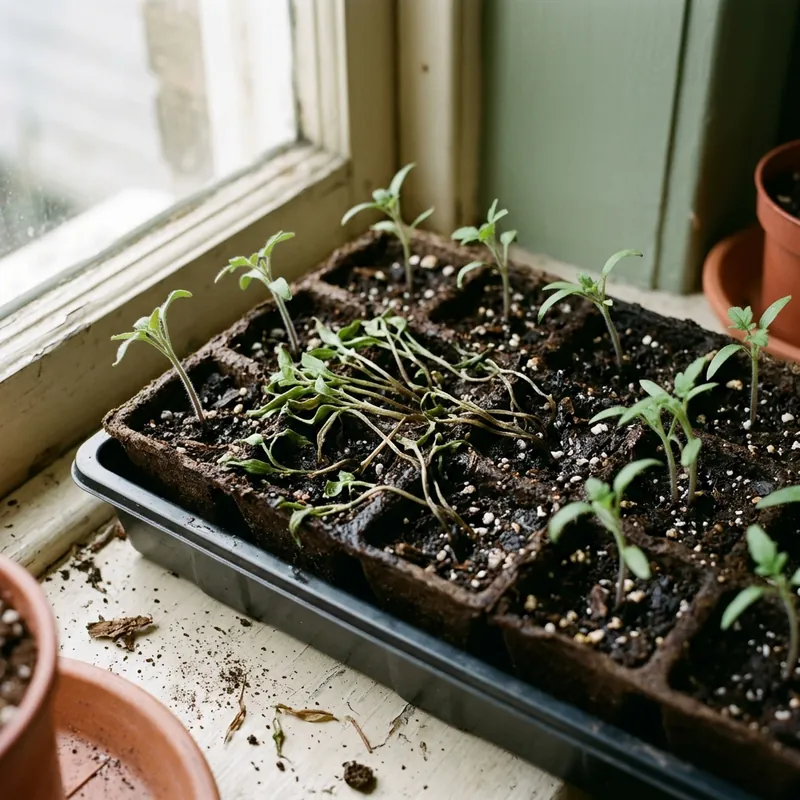
Short answer: Damping off is a seedling disease caused by soil organisms such as Pythium and Rhizoctonia. Seedlings suddenly fall over, their stems pinched, thin and dark right at the soil line, often in patches that spread across a tray. Throw out the collapsed seedlings and their mix, then sow again thinly in clean pots with fresh mix, with warmth, good light and moving air.
What it looks like
- Seedlings that suddenly fall over as if cut, often overnight
- Stems that are thin, dark and pinched or water-soaked at soil level
- Bare patches in a tray that spread outward day by day
- Seeds that never come up because they rotted in the mix
- White, cobweb-like mold on the mix or on fallen seedlings
- Older seedlings that survive but stay small, with brown roots
Is it damping off or something else?
| Could also be | How to tell |
|---|---|
| Underwatering | Thirsty seedlings wilt across the whole tray at once and stand up again within an hour of watering. Damped-off seedlings stay down, and their stems are pinched and dark at the base. |
| Too little light | Seedlings in low light grow tall, pale and spindly and may lean or flop, but their stems stay green all the way down. Damping off leaves a dark, collapsed spot right at soil level. |
| Cutworms | Cutworms chew through outdoor seedlings at soil level and leave the top lying beside the stump, with a fat caterpillar curled in the soil nearby. Damping off rots the stem, mostly in trays indoors. |
Why it happens
Damping off is caused by several common soil organisms: water molds such as Pythium and Phytophthora, and fungi such as Rhizoctonia and Fusarium. They live in garden soil, used potting mix and on dirty pots, trays and tools, and the soft stems of young seedlings are easy for them to invade.
Cold, wet and crowded conditions tip the balance their way. Soggy mix, cool soil that slows germination, low light, still air and seeds sown thickly all give them moisture and time to spread from seedling to seedling. Once seedlings have grown a few true leaves and their stems have toughened, they are much less at risk.
How to fix it
- Throw out collapsed seedlings and their mix today. Lift the fallen seedlings together with the mix around them and put them in the trash. Seedlings that have damped off can't recover, and the patch keeps spreading if you leave it.
- Sow again in clean pots with fresh mix. Use new pots and trays, or scrub old ones clean in hot soapy water and let them dry. Fill them with fresh seed-starting mix from a new bag, never garden soil.
- Sow thinly and give warmth, light and air. Space the seeds so seedlings won't touch. Keep the tray warm, give it bright light as soon as shoots appear, and open the lid or vents every day so the air moves.
- Water from below, only when the surface feels dry. Stand the tray in a shallow dish of water until the surface just darkens, then lift it out to drain. Wait until the top feels dry before you water again, and skip misting the surface over and over.
Watch out: Water from a rain barrel often carries these fungi, and old pots and trays hold them too. Use tap water for seedlings and wash trays before you sow.
How to prevent it
- Start seeds in fresh, sterile seed-starting mix
- Use clean pots, trays and tools every time
- Sow thinly, and thin out crowded seedlings early
- Keep the mix evenly moist, never soggy
- If you do use rainwater, keep the barrel covered and clean it out regularly
Plants it often affects
- Tomato indoor seedlings in early spring collapse in patches
- Pepper slow to sprout in cool mix, so seeds have longer to rot
- Basil thickly sown pots flop over in spreading circles
- Lettuce crowded seedlings in cool, damp trays fall over at the base
- Bean seeds can rot in cold, wet soil before they come up
Questions people ask
Can seedlings with damping off be saved?
No. Once the stem has collapsed at the base, the seedling won't recover. Remove it with its mix and protect the healthy ones with better air, light and watering.
Does damping off stay in the soil?
Yes. The organisms live in garden soil, used potting mix and on dirty pots. That's why fresh mix and clean trays matter so much indoors. Outdoors, sow when the soil is warm enough for seeds to sprout quickly.
Why did my seedlings fall over overnight?
If the stems are pinched and dark at the soil line, damping off is the likely cause. If the stems are green and the seedlings stand up after watering, they were thirsty. Pale, spindly seedlings leaning toward a window need more light.

Not sure it's damping off?
Take a photo in Liana and the health check names the problem and tells you what to do first. Liana also reminds you to check the soil, so watering mistakes don't start. Get Liana for iPhone.
Sources
- Royal Horticultural Society, Damping off
- Penn State Extension, Damping Off