Cutworms: how to find them and protect your seedlings
Cutworms are fat gray, brown or green caterpillars that hide in the soil by day and come up to feed at night. They cut seedlings and young transplants off at soil level, often several in one night, and some chew holes in roots and tubers. They're most damaging in spring, when plants are small.
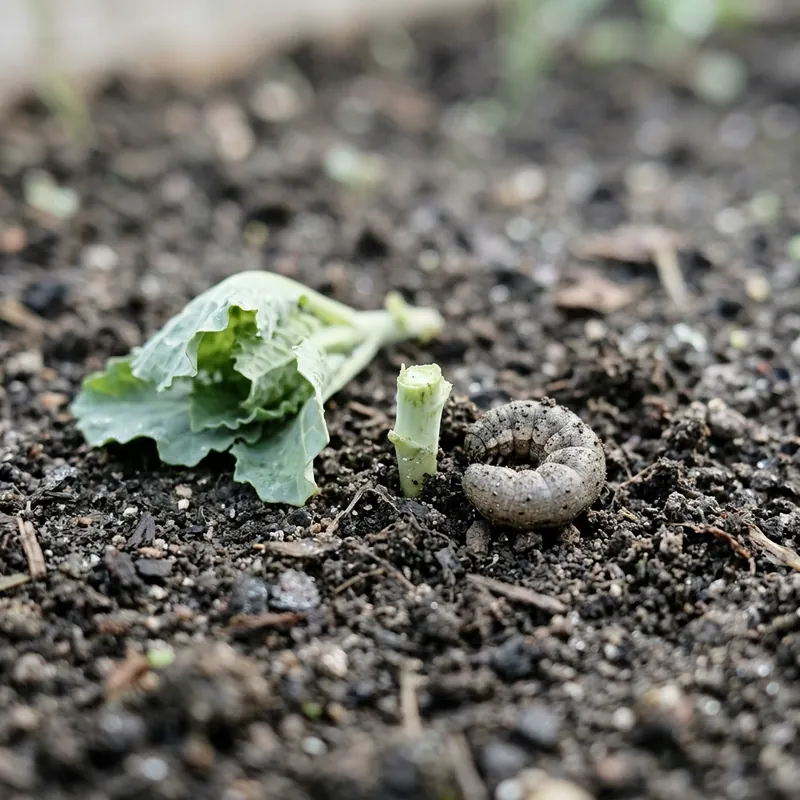
Short answer: Cutworms are moth caterpillars that live just under the soil and feed at night. The giveaway is a young plant lying cut through at the base in the morning, with no slime trail, and a curled caterpillar in the soil beside it. Dig gently around the stump to find it, then put collars around the rest of your young plants.
What it looks like
- Seedlings or transplants cut clean through at soil level overnight, the top lying beside the stump
- Plump gray, brown or green caterpillars curled into a tight C shape just under the soil nearby
- No slime trails around the damage
- A young plant that suddenly wilts, with its stem chewed around the base
- Holes chewed in potatoes, lettuce roots and other root crops
- Damage that moves along a row, a plant or two each night
Is it cutworms or something else?
| Could also be | How to tell |
|---|---|
| Slugs and snails | Slugs also attack seedlings at night, but they leave silvery slime trails and ragged holes in the leaves. Cutworms leave no slime, cut the stem cleanly and curl up in the soil close by. |
| Damping off | With damping off, seedlings flop over because the stem turns thin and dark at soil level, often in spreading patches of a tray. Cutworm damage is a clean cut through a healthy stem, usually outdoors. |
| Animal damage | Rabbits leave clean, slanted cuts and usually eat the tops. Cutworms often leave the cut plant lying where it fell, right at soil level. |
Why it happens
Cutworms are the caterpillars of several night-flying moths. The moths lay eggs on weeds and in dense, overgrown areas, and the caterpillars live in shallow burrows in the soil or under debris, coming up at night to feed.
Young caterpillars can spend the winter in the soil and start feeding again in spring, just as seedlings and transplants go out. That's why damage is worst in spring; cutworms are around all summer but rarely do much harm once plants are bigger.
Beds that were weedy, grassy or newly dug from lawn often have more of them.
How to fix it
- Dig around cut plants and pick out the caterpillars. During the day, gently scratch away the soil and debris around a cut plant, within a few inches of the stem. The caterpillar is usually curled up just under the surface. Pick it out and destroy it, then check the next few plants along the row.
- Check by flashlight at night. Go out after dark with a flashlight and look around the base of young plants. Pick off any caterpillars you find feeding. This works best while numbers are low.
- Put a collar around young plants. Wrap a strip of stiff cardboard, a cardboard tube or a cut plastic bottle around each stem. Push it partway into the soil and leave a few inches above ground, so cutworms can't reach the stem.
- Keep beds weeded and water in nematodes. Clear weeds and plant debris where moths lay eggs and caterpillars hide. In warm weather, water beneficial nematodes into moist soil around affected plants, following the packet directions.
- Turn the soil before planting. Dig or till beds in autumn and again before spring planting. It kills some caterpillars and brings others up where birds can find them.
Watch out: A seedling lying cut through at the base looks like slug damage. Slugs leave slime trails; cutworms leave none and curl up in the soil nearby.
How to prevent it
- Weed beds and their edges in spring, before you plant out.
- Put collars around tomato, pepper and cabbage transplants as you plant them.
- Check new transplants each morning for the first couple of weeks after planting.
- Turn the soil in autumn and spring to expose caterpillars to birds.
Plants it often affects
- Tomato new transplants cut off at the soil line
- Pepper young plants toppled overnight
- Cabbage transplants cut through at the base
- Lettuce seedlings cut off and roots chewed
- Potato holes chewed into the tubers
Questions people ask
What is cutting my seedlings off at the base overnight?
If there's no slime trail and the stem is cut cleanly at soil level, it's most likely a cutworm. Scratch away the soil around the stump in the morning and you'll usually find a fat caterpillar curled into a C shape.
Do cutworm collars really work?
Yes, for cutworms that move in from around the bed. The collar has to go partway into the soil so they can't burrow under it. It won't help against a caterpillar already in the soil inside the collar, so check before you set it.
When are cutworms worst?
In spring, when seedlings and new transplants have soft, thin stems. Cutworms are around all summer, but bigger plants usually shrug them off.

Not sure it's cutworms?
Take a photo in Liana and the health check names the problem and tells you what to do first. Liana also reminds you to check the soil, so watering mistakes don't start. Get Liana for iPhone.
Sources
- Virginia Cooperative Extension, Cutworms in the Home Garden
- Royal Horticultural Society, Cutworms