Powdery mildew on plants: how to spot it and stop it
Powdery mildew on plants looks like someone dusted the leaves with flour. It is a fungus that grows on the leaf surface, and wind carries its spores from leaf to leaf and plant to plant. Badly covered leaves yellow and drop early, and the plant loses strength the longer it goes on.
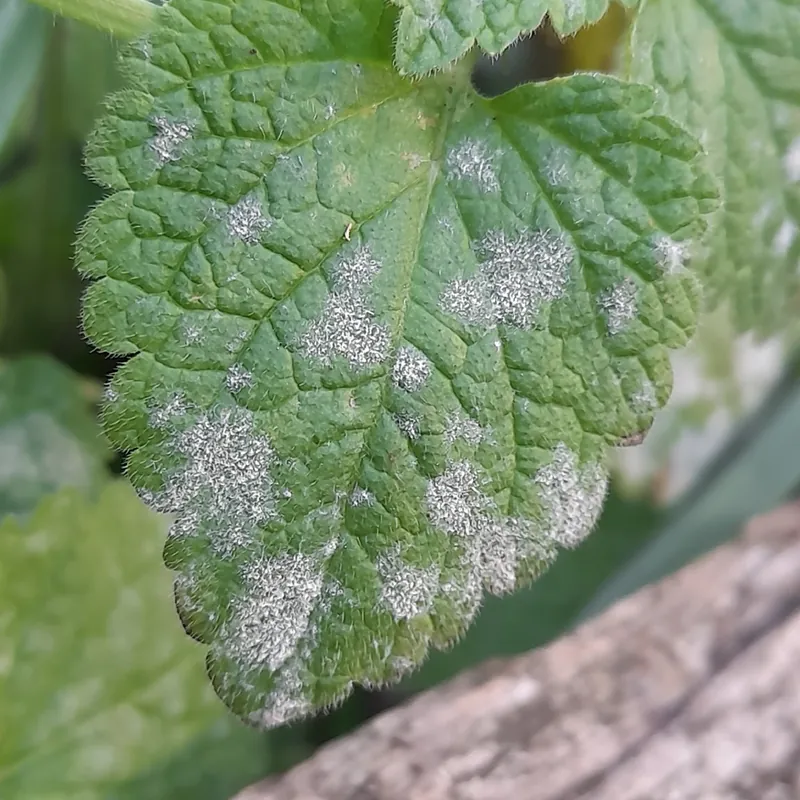
Short answer: Powdery mildew is a fungal disease that leaves a white or gray powdery coating on leaves, stems and sometimes flowers. The giveaway is that the powder sits on top of the leaf and smudges off when you rub it. Start by getting more air moving around the plant and removing the worst leaves, then keep water on the soil instead of the foliage.
What it looks like
- White or pale gray powdery patches on the upper side of leaves, often starting as small round spots
- A coating that wipes off with a finger, leaving the leaf underneath pale or slightly yellow
- Patches that join up until whole leaves look dusted
- New shoots and buds that come out twisted, small or distorted
- Leaves that turn yellow or brown and drop early
- Powder on flower buds and stems as well as leaves on badly affected plants
Is it powdery mildew or something else?
| Could also be | How to tell |
|---|---|
| Downy mildew | Downy mildew grows mostly on the underside of leaves and favors cool, very wet weather. Powdery mildew sits on the upper surface and does fine in dry weather. |
| Mealybugs | Mealybugs form white, cottony clumps in leaf joints and along stems, and the clumps are small insects you can pick off. Powdery mildew is a thin, flat dust spread across the leaf itself. |
| Mineral residue from hard water | Dried water spots leave white rings or crusty marks where droplets sat, and they don't grow or spread. Powdery mildew keeps spreading to new leaves over days. |
Why it happens
Powdery mildew is caused by a group of fungi that live on the outside of leaves. Their spores blow in on air currents, and unlike most leaf fungi they can infect a leaf without any water sitting on it. That is why it often shows up in dry summers when other diseases stay away.
Still, crowded air is what it likes best. Plants packed close together, a corner with no air movement, shade and moderate temperatures (roughly 60 to 80°F) all invite it. Lots of soft, leafy growth from too much nitrogen fertilizer makes plants more prone as well.
There are many kinds of powdery mildew fungi, and each one infects its own range of plants. That means a bad year on one plant in your garden doesn't always mean every plant will get it, but plants of the same kind growing close together pass it around easily.
How to fix it
- Get air moving around the plant today. Move a houseplant out of a crowded corner or away from other plants. Outdoors, thin out crowded stems inside the plant so air can pass through the middle.
- Remove the worst leaves. Snip off leaves that are mostly white and put them in a bag in the trash. Leave the lightly marked ones for now so the plant keeps enough leaves to feed itself.
- Keep water off the leaves. Water at the base of the plant, straight onto the soil. If leaves do get wet outdoors, water early in the day so they dry quickly.
- Give plants more space. Spread pots out so their leaves don't touch. In the garden, space new plants further apart and choose a sunnier spot for plants that get mildew every year.
- Go easy on fertilizer. Hold off on feeding while the plant is affected. Heavy feeding pushes out soft new growth that the fungus finds easy to infect.
How to prevent it
- Grow mildew-prone plants in full sun where they like it, with room around each one
- Choose varieties labeled as resistant to powdery mildew, especially for roses, cucumbers and squash
- Water the soil, not the leaves
- Prune crowded growth so air can move through the plant
- Check the tops of leaves every week or so in warm, still weather and remove the first spotted leaves you find
Plants it often affects
- Rose white powder on young leaves, buds and stems, often in shady or crowded beds
- Cucumber very prone; older leaves get covered and die back by late summer
- Hydrangea bigleaf hydrangea is the one most often hit, with dusty patches on the leaves
- Strawberry leaves curl upward and show a pale coating underneath and on top
- Sunflower lower leaves turn dusty white later in the season
- Bean powdery patches on leaves and pods in warm, dry spells
Questions people ask
Is powdery mildew harmful to plants?
Yes, over time. Covered leaves can't make as much food, and they die and drop earlier than healthy ones. New growth may come out distorted, and it can be serious on woody plants such as roses. Vegetables like cucumbers can give a smaller harvest.
Can I compost leaves with powdery mildew?
A well-run, hot compost pile should kill the spores. If your pile is small or never heats up, put the leaves in the trash instead so you don't spread the fungus around the garden.
Does powdery mildew spread to other plants?
Yes, the wind carries the spores to new plants. Each kind of powdery mildew infects its own range of plants, so plants of the same kind are most at risk. Keep an affected pot away from similar plants until it is clear.

Not sure it's powdery mildew?
Take a photo in Liana and the health check names the problem and tells you what to do first. Liana also reminds you to check the soil, so watering mistakes don't start. Get Liana for iPhone.
Sources
- University of California IPM, Powdery Mildew on Ornamentals
- University of California IPM, Powdery Mildew on Vegetables