Plant not getting enough light: signs and what to do
A plant not getting enough light changes slowly, so it is easy to miss until the stems look long and bare. Light is the plant's food supply, and without enough of it every new leaf comes out a little smaller and paler than the last. Most plants fill out again once they get a brighter spot.
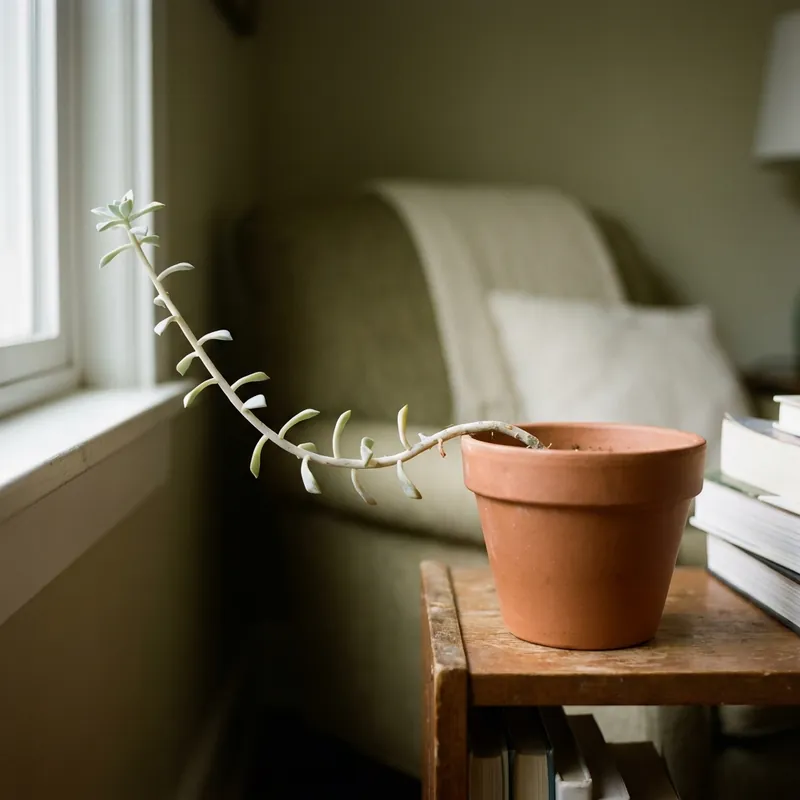
Short answer: When a plant is not getting enough light, its stems stretch toward the window, the gaps between leaves grow wider and new leaves come out smaller than the old ones. Older leaves may yellow and drop, and flowering plants stop blooming. Move it closer to a window or to a brighter one, then cut back the stretched growth so it fills out again.
What it looks like
- Long, thin stems that lean or reach toward the window
- Wide gaps of bare stem between one leaf and the next
- New leaves smaller than the older ones
- Paler or lighter green leaves than normal
- Lower, older leaves turning yellow and falling
- Flowering plants that stop producing buds
- Slow growth, and soil that stays damp for a long time after watering
Is it not enough light or something else?
| Could also be | How to tell |
|---|---|
| Overwatering | Both can yellow the lower leaves. With overwatering the soil stays wet and the plant often looks limp, while a light-starved plant mostly shows stretched stems and small new leaves. |
| Natural leaf drop | With normal ageing only one or two of the oldest leaves yellow, and new leaves still arrive at full size and close together. Stretching and shrinking new growth point to light. |
| Nutrient deficiency | A hungry plant can be pale and slow too, but its stems stay compact. It is more likely in a bright spot where the plant has sat in the same soil for years. |
Why it happens
Light fades quickly as you move away from a window. Nebraska Extension puts an east or west window at about 60 percent of the light of a south window, and a north window at about 20 percent. A spot that looks bright to your eyes across the room can be dim for a plant.
The problem often shows up in winter, when days are short and the sun is lower. A plant that did well in an east window in summer may need a south window in winter. Sun-loving plants such as succulents stretch quickly when they are kept indoors.
In low light a plant grows slowly and uses less water and fertilizer. Soil that stays wet for days and extra feeding both add stress to a plant that is already struggling.
How to fix it
- Move it to a brighter spot. Bring the plant closer to its window, or to a brighter window such as one facing south or west. Make the change gradually if it is going into direct sun for the first time, since a sudden jump can scorch leaves.
- Turn the pot a quarter turn each week. Plants grow toward the light, so a pot that never moves ends up lopsided. A small turn every week keeps growth even on all sides.
- Cut back the leggy growth. Stretched stems will not shorten again. Trim them back just above a leaf with clean scissors, and the plant will branch out from there and grow bushier in the better light.
- Water less while light is low. A plant in low light uses less water, so check the soil with your finger and only water when it has dried out. Expect longer gaps between waterings in winter.
- Hold back on fertilizer. Low light means the plant needs less food. Wait until it is growing well in its new spot before you feed again, and feed only during the growing season.
How to prevent it
- Check what light a plant needs before you choose its spot, and place sun lovers in south or west windows
- Move plants closer to the glass, or to a brighter window, as days shorten in autumn
- Keep windows clean and avoid blocking them with taller plants or furniture
- Turn pots regularly so every side gets its share of light
Plants it often affects
- Pothos vines grow long and bare, with small, pale leaves far apart
- Monstera new leaves stay small and the stems lean hard toward the window
- Fiddle-leaf fig leans toward the light and drops its lower leaves
- Heartleaf philodendron long trailing stems with tiny leaves spaced far apart
- Jade plant stems stretch and the fleshy leaves spread out along them
- Aloe leaves turn pale and flop outward instead of standing upright
Questions people ask
Can a leggy plant go back to normal?
The stretched stems stay stretched, but the plant can recover. Move it into better light and cut the long stems back, and the new growth will come in shorter and fuller. Many leggy cuttings can also be rooted to make new plants.
Why is my plant leaning toward the window?
It is growing toward the light it has, which usually means the light is coming from one side and is not quite enough. Move it closer to the window and turn the pot a little each week so it grows straight.
Why does my plant look worse in winter?
Winter days are shorter and the sun is weaker, so a spot that was bright enough in summer may not be in winter. Moving plants closer to the glass or to a brighter window helps. They also use less water then, so let the soil dry before watering.

Not sure it's not enough light?
Take a photo in Liana and the health check names the problem and tells you what to do first. Liana also reminds you to check the soil, so watering mistakes don't start. Get Liana for iPhone.
Sources
- Nebraska Extension in Lancaster County, Let There Be Light… for Your Houseplants
- Clemson Cooperative Extension, Home & Garden Information Center, Indoor Plants: Cleaning, Fertilizing, Containers & Light Requirements