Sunscald on fruit and tree bark: how to spot and prevent it
Sunscald on fruit and tree bark is sun damage to tissue that is used to shade. On tomatoes, peppers and apples it leaves pale, papery patches on the sunny side; on young trees it cracks and kills the bark on the south side of the trunk. It nearly always follows a sudden change, such as heavy pruning, lost leaves or strong winter sun on thin bark.
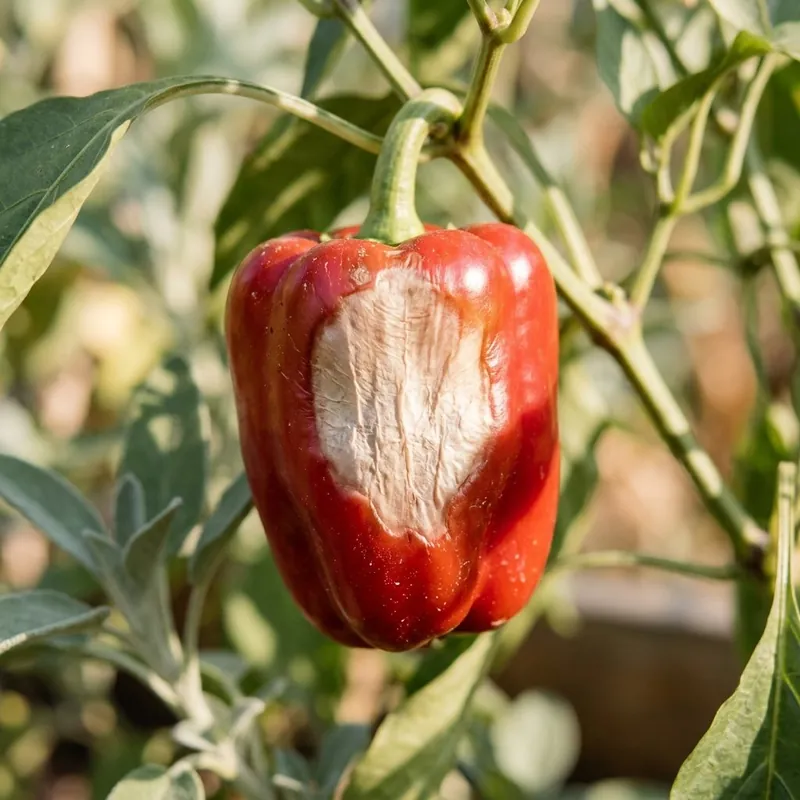
Short answer: On fruit, sunscald is a pale white or yellowish patch on the side that faced the sun, which turns thin, papery and slightly sunken. It happens when fruit suddenly loses the shade of its leaves. Pick scalded fruit, cut away the damaged part and use the rest, and leave enough leaves on the plant to shade the fruit still growing. On young trees, it shows as cracked or peeling dead bark on the south or southwest side, and white tree wrap in winter prevents it.
What it looks like
- A pale, white or yellowish patch on the side of the fruit that faced the sun
- The patch turning thin, papery and slightly sunken, sometimes wrinkled
- Mold or rot setting in on the damaged area later
- Damage on fruit that was suddenly exposed after pruning, a storm or leaf loss
- On young trees, discolored, cracked or peeling bark on the south or southwest side of the trunk
- Sunken bark with dead tissue underneath, usually noticed in spring
Is it sunscald on fruit and bark or something else?
| Could also be | How to tell |
|---|---|
| Blossom end rot | Blossom end rot is always at the bottom tip of the fruit and turns dark and leathery. Sunscald sits on the sunny side or shoulder and stays pale. |
| Bacterial canker | Bacterial canker also kills patches of bark on cherries and plums, but it oozes amber gum and spots the leaves with holes. Sunscald damage sits on the sunny side of the trunk, with no leaf spots. |
Why it happens
Fruit that grows in the shade of its leaves has tender skin. If that shade disappears all at once, the sun heats the skin until the tissue dies. Late-season pruning of tomatoes and peppers, summer storms that strip foliage and leaf diseases that drop the lower leaves are the usual triggers, and very hot weather makes it worse.
Tree bark is damaged in winter. Sun warms the south and southwest side of the trunk on clear days, waking the cells just under the bark, and a hard freeze that night kills them. Utah State University Extension notes the sunny side of a trunk can be as much as 77°F warmer than the shaded side on a cold day. Young trees with thin bark, such as apples, cherries, peaches and maples, are most at risk.
How to fix it
- Pick scalded fruit and use the good part. Pick damaged tomatoes and peppers, cut away the scalded patch and eat the rest soon. Throw away or compost fruit that has started to rot or grow mold.
- Leave enough leaves to shade the fruit. Keep the leaves that cover the fruit. Remove only yellow or damaged lower leaves, and stop pruning tomatoes and peppers once the fruit is sizing up.
- Shade tomatoes and peppers in heat waves. Drape shade cloth or light row cover over the plants during very hot spells, especially for the afternoon sun. Mulch the soil and water deeply when it is dry so the plants keep their foliage healthy.
- Wrap young tree trunks for winter. In late fall, wrap the trunks of young, thin-barked trees with white tree wrap, which reflects the sun. Take it off in spring once the risk of freezing has passed, and repeat for at least the first two or three winters after planting.
- Leave damaged bark to heal. Don't paint or seal scalded bark with tar or wound paint, which can slow healing. Light-colored tree wrap over the injured area helps protect it while the tree grows over the wound.
Watch out: Stripping leaves to ripen tomatoes exposes the fruit and scalds it. Take off only yellow or lower leaves.
How to prevent it
- Prune tomatoes and peppers lightly, and avoid heavy pruning late in the season
- Keep plants healthy, mulched and watered when the soil is dry so the foliage stays thick
- Plant young trees where a building or evergreen shades the trunk in winter, or set a light-colored board on the south side
- Wrap new trees with white tree wrap for their first few winters
Plants it often affects
- Tomato pale, blistered patches on the shoulders after pruning or leaf loss
- Bell pepper soft, bleached patches that dry thin and papery
- Chili pepper scalds on the sunny side of fruit that lost its leaf cover
- Apple browned or bleached fruit on the sunny side, and cracked bark on young trunks
- Cherry thin, dark bark stays prone to winter sunscald
- Maple young trunks crack and peel on the southwest side
Questions people ask
Can you eat tomatoes with sunscald?
Yes, if the fruit is ripe and has no rot. Cut out the pale patch and use the rest soon. Compost green fruit with large scalded areas, and throw out any fruit with mold.
Should I remove tomato leaves to help the fruit ripen?
It is better not to. Bare fruit scalds easily in strong sun. Take off only yellow, diseased or lowest leaves and leave the rest to shade the fruit.
How do I protect young trees from sunscald in winter?
Wrap the trunk with white tree wrap in late fall and remove it in spring, for at least the first two or three winters. A light-colored board on the south and west sides also shades the trunk. Water deeply before the ground freezes so the tree goes into winter well hydrated.

Not sure it's sunscald on fruit and bark?
Take a photo in Liana and the health check names the problem and tells you what to do first. Liana also reminds you to check the soil, so watering mistakes don't start. Get Liana for iPhone.
Sources
- South Dakota State University Extension, Leaf Scorch and Sunscald in the Garden
- Utah State University Extension, Sunscald Injury or Southwest Winter Injury on Deciduous Trees