Low humidity and brown leaf tips: how to help your plants
Brown leaf tips from low humidity are one of the most common houseplant complaints, especially in winter. Heated indoor air is very dry, and tropical plants lose water through their leaves faster than their roots can replace it. The damage is cosmetic at first, and a few simple changes help.
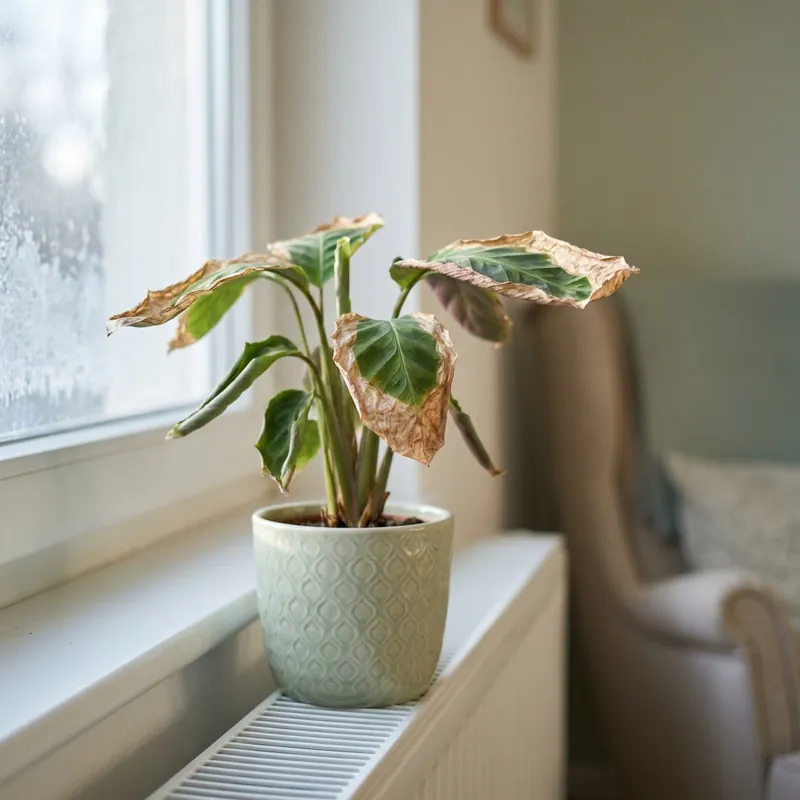
Short answer: Low humidity shows as crisp brown tips and edges on leaves, often with a thin yellow band, and gets worse when the heat is on. Thin-leaved tropical plants suffer most. Group plants together, stand pots on a tray of damp pebbles, and move them away from radiators, heat vents and drafts.
What it looks like
- Crisp brown tips on the leaves
- Brown, dry edges, sometimes with a yellow band next to the green
- Damage that gets worse in winter once the heating is on
- Plants near radiators, heat vents or drafty doors affected most
- Flower buds and flowers drying up before they open
- Thin-leaved tropical plants and ferns suffering more than succulents
Is it low humidity or something else?
| Could also be | How to tell |
|---|---|
| Underwatering | A thirsty plant goes limp and its soil is dry, often pulling away from the pot. With low humidity the soil can be moist and the leaves firm, with only the tips and edges browning. |
| Too much direct sun | Sun scorch makes bleached or brown patches, mostly on the side facing the window. Dry air browns the tips and edges all around the plant. |
| Fertilizer salt buildup | Too much fertilizer also browns leaf tips and edges. Look for a white crust on the soil or the rim of the pot, and think back to how often you have fed the plant. |
Why it happens
Many houseplants come from tropical forests, where the air can reach about 80 percent humidity. In heated homes in winter, indoor humidity can drop below 20 percent. Leaves lose water faster than the roots can supply it, and the tips and edges, farthest from the veins, dry out first.
Furnaces, heat pumps and radiators all dry the air, and plants right beside a heat vent or register get a steady stream of hot, dry air. Cold drafts from doors and windows add stress too.
How to fix it
- Group plants together. Plants release moisture through their leaves, so a cluster raises the humidity around each one. Group plants that like moist air together, and keep succulents and snake plants in their own group.
- Stand the pot on a tray of damp pebbles. Fill a tray with pebbles and add water to about halfway up the stones, then set the pot on top. The pot should sit on the pebbles, never in the water, or the roots can rot.
- Run a humidifier for a room full of plants. A humidifier is the most effective way to raise humidity, and it suits a room with many plants that like moist air. For one or two plants, grouping and pebble trays are usually enough.
- Move plants away from radiators and drafts. Keep plants away from heat vents, radiators and the hot air near heat registers, and away from drafty doors and windows.
- Trim brown tips if they bother you. Brown tips will not turn green again. Snip them off with clean, sharp scissors, following the natural shape of the leaf and leaving a thin line of brown so you don't cut into healthy tissue.
Watch out: Misting barely helps. The effect lasts only a few minutes.
How to prevent it
- Choose plants that tolerate dry air, such as succulents, for rooms with strong heating
- Set plants up in groups or on pebble trays before winter heating starts
- Keep plants out of the path of heat vents and drafty doors
- Put the most humidity-loving plants in a naturally moist room, such as a bright bathroom
Plants it often affects
- Spider plant the long leaves brown at the tips
- Peace lily leaf tips and edges brown in dry winter air
- Parlor palm frond tips turn brown and crisp
- Prayer plant edges crisp and leaves curl
- Boston fern small leaflets dry and drop, leaving bare stems
- Flamingo flower leaf edges brown and flowers fade early
Questions people ask
Does misting plants help with humidity?
Very little. The water evaporates within minutes, so the humidity around the plant soon drops again. Grouping plants, pebble trays and a humidifier all work better, and plants with fuzzy leaves, such as African violets, should not be misted at all.
Will brown leaf tips turn green again?
No. The brown part is dead, but the rest of the leaf still works. Trim the tips if you don't like the look and judge your changes by the new leaves.
Do pebble trays work?
They give a small, local boost to the air right around the plant. They work best combined with grouping plants. Keep the water below the top of the pebbles so the pot never stands in it.

Not sure it's low humidity?
Take a photo in Liana and the health check names the problem and tells you what to do first. Liana also reminds you to check the soil, so watering mistakes don't start. Get Liana for iPhone.
Sources
- Purdue Consumer Horticulture, Indiana Yard and Garden, Thirst Aid for Houseplants
- UF/IFAS Extension Duval County, Houseplants and Humidity in NE Florida Winters