Nutrient deficiency in plants: signs and how to feed safely
Nutrient deficiency in plants happens when the soil no longer supplies what a plant needs to make healthy leaves. It is most common in potted plants that have lived in the same soil for years, and in hungry vegetables grown in tired garden beds. It is also easy to misdiagnose, because yellow leaves have many causes.
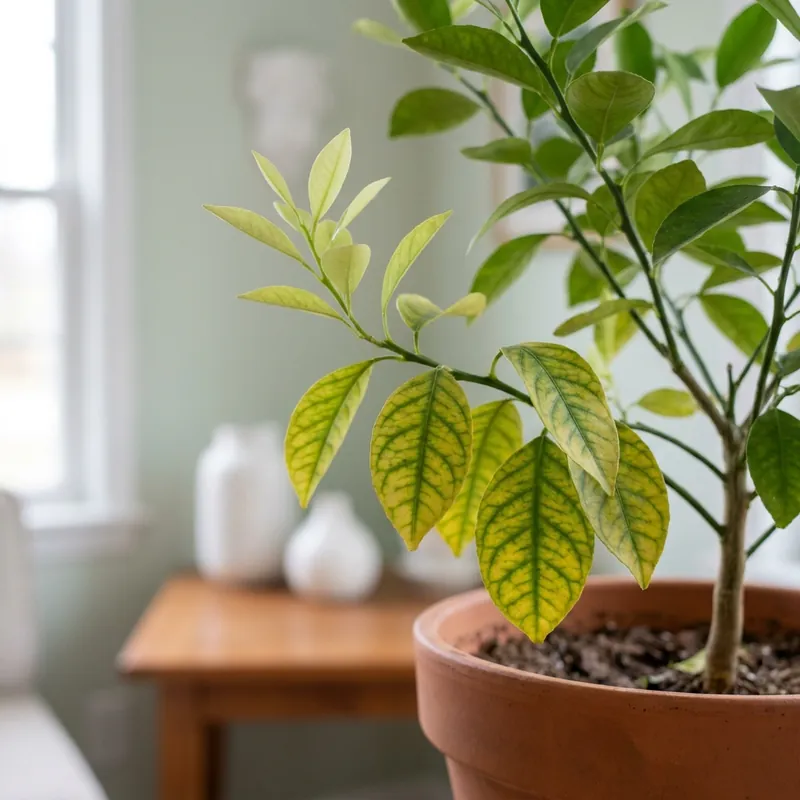
Short answer: A plant short of nutrients yellows on its older, lower leaves first, often between the veins while the veins stay green, and its growth slows. Before you feed, check the soil: wet soil points to overwatering instead. If the soil is fine, feed with a balanced liquid fertilizer at half strength during the growing season, and repot into fresh soil if it has been more than two years.
What it looks like
- Older, lower leaves turning yellow first while new growth stays greener
- Yellow between the veins with the veins still green
- Leaves paler or lighter green all over
- Slow growth and new leaves smaller than usual
- Few or no flowers on plants that normally bloom
- A plant that has been in the same pot and soil for years
Is it nutrient deficiency or something else?
| Could also be | How to tell |
|---|---|
| Overwatering | Overwatering also yellows lower leaves, and it is far more common. The soil stays wet, the plant often looks limp, and the soil may smell sour. Check moisture before you blame hunger. |
| Natural leaf drop | When a plant sheds an old leaf, only one or two of the oldest leaves yellow and the rest of the plant stays deep green and growing. A deficiency makes several older leaves pale and slows the whole plant. |
| Root-bound | A plant packed with roots can look hungry because little soil is left. Roots circling the pot or growing out of the drainage holes, and water running straight through, point to repotting. |
Why it happens
Potting mix holds a limited supply of food, and the plant uses it up over time. Watering also washes nutrients out of the pot. In garden beds, nitrogen dissolves easily in water and leaches away, so heavy feeders such as corn and cabbage can run short.
Some nutrients, nitrogen among them, can move inside the plant. When the roots cannot find enough, the plant pulls these from its oldest leaves to feed new growth. That is why the lower leaves yellow first.
Sometimes the nutrients are in the soil but the roots cannot take them up. Soggy soil, damaged roots or a cramped pot can all make a well-fed plant look starved, so feeding alone will not help.
How to fix it
- Check the soil before you feed. Push a finger into the soil. If it is wet, the yellowing is far more likely from overwatering, and fertilizer will only add stress. Feed only when the soil and roots look healthy.
- Feed with a balanced liquid fertilizer at half strength. Choose a balanced liquid fertilizer and mix it at half the strength the label suggests. Water it into soil that is already slightly moist, never into bone-dry soil.
- Repot into fresh soil if it has been over two years. Old potting mix breaks down and runs out of food. Move the plant into fresh mix, in a pot only one size larger if the roots are crowded.
- Feed during the growing season only. Plants use fertilizer when they are actively growing in spring and summer. Stop in autumn and winter, when most plants rest and unused fertilizer builds up in the soil.
- Don't overcompensate. More fertilizer will not fix the problem faster. Excess salts burn roots and cause brown leaf tips and edges. If you see a white crust on the soil, water thoroughly and let the excess drain out of the holes to wash salts away.
Watch out: Yellow leaves are far more often a sign of overwatering than hunger. Check the soil before you feed.
How to prevent it
- Repot houseplants into fresh potting mix every couple of years
- Feed lightly during the growing season and not at all in winter
- Work compost into vegetable beds before planting heavy feeders
- Use pots with drainage holes so roots stay healthy enough to take up food
Plants it often affects
- Corn a heavy feeder; lower leaves turn pale yellow when soil runs short
- Cabbage older outer leaves yellow and heads stay small
- Pumpkin big vines that slow down and pale when the bed is tired
- Beet older leaves yellow and roots stay small
- Grapevine older leaves yellow and growth weakens in poor soil
Questions people ask
How do I know if yellow leaves mean my plant needs fertilizer?
Look at where the yellow is and check the soil. Yellowing that starts on older leaves, slow growth and soil that is neither soggy nor bone dry point to hunger, especially in old potting mix. Wet soil points to overwatering instead.
Should I fertilize houseplants in winter?
Usually not. Most houseplants rest in winter and use little food, so fertilizer builds up in the soil and can damage the roots. Start again in spring when new growth appears.
What are the signs of too much fertilizer?
Brown, dry leaf tips and edges, slow growth and a white crust on the soil or the rim of the pot. Water the pot thoroughly and let it drain to wash out the extra salts, then feed less often.

Not sure it's nutrient deficiency?
Take a photo in Liana and the health check names the problem and tells you what to do first. Liana also reminds you to check the soil, so watering mistakes don't start. Get Liana for iPhone.
Sources
- University of Arizona Cooperative Extension, Guide to Symptoms of Plant Nutrient Deficiencies
- Clemson Cooperative Extension, Home & Garden Information Center, Indoor Plants: Cleaning, Fertilizing, Containers & Light Requirements