Too much sun on houseplants: how to spot and fix scorch
Too much sun on houseplants causes scorch, a kind of sunburn that leaves pale or brown dead patches on the leaves. It usually happens to shade-loving plants in a bright window, or to plants moved outdoors or into a sunnier spot too quickly. The damaged patches stay, but the plant itself usually recovers once it is out of the harsh light.
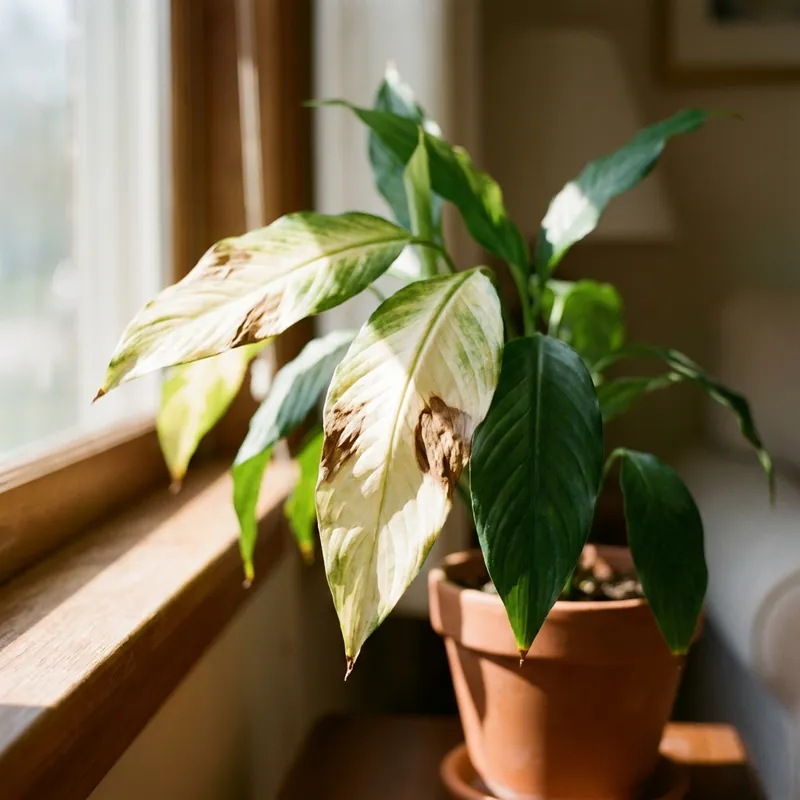
Short answer: Sun-scorched leaves have bleached, pale patches or crisp brown areas, mostly on the side facing the window. Leaves in the shade of the plant look fine. Move the plant out of direct midday sun, or filter the light with a sheer curtain, and cut off leaves that are badly burned.
What it looks like
- Bleached, whitish or faded patches on the leaves
- Pale areas that later turn brown, dry and papery
- Damage mostly on the side facing the window, or on the top leaves
- Leaves shaded by other leaves stay green and healthy
- Leaves drooping or curling in the middle of the day
- Damage that appears soon after a move to a sunnier spot or outdoors
Is it too much direct sun or something else?
| Could also be | How to tell |
|---|---|
| Low humidity | Dry air browns the tips and edges of leaves all around the plant, whichever side faces the light. Sun scorch shows as patches, mostly on the sunny side. |
| Underwatering | A thirsty plant goes limp all over and its soil feels dry and may pull away from the pot. A scorched plant can have moist soil and only some leaves damaged. |
| Leaf spot | Leaf spot makes brown or black spots, often with a yellow ring, that spread over time and can show up on shaded leaves too. Scorch stops spreading once the light is fixed. |
Why it happens
Strong direct sun, especially at midday, heats and burns the leaf tissue of plants that grow in shade in nature. Ferns, peace lilies and prayer plants are among the first to suffer. South windows get the most light, and west windows are warmer than east ones in the afternoon.
Sudden changes cause most scorch. A plant moved from a dim room to a sunny window, or carried outside for summer, has leaves grown for lower light that cannot cope with the jump. Clemson Extension notes that scorching often happens after plants are moved outdoors into direct light.
How to fix it
- Move it out of direct midday sun. Pull the plant back from the window, or move it to one that gets gentler morning light. Plants that like shade are happiest a few feet from a bright window, out of the sun's direct path.
- Filter the light with a sheer curtain. If you want to keep the plant where it is, a sheer curtain is usually enough. It softens direct sun into bright, indirect light.
- Remove badly scorched leaves. Brown, crisp patches are dead tissue and will not turn green again. Cut off leaves that are mostly burned with clean scissors, and leave lightly marked leaves on the plant, since they can still feed it.
- Make any future moves gradually. Sudden changes in light shock plants. When a plant needs more sun, or goes outside for summer, start it in shade or bright indirect light and give it more sun a little at a time.
How to prevent it
- Check each plant's light needs before you put it in a south or west window
- Bring plants outdoors in spring into shade first, then give them a little more sun each day
- Use sheer curtains or blinds on very sunny windows
- Watch new plants for a few days after any move to a brighter spot
Plants it often affects
- Peace lily leaves bleach to pale yellow and brown at the edges in direct sun
- Prayer plant leaf colors fade and the leaves curl and crisp
- Cast iron plant a deep shade plant that gets pale, bleached streaks in sun
- Boston fern fronds go yellow, then brown and crispy
- Maidenhair fern the thin fronds dry out and shrivel quickly
- Nerve plant wilts and scorches fast, losing its colored veins
Questions people ask
Will sunburned leaves turn green again?
No. The bleached or brown areas are dead and cannot recover. The rest of the leaf still works, so you can leave lightly marked leaves on the plant and judge recovery by the new leaves.
Can I put my houseplants outside in summer?
Yes, but ease them in. Start them in full shade and move them into brighter spots little by little. Shade-loving plants such as peace lilies and ferns should stay out of direct sun outdoors.
Is a south-facing window too much sun?
For sun lovers such as succulents and many herbs it is ideal. For shade plants it often is too much, especially in summer. Set them back from the glass, use a sheer curtain, or choose an east window instead.

Not sure it's too much direct sun?
Take a photo in Liana and the health check names the problem and tells you what to do first. Liana also reminds you to check the soil, so watering mistakes don't start. Get Liana for iPhone.
Sources
- Clemson Cooperative Extension, Home & Garden Information Center, Indoor Plants: Cleaning, Fertilizing, Containers & Light Requirements
- Nebraska Extension in Lancaster County, Let There Be Light… for Your Houseplants