Root bound plant: how to tell and how to repot it
A root bound plant has filled its pot so completely that the roots circle the sides, push out of the drainage holes and leave little soil to hold water. Growth slows, the plant dries out quickly, and leaves may droop or turn yellow. Moving it into a pot one size up usually sorts it out.
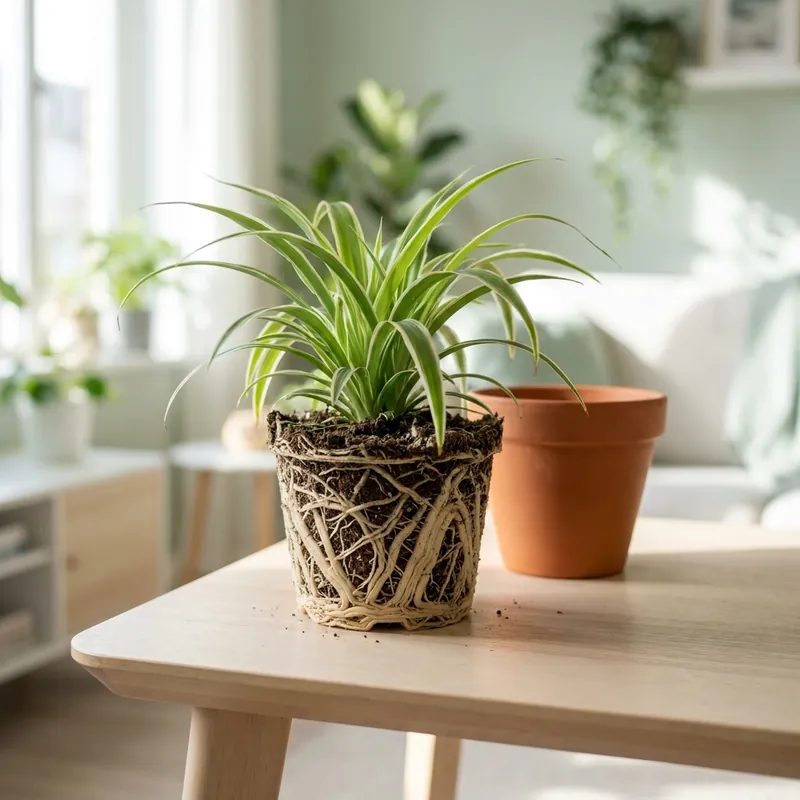
Short answer: A plant is root bound when its roots wrap around the inside of the pot and grow out of the drainage holes. The giveaway is water running straight through without soaking in, so the plant dries out soon after watering. Repot it one size up, gently tease the circling roots apart and water it well.
What it looks like
- Roots growing out of the drainage holes or pushing up above the soil
- Water running straight through the pot and out of the bottom
- Soil that dries out very soon after a thorough watering
- Slow or stunted growth, with smaller new leaves
- Drooping or yellowing lower leaves despite regular care
- A solid mat of roots circling the pot when you slide the plant out
- A plastic pot that bulges or cracks
Is it root bound or something else?
| Could also be | How to tell |
|---|---|
| Underwatering | Underwatering also brings dry soil and wilting, but after a good soak the soil stays moist for a while. A root bound plant is dry again very quickly because there is so little soil left in the pot. |
| Nutrient deficiency | Pale, yellowing leaves and slow growth can also mean the plant has used up the nutrients in its soil. Slide it out of the pot: if the roots aren't packed tight, feeding in the growing season is the fix rather than a bigger pot. |
Why it happens
Roots keep growing until they meet the side of the pot, then turn and follow it around. Over time they form a dense mat with very little soil left between them. That small amount of soil holds little water and few nutrients, so the plant dries out fast, grows slowly and can wilt even when you water often.
Fast growers such as mint, spider plants and ferns fill a pot quickly. Potting mix also breaks down and packs tighter as it ages, which makes things worse for a plant that hasn't been repotted in a few years.
How to fix it
- Pick a pot one size up. Choose a pot about 2 inches wider than the current one, with a drainage hole. Water the plant about an hour before you start so the root ball holds together.
- Tease the circling roots apart. Slide the plant out and gently loosen the outer roots with your fingers, working them away from the root ball so they point outward. If the root ball is very tight, start at the bottom and the edges.
- Trim roots that have wound tightly. Use clean scissors to cut any roots that circle tightly around the base or wrap around the stem, along with any that are dead or broken. Keep as many healthy roots as you can.
- Repot and water well. Set the plant at the same depth it was growing before, fill around it with fresh potting mix and firm it gently. Water well until it drains from the bottom, then empty the saucer.
- Keep it out of direct sun for a week. Give the plant bright, indirect light for about a week while the roots settle. A little drooping is normal after repotting. Let the top of the soil dry before you water again.
Watch out: Jumping several pot sizes leads to overwatering, because the extra soil the roots can't reach stays wet.
How to prevent it
- Look at the bottom of the pot each spring for roots poking out of the drainage holes.
- Repot in spring, when the plant is growing and settles in fastest.
- Move up just one pot size at a time.
- Refresh the potting mix every two to three years, since old mix breaks down and packs tight.
- Divide clumping plants like spider plants and ferns when they get too big, instead of moving them into ever larger pots.
Plants it often affects
- Spider plant thick, fleshy roots fill the pot fast and can push the plant up out of the soil
- Asparagus fern swollen, tuber-like roots can bulge or even crack a plastic pot
- Boston fern roots pack the pot so tightly that water runs straight through
- Spearmint runners fill a container in a season, then leaves get smaller
- Peppermint spreads to the pot edges quickly and dries out fast once it does
- Umbrella papyrus a thirsty, clumping plant that soon fills its pot with roots
Questions people ask
Is it bad for a plant to be root bound?
A little crowding does no harm, and some plants, like spider plants, are happy to stay snug for a while. Once roots fill the pot and water runs straight through, the plant can't get enough water or nutrients and growth stalls. That's the time to repot.
How big a pot should I move a root bound plant into?
Go one size up, about 2 inches wider than the current pot. A much bigger pot holds more soil than the roots can use, and that extra soil stays wet and can lead to root rot.
When is the best time to repot a root bound plant?
Spring is best, when the plant is starting to grow and can settle into its new pot quickly. A plant that is badly root bound and dries out almost as soon as you water it can be repotted at any time of year.

Not sure it's root bound?
Take a photo in Liana and the health check names the problem and tells you what to do first. Liana also reminds you to check the soil, so watering mistakes don't start. Get Liana for iPhone.
Sources
- University of Illinois Extension, Tips for Repotting Houseplants
- Royal Horticultural Society, How to grow houseplants