Transplant shock: why plants wilt after repotting
Transplant shock is the wilting, drooping and leaf drop that often follows repotting or planting out. Roots get disturbed during the move and can't supply the leaves with enough water for a while. It looks worrying, but most plants recover on their own over two to three weeks if you give them a quiet start.
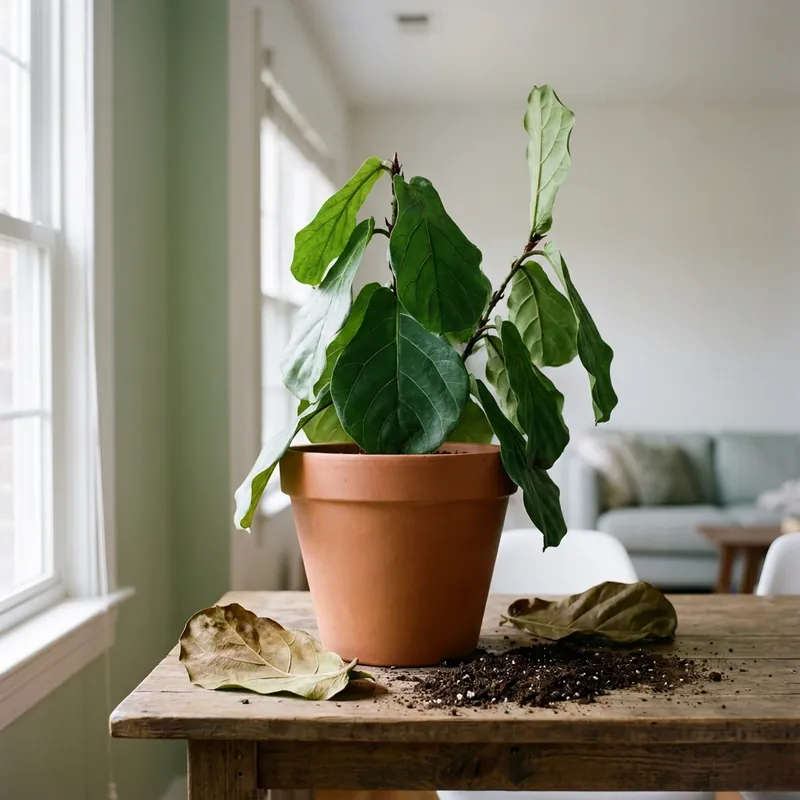
Short answer: Transplant shock is stress from roots disturbed during repotting or planting, and it shows as wilting and dropped leaves in the days after the move. Keep the plant out of direct sun for a week, water it once thoroughly and then leave it alone. Skip fertilizer for a month and expect it to recover over two to three weeks.
What it looks like
- Wilting or drooping in the first days after repotting or planting out
- Lower leaves turning yellow and dropping
- Leaves curling or browning at the edges
- Growth stopping for a while after the move
- Leafy herbs and vegetables flowering early (bolting) after a hard setback
Is it transplant shock or something else?
| Could also be | How to tell |
|---|---|
| Underwatering | If the new soil is dry all the way down, the plant may simply be thirsty. Shock happens even when the soil is moist, and it starts right after the move. |
| Overwatering | Watering again and again to perk up a drooping, newly moved plant can tip it into overwatering. If the soil stays wet and the plant keeps getting worse, the roots may be drowning. |
| Too much light | A plant moved outdoors or to a sunnier spot can get pale, bleached or brown patches on the leaves that face the sun. That's sun scorch, which shows as patches on the leaves instead of an overall droop. |
Why it happens
When you repot or plant out, the fine roots that take up water get broken or pulled away from the soil. Until new ones grow into the fresh soil, the leaves lose water faster than the roots can replace it, so the plant wilts and may drop some leaves. Growth slows down too, and in vegetables that setback can delay the harvest.
The shock is worse when the roots get torn or dry out during the move, when the plant goes straight into hot sun or wind, and for seedlings raised indoors that weren't hardened off first. Some crops, including corn and turnips, transplant poorly and are often better sown where they will grow.
How to fix it
- Keep it out of direct sun for a week. Move a repotted houseplant away from a sunny window into bright, indirect light for about a week. For garden plants set out in hot weather, give them light shade during the hottest part of the day.
- Water once, then leave it alone. Give the plant one thorough watering right after the move so the soil settles around the roots. After that, don't keep topping it up because it droops. Feel the soil and water again only when it has dried, and check more often outdoors in hot weather, since garden soil and small pots dry faster.
- Don't fertilize for a month. Fertilizer pushes new leafy growth that the damaged roots can't support yet, and it can harm tender new roots. Wait a month before you feed.
- Give it time to recover. Don't move it again, repot it a second time or trim the roots. Expect recovery over two to three weeks, and take fresh new leaves as the sign the roots have settled in.
Watch out: The instinct is to do more for a drooping plant. Doing less is the treatment.
How to prevent it
- Water the plant about an hour before you repot or plant it out, so the root ball holds together.
- Handle the root ball gently, and keep bare roots out of sun and wind while you work.
- Harden off seedlings raised indoors for about two weeks before planting out, moving them to cooler, airier conditions.
- Plant out on a cloudy day or in the evening, and avoid hot, windy spells.
- Sow crops that dislike root disturbance, like corn, turnips and poppies, straight where they will grow.
Plants it often affects
- Sunflower has a long taproot and sulks when moved, so it's usually sown where it will grow
- Corn transplants poorly, and seedlings can stall for a while after planting out
- Cilantro a setback from transplanting can make it bolt to flower early
- Corn poppy dislikes root disturbance so much that it's best sown where it will flower
- Turnip a root crop that transplants poorly and is usually sown directly
Questions people ask
How long does transplant shock last?
Most plants recover over two to three weeks. Larger plants, and those that lost a lot of roots in the move, can take longer. New leaves are the best sign that it's over.
Should I water a plant with transplant shock more?
No. Water thoroughly once after the move, then water again only when the soil has dried. Extra water doesn't help damaged roots and can leave them sitting in soggy soil, which leads to rot. The exception is soil that has truly dried out, which happens fastest outdoors in hot weather.
Can a plant die from transplant shock?
It can, but most don't. Plants are most at risk when the roots were badly damaged or dried out during the move, or when they're kept soggy, fed or moved again while they recover. A bright spot out of strong sun and some patience are usually all it needs.

Not sure it's transplant shock?
Take a photo in Liana and the health check names the problem and tells you what to do first. Liana also reminds you to check the soil, so watering mistakes don't start. Get Liana for iPhone.
Sources
- University of Illinois Extension, Tips for Repotting Houseplants
- Royal Horticultural Society, Vegetables: transplanting