Squash vine borer: how to find it and save the vine
The squash vine borer is the grub of a day-flying moth that tunnels inside the stems of squash, pumpkin and zucchini. The first sign is often a big, healthy plant that suddenly wilts on a sunny afternoon. Look at the base of the stem and you'll find a hole leaking sawdust-like droppings.
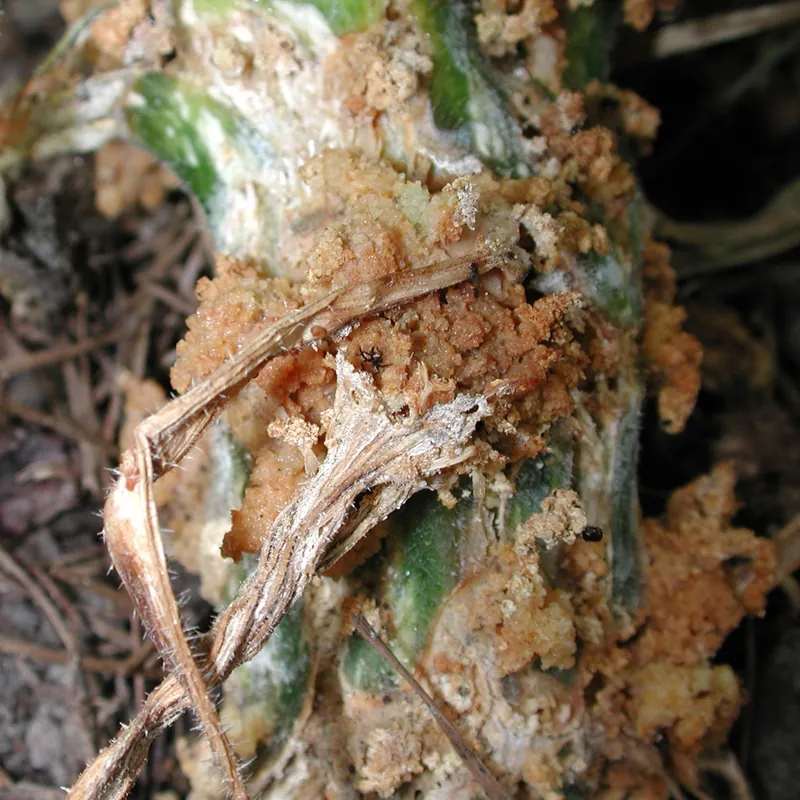
Short answer: A squash vine borer is a cream, brown-headed grub, up to about an inch long, feeding inside the stem near the base. The giveaway is sudden wilting, worst on sunny days, plus a hole near the soil with orange to tan, sawdust-like frass. Slit the stem lengthwise at the hole, pull out the grub and bury the cut section in moist soil.
What it looks like
- A squash or pumpkin plant that wilts suddenly on a sunny day, at first perking up at night
- Small holes near the base of the stem with orange to tan, sawdust-like droppings
- Soft, split or rotting stem near the soil line
- Cream grubs with brown heads inside the stem when you cut it open
- A whole runner that wilts and dies beyond the damaged spot
- Orange and black, wasp-like moths flying around the plants by day in early summer
Is it squash vine borer or something else?
| Could also be | How to tell |
|---|---|
| Underwatering | A thirsty squash perks up soon after a thorough watering, and the soil is dry. A borer-hit plant wilts with moist soil and has a hole with sawdust-like frass at the stem base. |
| Bacterial wilt | Bacterial wilt also makes vines collapse, often after cucumber beetles feed, but the stem has no hole or frass. Cut a wilted stem and a borer plant shows a tunnel and grub inside. |
| Squash bugs | Squash bugs make leaves speckle yellow, then wilt and crisp, and the gray bugs and bronze eggs are easy to find on the leaves. Borers leave the leaves alone and attack the stem from inside. |
Why it happens
The adult is a clearwing moth with an orange, black-spotted body that flies by day and looks like a wasp. It comes out of the soil in early summer and lays tiny flat eggs near the base of the vines and on leaf stalks.
The grubs hatch in about a week and bore straight into the stem, where they feed for several weeks. Their tunnels cut the plant's water supply, which is why it wilts. When grown, they leave the stem and spend the winter in the soil near where the plants grew.
Squash and pumpkins with large hollow stems are attacked most. Butternut squash, with its harder, solid stems, is far less likely to be hit, and cucumbers and melons rarely are.
How to fix it
- Slit the stem and remove the grub. At the first sign of frass, use a clean, sharp knife to make a lengthwise slit in the stem at the hole, keeping the cut as short as you can. Pull out the grub, and look a little farther along the tunnel in case there's more than one.
- Heap moist soil over the cut stem. Cover the slit section with moist soil so the stem can grow new roots there. Water the soil around it when the top is dry, so the plant can carry on.
- Bury a few nodes along each vine. On vining types, cover a few leaf joints along each runner with soil. They root into the ground, so the plant keeps growing even if the base is damaged.
- Cover young plants with insect mesh. Next season, put insect mesh or row cover over young plants as soon as they're planted, with the edges sealed, so moths can't lay eggs. Remove it when the flowers open so bees can pollinate. This works best where squash didn't grow last year.
- Grow butternut squash. If borers are a problem every year, grow butternut squash, which the borer rarely attacks. Hubbard squash and many pumpkins are among the most likely to be hit.
- Clear vines and turn the soil after harvest. Pull up and dispose of the old vines once you've harvested, since grubs may still be inside. Turn the soil in autumn and again in spring to expose the overwintering cocoons to birds and cold.
Watch out: The sudden wilt looks like thirst, so people water more. Check the base of the stem for a hole and droppings first.
How to prevent it
- Cover young squash with insect mesh until they flower.
- Plant squash in a new spot each year, away from last year's beds.
- Grow butternut squash if borers are a regular problem.
- Bury a few nodes along each vine early in the season so it has extra roots.
- Remove spent vines after harvest and turn the soil.
Plants it often affects
- Zucchini sudden wilting, with frass at the stem base
- Pumpkin hollow stems are easy for the grubs to tunnel
- Summer squash one of the most common victims
- Hubbard squash very likely to be attacked
- Butternut squash solid stems; rarely attacked, a safer choice
Questions people ask
Why did my squash plant suddenly wilt?
If the soil is moist and the plant collapsed on a sunny day, check the base of the stem. A hole with sawdust-like frass means squash vine borer. With no hole, bacterial wilt or root problems are more likely.
Can a squash plant survive a vine borer?
Often, if you act quickly. Remove the grub, bury the slit stem in moist soil, and bury a few more nodes along the vine so it roots in new places. A plant whose stem has rotted through at the base rarely recovers.
Which squash are resistant to squash vine borer?
Butternut squash and its relatives have solid stems the grubs find hard to tunnel, so they're rarely attacked. Zucchini, Hubbard squash and most pumpkins have hollow stems and are hit the most.

Not sure it's squash vine borer?
Take a photo in Liana and the health check names the problem and tells you what to do first. Liana also reminds you to check the soil, so watering mistakes don't start. Get Liana for iPhone.
Sources
- UConn Home and Garden Education Center, Squash Vine Borer
- University of Wisconsin-Madison Extension, Squash Vine Borer, Melittia cucurbitae