Bacterial wilt on cucumbers: how to confirm it and protect the rest
Bacterial wilt is a disease of cucumbers, melons and, less often, squash and pumpkins. The leaves wilt on warm days and stop recovering at night, until the whole vine collapses. Striped and spotted cucumber beetles spread it, mostly in North America, and there is no cure once a plant is infected.
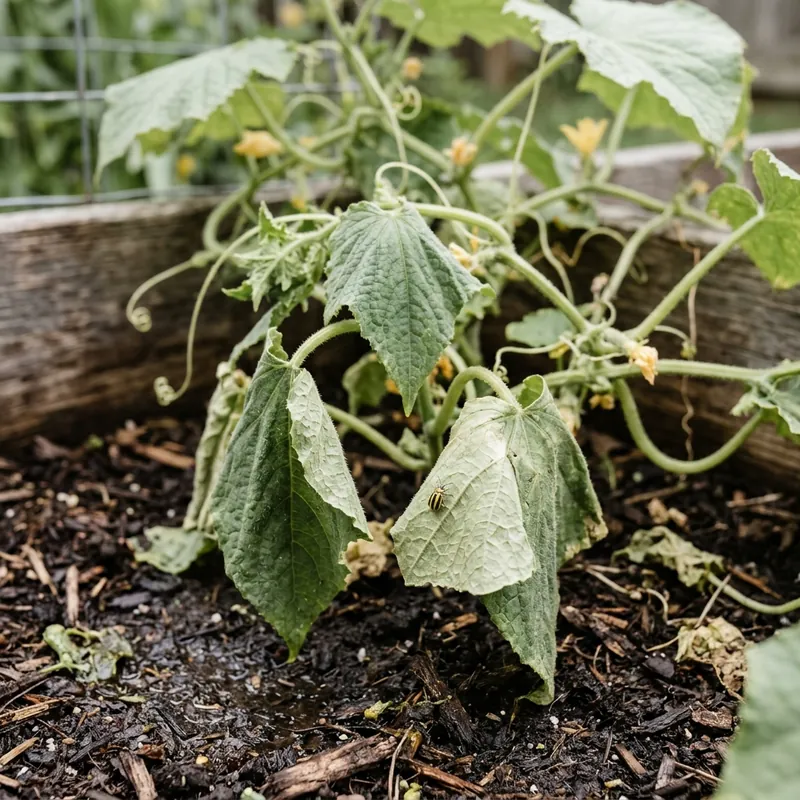
Short answer: Bacterial wilt is caused by bacteria that block the water-carrying vessels in the stem, spread by cucumber beetles. The giveaway is leaves that wilt in moist soil and stay limp into the evening, and sticky strands when you pull a cut stem apart. Pull up and throw away infected plants straight away, and keep beetles off the rest.
What it looks like
- Single leaves or runners that wilt on warm days, then the whole vine
- Wilting that doesn't recover overnight or after watering
- Leaves that turn dull green before they wilt
- Sticky, stringy strands between the two halves of a cut stem pulled slowly apart
- Striped or spotted yellow beetles on leaves and flowers
- First sick plants at the edges of the planting, where beetles land
Is it bacterial wilt or something else?
| Could also be | How to tell |
|---|---|
| Squash vine borer | Vine borer wilt hits squash and pumpkins, and the stem near the base has a hole oozing sawdust-like droppings, with a white grub inside. Bacterial wilt leaves the stem whole and mostly strikes cucumbers and melons. |
| Heat stress | Leaves wilting in the midday heat and perking up by evening in moist soil is normal heat stress. With bacterial wilt the leaves stay limp at night. |
Why it happens
Bacterial wilt is caused by bacteria that spend the winter inside striped and spotted cucumber beetles. In spring the beetles feed on young plants and the bacteria enter through those feeding wounds. They multiply in the stem and clog the vessels that carry water, so no amount of watering helps.
Cucumbers and melons are hit hardest, while squash and pumpkins are less often affected. Young plants are most at risk, since the beetles feed heavily on seedlings and new leaves.
The disease follows the beetles. More beetles in a season means more wilt, and it usually shows first at the edges of a planting.
How to fix it
- Do the string test on a wilted stem. Cut through a wilting stem near the base, press the two cut ends together, then slowly pull them apart. Sticky strands stretching between them confirm bacterial wilt. The test doesn't work on stems that are already dead.
- Pull up and throw away infected plants. Remove infected plants straight away and put them in the trash. A sick plant won't recover, and beetles feeding on it carry the bacteria to healthy vines.
- Cover young plants with insect mesh until they flower. Put fine mesh or floating row cover over new plantings right away and seal the edges with soil. Take it off when flowers open so bees can pollinate.
- Pick off cucumber beetles. Look on flowers and under leaves for small yellow beetles with black stripes or spots. Pick or knock them into a bucket of soapy water, especially early in the season.
Watch out: Watering won't revive the plants, because the bacteria block the stems. Leaves that stay limp into the evening in moist soil point to bacterial wilt.
How to prevent it
- Cover young cucumber and melon plants with row cover until they flower
- Check for cucumber beetles every few days, starting the day you plant
- Grow varieties sold as resistant to bacterial wilt where you can
- Remove and throw away wilted plants promptly
Plants it often affects
- Cucumber very prone; whole vines collapse after the first runners wilt
- Cantaloupe melons wilt badly, much like cucumbers
- Squash less often affected, but can wilt and die
- Pumpkin less often infected than cucumbers and melons
Questions people ask
Can a cucumber plant recover from bacterial wilt?
No. The bacteria plug the stems, and the plant keeps wilting until it dies. Remove it quickly so beetles can't spread the disease to other plants.
Does bacterial wilt stay in the soil?
It spends the winter in cucumber beetles, so it travels with the insects. Keeping beetles away from young plants matters far more than where you plant.
How do I tell bacterial wilt from thirst?
Check the soil first. A thirsty plant sits in dry soil and perks up after a deep soak. A plant with bacterial wilt wilts in moist soil, stays limp into the evening and passes the string test.

Not sure it's bacterial wilt?
Take a photo in Liana and the health check names the problem and tells you what to do first. Liana also reminds you to check the soil, so watering mistakes don't start. Get Liana for iPhone.
Sources
- Iowa State University Extension, Cucurbit Bacterial Wilt