Tomato hornworm: how to find them and save your plants
The tomato hornworm is a big green caterpillar with pale stripes and a horn at its tail that feeds on tomatoes, peppers, eggplant and potatoes. A few can strip a plant's leaves and gouge its fruit within days. They blend in so well that most people find the damage first.
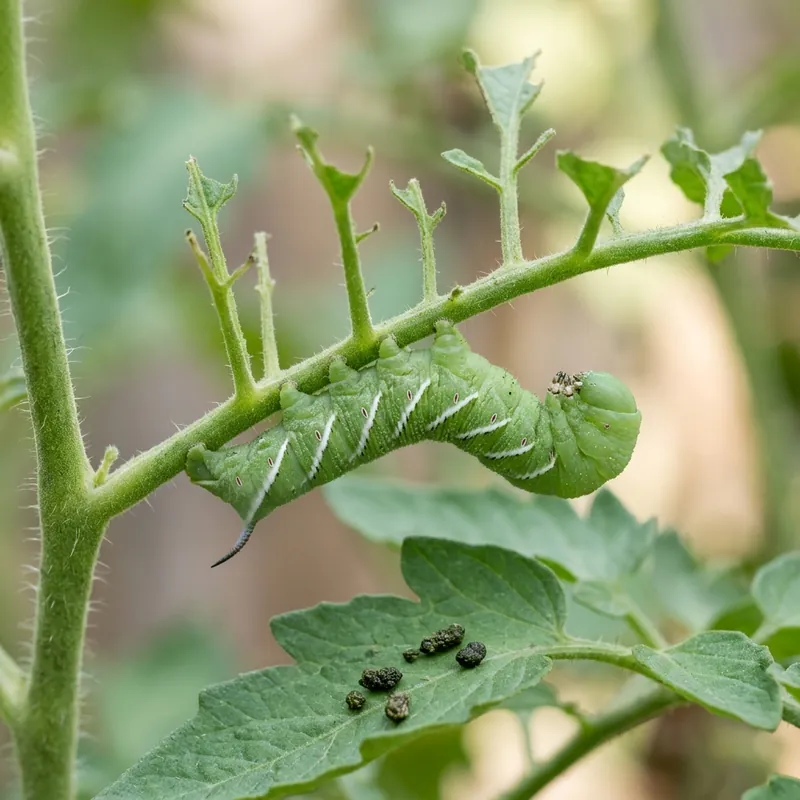
Short answer: Tomato hornworms are large green caterpillars, up to about 4 inches long, with white V-shaped markings and a horn at the rear. Look for bare stems near the top of the plant and big dark droppings on the leaves and ground below, then search the leaves just above. Pick them off by hand, but leave any that carry white, rice-like cocoons.
What it looks like
- Bare stems and missing leaves, usually starting near the top of the plant
- Large dark green or black droppings on the leaves and the ground below
- Big chunks chewed out of green tomatoes
- A large green caterpillar with white V-shaped stripes and a horn at the tail
- Flower clusters and young stems eaten when the leaves run out
- A caterpillar covered in small white cocoons (parasitized, so leave it)
Is it tomato hornworm or something else?
| Could also be | How to tell |
|---|---|
| Tobacco hornworm | Tobacco hornworm looks almost the same but has straight diagonal white stripes and a red or orange horn. It eats the same plants and is handled the same way. |
| Other caterpillars | Most garden caterpillars are much smaller and chew holes across the leaves. Hornworms are huge, have a horn at the tail and strip whole leaves down to the stems. |
| Animal damage | Deer and rabbits tear or bite off shoots and leave no droppings on the leaves. Hornworms leave large dark pellets on the leaves and soil beneath the damage. |
Why it happens
Hornworms are the caterpillars of large hawk moths (sphinx moths). The moths lay eggs on tomatoes and their relatives, and the caterpillars grow very fast, eating more as they get bigger.
When fully grown, the caterpillars drop to the ground and burrow into the soil near the plant to turn into pupae. The pupae spend the winter there, and new moths come out the next spring, so a bed with hornworms one year often has them the next.
Numbers usually peak in midsummer, which is when plants can be stripped fastest.
How to fix it
- Follow the droppings to the caterpillar. Look for bare stems and fresh dark droppings on the leaves or soil. The caterpillar is usually on the leaves or stems right above. Check the undersides of leaves and along the stems, since they blend in well.
- Pick them off by hand. Pull the caterpillars off and drop them into soapy water, or snip them off with pruners. They look fierce, but the horn is harmless.
- Search at night with a UV flashlight. Hornworms glow under ultraviolet light. After dark, shine a UV (black light) flashlight over your plants and they're much easier to spot than by day.
- Leave parasitized hornworms alone. A hornworm covered in small white cocoons has been parasitized by a tiny wasp. Leave it on the plant: it stops feeding, and more wasps hatch to hunt other hornworms.
- Dig over the bed in autumn. After the harvest, dig or till the soil where tomatoes grew. It destroys pupae resting in the soil and brings others to the surface, so fewer moths come out in spring.
Watch out: White rice-like cocoons on a caterpillar's back are parasitic wasps. Leave those hornworms in place, since they stop feeding and release more wasps.
How to prevent it
- Check tomato plants every few days in summer, looking for droppings and bare stems.
- Dig or till tomato beds in autumn or early spring to destroy overwintering pupae.
- Leave parasitized hornworms in the garden so the wasps can build up.
- Avoid broad-spectrum insecticides, which kill the wasps that keep hornworms down.
Plants it often affects
- Tomato the main host; leaves stripped from the top down and green fruit gouged
- Pepper leaves eaten, less often than tomato
- Eggplant occasional heavy leaf damage
- Potato leaves chewed now and then
Questions people ask
What are the white things on my tomato hornworm?
They're cocoons of a tiny parasitic wasp. The wasp laid its eggs inside the caterpillar, and the young fed on it before spinning cocoons on its back. Leave it on the plant; it will stop eating and die, and the new wasps will go after other hornworms.
Are tomato hornworms dangerous?
No. The horn on the tail looks like a stinger but is harmless, and they don't bite people. You can pick them off with bare hands, though gloves are fine if you'd rather.
Why can't I find the hornworms eating my tomatoes?
They're the same green as the stems and hold still during the day. Look directly above fresh droppings, check the undersides of leaves, or search at night with a UV flashlight, which makes them glow.

Not sure it's tomato hornworm?
Take a photo in Liana and the health check names the problem and tells you what to do first. Liana also reminds you to check the soil, so watering mistakes don't start. Get Liana for iPhone.
Sources
- Utah State University Extension, Tomato and Tobacco Hornworms
- Ohio State University Extension (BYGL), Glow Worms