Squash bugs: how to find the eggs and stop them early
Squash bugs are flat, gray-brown bugs that suck sap from squash, pumpkins and other vine crops across North America. Their feeding leaves yellow speckles that turn brown, then whole leaves wilt and crisp. Young plants can die when numbers are high.
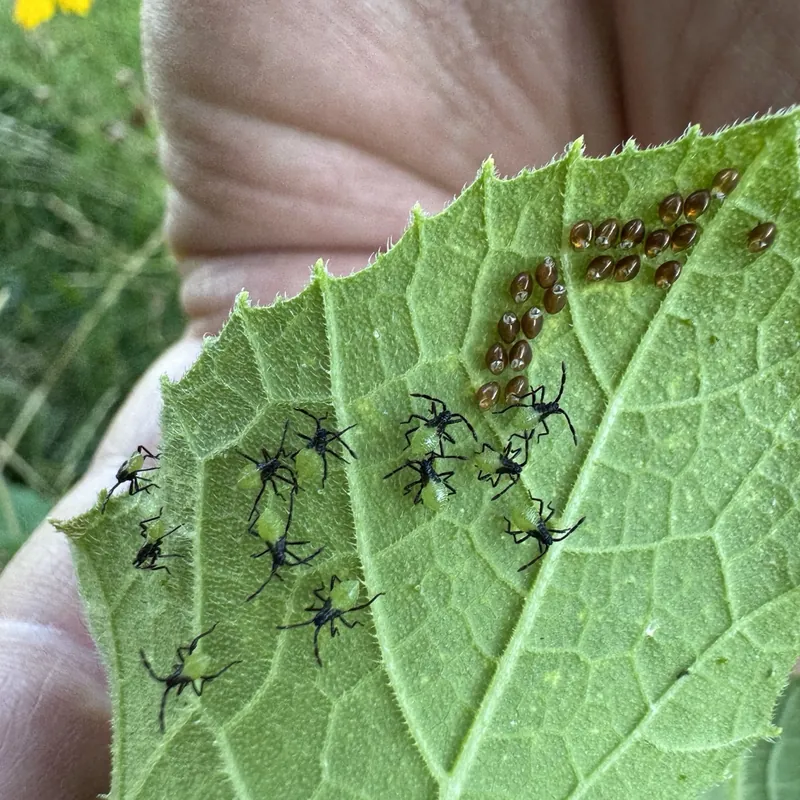
Short answer: Squash bugs are flat, gray-brown bugs about five-eighths of an inch long that hide at the base of squash and pumpkin plants. The giveaway is clusters of shiny bronze eggs under the leaves, often in the V between two veins, along with yellow speckled leaves. Crush the egg clusters every few days and pick the bugs and nymphs into soapy water.
What it looks like
- Clusters of shiny bronze eggs on the undersides of leaves, often where two veins meet
- Yellow specks on the leaves that turn brown
- Leaves that wilt, then turn brown, dry and crisp
- Groups of small nymphs, green or gray with dark legs, on the leaves and stems
- Flat gray-brown adults that scuttle to the base of the plant or under leaves when disturbed
- Sunken, scarred spots on the fruit, sometimes rotting
Is it squash bugs or something else?
| Could also be | How to tell |
|---|---|
| Stink bugs | Stink bugs are broader and shield-shaped, green or brown, and mostly feed on fruit and pods of many crops. Squash bugs are narrower and gray-brown and stick to squash, pumpkins and their relatives. |
| Squash vine borer | With vine borer, the whole plant wilts suddenly and there's a hole with sawdust-like frass at the stem base. Squash bugs speckle the leaves first, and you'll find bugs and bronze eggs on them. |
| Bacterial wilt | Bacterial wilt makes leaves droop on warm days without the yellow speckles, and the vines don't recover. Squash bug damage starts as speckling, with bugs and eggs easy to find. |
Why it happens
Adult squash bugs spend the winter under plant debris, in mulch, weeds and around buildings. In late spring they fly to squash and pumpkin plants to feed, mate and lay eggs.
The eggs hatch in about 10 days, and the nymphs feed in groups for several weeks before becoming adults. They pierce leaves and stems and suck the sap, which leaves yellow spots that turn brown and can make the leaves wilt and die.
Young plants suffer most, and adults are hard to kill once numbers are high. Gardens that grow squash in the same place every year, with old vines left in the bed, often have the biggest problems.
How to fix it
- Crush the egg clusters every few days. Turn the leaves over and look for clusters of shiny bronze eggs, often in the angle between two veins. Squash them, or tear off that piece of leaf and drop it in soapy water. Check again every few days, since new clusters keep appearing.
- Pick off bugs and nymphs in the morning. Early in the day, knock the bugs and nymphs into a container of soapy water. Look under leaves and around the base of the plant, where adults hide.
- Trap them under a board overnight. Lay a board or a sheet of cardboard on the soil near the plants in the evening. Squash bugs shelter under it overnight, so lift it in the morning and drop them into soapy water.
- Clear dead vines in autumn. After the harvest, pull up and dispose of old vines and plant debris, where adults spend the winter. Don't add bug-covered leaves to the compost pile.
- Rotate after a bad year. Plant squash and pumpkins somewhere new next year. After a serious infestation, a year off from these crops helps break the cycle.
Watch out: Adults are hard to kill and hide fast. The nymphs and eggs are far easier, so start early in summer before numbers build.
How to prevent it
- Start checking leaf undersides for bronze eggs as soon as squash plants are growing well in early summer.
- Remove old vines, weeds and debris after harvest.
- Move squash and pumpkins to a new bed each year.
- Lay a board in the bed and check under it each morning to catch the first arrivals.
Plants it often affects
- Zucchini yellow speckled leaves and bronze eggs underneath
- Pumpkin leaves wilt and crisp, and the fruit can be scarred
- Summer squash young plants can be killed by heavy feeding
- Winter squash bugs gather on the vines and fruit late in the season
- Cucumber attacked less often than squash
- Melon occasional speckling on the leaves
Questions people ask
What do squash bug eggs look like?
They're small, shiny, bronze-colored ovals laid in a tidy cluster on the underside of a leaf, usually in the V between two veins. They can also be on stems. Crush them before they hatch.
Why are my squash leaves turning yellow and wilting?
Yellow speckles that turn brown, followed by wilting, point to squash bugs, so check under the leaves for bugs and bronze eggs. A sudden wilt with no speckles points to squash vine borer or bacterial wilt instead.
Do insecticides work on squash bugs?
Not for long. Sprays work best on young nymphs and give short-lived results, since numbers bounce back quickly, and adults are hard to kill. Removing eggs and hand-picking every few days does more in a home garden.

Not sure it's squash bugs?
Take a photo in Liana and the health check names the problem and tells you what to do first. Liana also reminds you to check the soil, so watering mistakes don't start. Get Liana for iPhone.
Sources
- University of Illinois Extension, Squash Bug
- University of Nevada, Reno Extension, Squash Bug Control in Home Gardens