Leaf spot disease: what those brown spots mean
Leaf spot disease is the name for brown or black spots that appear on leaves and slowly grow outward. Most cases are caused by fungi that need water sitting on a leaf to get started. Caught early, it is easy to keep in check, and the plant usually carries on growing.
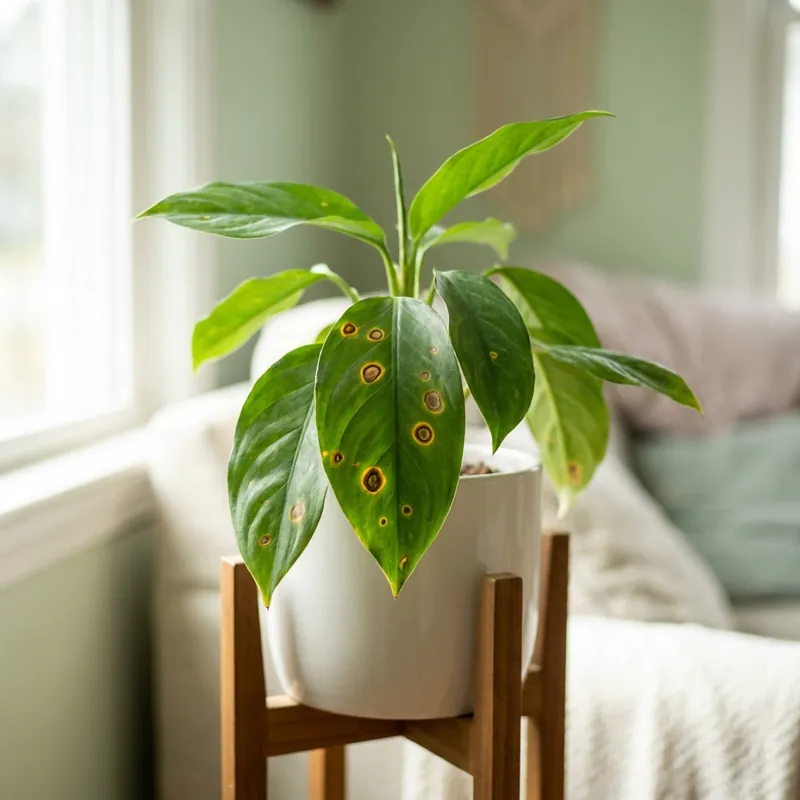
Short answer: Leaf spot is usually a fungal disease that causes brown or black spots, often with a yellow halo, which spread and can merge until a leaf dies. It follows leaves staying wet. Remove the spotted leaves and throw them in the trash, then water only the soil so the foliage stays dry.
What it looks like
- Round brown or black spots, often with a yellow ring around them
- Spots that slowly grow larger and join together into blotches
- A target pattern of rings inside some spots
- Tiny black dots in the dead center of older spots
- Leaves that turn yellow around the spots and then die
- Spotting that starts on lower or inner leaves, where splashing water lands and leaves stay wet longest
Is it leaf spot or something else?
| Could also be | How to tell |
|---|---|
| Bacterial blight | Bacterial spots look water-soaked or greasy at first, are often fairly even in size and can ooze something sticky. They spread much faster than fungal spots, especially in wet, warm conditions. |
| Too much light | Sunburn shows as pale, bleached or crispy patches on the leaves facing the sun, and it appears all at once after a move. Leaf spots are scattered, have a darker edge and keep spreading. |
| Cold damage | Cold damage turns patches dark and mushy within a few days of a chilly night or a cold window, then stops. Leaf spots keep appearing on new leaves over weeks. |
Why it happens
Most leaf spots come from fungi that survive on dead leaves and plant debris, in the pot or on the ground. When water splashes onto a leaf and stays there, spores can sprout and infect it. Each new spot makes more spores, which the next splash carries to other leaves.
Plants that get their leaves wet often are most at risk: houseplants misted or watered from above, garden plants under sprinklers, and anything set outdoors in the rain. Crowded plants dry out slowly after watering, so they stay wet longer and spot more.
Some leaf spots are caused by bacteria instead. They look similar and are hard to tell apart without a lab, so it helps to treat any spotting with the same care: remove it, keep leaves dry and keep tools clean.
How to fix it
- Remove spotted leaves and bin them. Cut off every leaf with spots and pick up any that have fallen into the pot or onto the ground. Put them in the trash, not the compost, since the fungus survives on dead leaves.
- Water the soil, never the leaves. Pour water directly onto the soil at the base of the plant and stop misting. Outdoors, use a watering can or soaker hose instead of a sprinkler.
- Improve airflow. Move the plant so its leaves don't touch neighboring plants, and thin out crowded stems. Moving air helps wet leaves dry quickly.
- Disinfect scissors between cuts. Wipe the blades with rubbing alcohol after each cut so you don't carry spores from a spotted leaf to a healthy one. Clean them again before you use them on another plant.
- Watch the new leaves. Check the plant every few days for fresh spots and remove them as soon as you see them. If new leaves stay clean, the problem is under control.
How to prevent it
- Water at the soil line and keep leaves dry, especially on fuzzy-leaved plants like African violets
- Give plants enough space for air to move between them
- Clear fallen leaves from pots and garden beds, particularly in fall
- Keep houseplants inside during rainy spells instead of setting them out to get washed
- Clean pruning tools before moving from one plant to the next
Plants it often affects
- Rose black spot gives dark round spots with fringed edges, then yellow leaves that drop
- Strawberry small spots with pale centers and dark edges on the leaves
- Hydrangea brown or purple spots, usually on the lower leaves first
- Maple dark spots and blotches on the leaves in wet springs
- Tulip small brown spots on leaves and petals in cool, wet weather
Questions people ask
Will leaves with leaf spot recover?
No, the spots stay. A spotted leaf won't turn clean again, and badly spotted ones usually yellow and die. Remove them, and judge the plant by whether its new leaves come out clean.
Can leaf spot spread to other plants?
Yes. Spores move with splashing water, on hands and on tools. Keep the affected plant a little apart from others, water it last and clean your scissors after using them on it.
Should I spray a fungicide for leaf spot?
Start with cleanup either way. A spray can't heal leaves that already have spots; at most it helps protect new growth once the spotted leaves are gone. For most houseplants, removing spotted leaves, keeping foliage dry and improving airflow is often enough to stop the spread.

Not sure it's leaf spot?
Take a photo in Liana and the health check names the problem and tells you what to do first. Liana also reminds you to check the soil, so watering mistakes don't start. Get Liana for iPhone.
Sources
- Clemson Cooperative Extension, Home & Garden Information Center, Houseplant Diseases & Disorders
- University of Maryland Extension, Diagnose Indoor Plant Problems