White mold on vegetables and flowers: how to stop it coming back
White mold, caused by the fungus Sclerotinia and called white mould in Britain, covers stems in fluffy white growth, usually near the base. Hard black lumps like seeds form in and on the stems, and plants such as beans, lettuce, sunflowers and dahlias wilt and collapse. Those lumps can last in soil for years, so getting them out with the plant matters most.
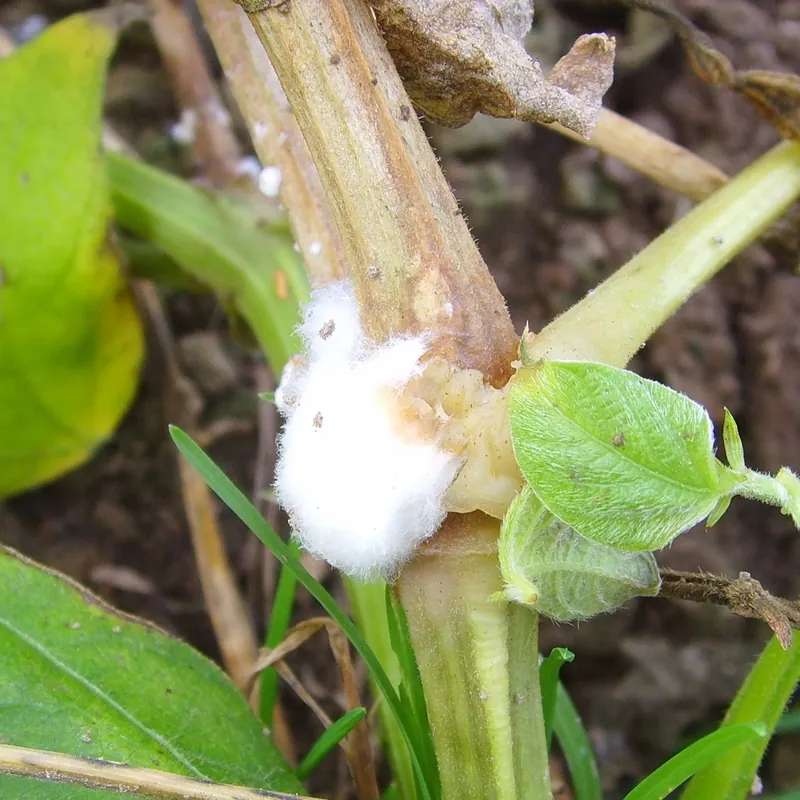
Short answer: White mold is a fungal disease that leaves white, cottony growth on stems, with hard black lumps called sclerotia inside or on the rot. The plant wilts and falls over. Lift infected plants today, bag them so the black lumps don't fall, and put them in the trash, never on the compost pile.
What it looks like
- Soft, water-soaked patches low on stems, near the soil
- White, fluffy, cotton-like growth over the rotting stems or the soil nearby
- Hard black lumps, like mouse droppings or seeds, on the stems or inside when you split one open
- Plants that wilt suddenly and collapse while the soil is still moist
- Lettuce heads that rot and slump from the base
- Brown spots on petals and buds
Is it white mold or something else?
| Could also be | How to tell |
|---|---|
| Gray mold | Gray mold is a gray, dusty fuzz that puffs spores when touched, often on flowers and soft fruit. White mold is bright white and cottony, and it forms hard black lumps. |
| Fusarium wilt | Fusarium wilt yellows and wilts a plant from the inside, with brown streaks in the stem and no fuzz on the outside. |
| Bacterial soft rot | Soft rot turns stems and leaves into a slimy, wet mush that often smells foul. White mold is fluffy and dry on the surface, and you'll find the black lumps. |
Why it happens
White mold is caused by the fungus Sclerotinia sclerotiorum, which can infect more than 400 kinds of plants, from beans, lettuce and cabbage to tomatoes, carrots, sunflowers and many garden flowers. It survives as sclerotia, the hard black lumps, in soil and old plant debris for at least five years.
In cool, wet or humid weather, sclerotia near the soil surface sprout tiny cups that release spores into the air. The spores land on fading flowers and leaves, and the fungus grows from there into the stems. Crowded plants, dense leaves, overhead watering, poorly drained soil and too much nitrogen fertilizer all keep plants damp and help it along.
Corn and other grasses and grains don't get it, which makes them a good crop to grow where it has struck. Weeds can carry it, so a weedy bed keeps the fungus going.
How to fix it
- Lift infected plants today. Slip a bag over the plant before you pull it, or lay a sheet on the ground, so the black lumps don't drop into the soil. Pull up the whole plant, roots and all.
- Throw them out with any fallen lumps. Seal the bag and put it in the trash, or burn it where that is allowed. Pick up any black lumps you see on the soil surface too.
- Space plants and keep stems dry. Give plants more room so air moves between them. Water the soil at the base, early in the day, with a soaker hose or watering can instead of a sprinkler.
- Grow sweet corn there for several years. Corn isn't affected, so plant it in that bed while the sclerotia die off. Grow beans, lettuce, sunflowers and other hosts somewhere else, and keep the bed weeded.
Watch out: The black lumps survive in soil for many years. Put on the compost pile or dug back into the soil, they restart the disease wherever the compost goes.
How to prevent it
- Space plants well and choose open, upright varieties
- Water deeply at the soil, early in the day, with drip or soaker hoses
- Go easy on nitrogen fertilizer, which makes soft, dense growth
- Clear away fading flowers and dead leaves, where infections often start
- Check saved bean and sunflower seed for black lumps and throw those out
Plants it often affects
- Bean white fuzz on stems and pods low down, then the plant collapses
- Lettuce the head rots from the base and slumps, known as lettuce drop
- Sunflower the stem rots near the soil and the plant topples
- Cabbage heads rot under a white, cottony growth
- Carrot roots turn soft and cottony, often in storage
- Tomato stems rot near the soil line and the plant wilts
Questions people ask
How long does white mold stay in the soil?
The black sclerotia can survive in soil for at least five years. That's why removing infected plants before the lumps drop, and growing corn or other non-hosts in that spot, makes such a difference.
Can I compost plants with white mold?
No. A home compost pile won't reliably kill the sclerotia, and spreading the compost spreads the disease. Bag the plants and put them in the trash, or burn them where that is allowed.
Is white mold the same as powdery mildew?
They are different diseases. Powdery mildew is a thin white dust on the surface of leaves, and the plant usually keeps growing. White mold is a thick, cottony growth that rots stems and kills the plant, leaving hard black lumps behind.

Not sure it's white mold?
Take a photo in Liana and the health check names the problem and tells you what to do first. Liana also reminds you to check the soil, so watering mistakes don't start. Get Liana for iPhone.
Sources
- University of Wisconsin-Madison Extension, White Mold
- Utah State University Extension, White Mold