Gray mold: the fluffy fuzz on rotting flowers and fruit
Gray mold, often called botrytis after the fungus that causes it, is a fuzzy gray growth on soft, rotting flowers, fruit, leaves and stems. British gardeners know it as grey mould. It attacks hundreds of plants, from strawberries to houseplants, and it gets a foothold through dead or damaged tissue when the air is damp and still.
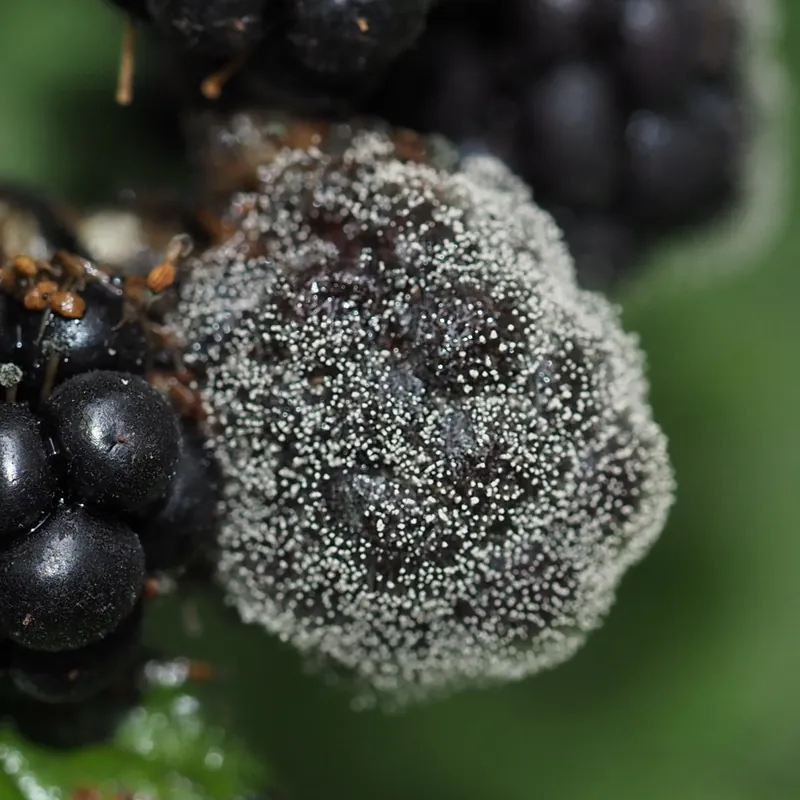
Short answer: Gray mold is a fungal disease, caused by Botrytis cinerea, that rots soft plant parts and covers them in fluffy gray fuzz full of dusty spores. It usually starts on dead flowers, bruised fruit or damaged leaves. Gently bag and cut off every moldy part today, clear away dead flowers and fallen leaves, and get more air moving around the plant.
What it looks like
- Fluffy gray or gray-brown fuzz on flowers, fruit, leaves or stems that puffs out dust when touched
- Soft, brown, rotting patches that spread quickly, often starting on a dead petal or a bruised spot
- Flower petals browning from the center outward, or buds that rot before they open
- Strawberries and other soft fruit that turn brown and soft and grow fuzz on the plant
- Irregular brown patches on leaves, sometimes with rings like a target
- Stems that rot through at a wound or pruning cut, so everything above wilts
Is it gray mold or something else?
| Could also be | How to tell |
|---|---|
| Powdery mildew | Powdery mildew is a flat, white dust on the surface of healthy-looking leaves. Gray mold is raised, fluffy and gray, and the tissue under it is soft and rotting. |
| Bacterial soft rot | Bacterial soft rot turns tissue slimy and wet and usually smells foul, with no fuzz. Gray mold rot is drier and covered in gray growth. |
| Flowers fading with age | Old petals brown from the outer edges and dry out cleanly. Gray mold browns petals from the center outward and they go soft and fuzzy in damp air. |
Why it happens
Gray mold is caused by Botrytis cinerea, a fungus that lives on dead and dying plant material almost everywhere. It readily infects tender tissue such as petals and ripe fruit, and it gets into healthy leaves and stems through wounds or from dead tissue touching them, like a withered petal stuck to a leaf.
It needs moisture to infect. Damp, humid, still air, plants packed close together, leaves that stay wet and cool nights all help it along, while warm, dry weather slows it down or stops it. Indoors, crowded windowsills and steamy rooms with no ventilation invite it.
The fuzz is made of spores, and touching or shaking a moldy part releases clouds of them. They travel on air and splashing water, and the fungus survives between seasons on infected dead material, which is why clearing away debris makes such a difference.
How to fix it
- Cut off every moldy part today. Slip a plastic bag over each moldy flower, fruit or leaf first, then cut it off into the bag without shaking it. On woody stems, cut a few inches below the rot into healthy growth, then put the bag in the trash.
- Pick off dead flowers and fallen leaves. Deadhead fading flowers and clear dead leaves and petals from the plant, the pot and the ground below. This removes the dead tissue the fungus uses to get in.
- Get air moving. Indoors, open a window or move pots apart. Outdoors, space plants out and thin dense growth so leaves and flowers dry quickly after rain.
- Water the soil in the morning. Water at the base of the plant early in the day and keep leaves, flowers and fruit dry. Check the soil first, since plants sitting in wet soil and damp air are the most at risk.
- Clean your scissors. Wipe the blades with rubbing alcohol after cutting out moldy parts so you don't carry spores to healthy plants.
Watch out: Shaking a moldy part releases clouds of spores onto nearby plants. Bag it gently before you pull it off.
How to prevent it
- Deadhead faded flowers regularly and pick ripe fruit promptly
- Give plants enough space for air to move between them, and ventilate rooms and greenhouses
- Water at soil level in the morning, and only when the soil needs it
- Avoid bruising or wounding plants, and don't overfeed, since soft growth rots easily
- Keep strawberries off wet soil with a layer of straw mulch
Plants it often affects
- Strawberry ripening berries turn soft and brown and grow gray fuzz on the plant
- Geranium dead petals and flower heads rot and spread mold to the leaves below
- Cyclamen flower and leaf stalks rot at the base of the plant, often in cool, humid rooms
- Tulip petals spot and rot, and the rot can travel down into the bulb
- Rhododendron flowers rot in wet springs, and thick leaves get brown patches with rings
Questions people ask
Can I eat strawberries from a plant with gray mold?
Throw out any berry with mold on it, along with any that touch it, since the fungus spreads quickly between soft fruit. Berries from the same plant without any spots are fine to eat once washed.
Can I compost plants with gray mold?
It's safer to bag them for the trash. The fungus survives on dead plant material, and a cool compost pile won't reliably kill it. Shaking moldy material into a heap also releases spores.
Will a plant recover from gray mold?
Usually, yes, once the moldy parts are gone and the weather or room dries out. Many flowering plants come back well when the damp spell ends. Keep removing any new moldy spots as soon as you see them.

Not sure it's gray mold?
Take a photo in Liana and the health check names the problem and tells you what to do first. Liana also reminds you to check the soil, so watering mistakes don't start. Get Liana for iPhone.
Sources
- University of Illinois Extension, Gray Mold (Botrytis)
- University of Wisconsin-Madison Plant Disease Diagnostics Clinic, Gray Mold (Botrytis Blight)