Animal damage to plants: how to tell who did it
Animal damage to plants can appear overnight: shoots bitten off, bark gnawed, bulbs dug up or fruit pecked. Deer, rabbits, squirrels, mice and birds all feed in gardens, and each leaves its own clues. Work out which animal it is before you buy fencing, since what stops a rabbit won't stop a deer.
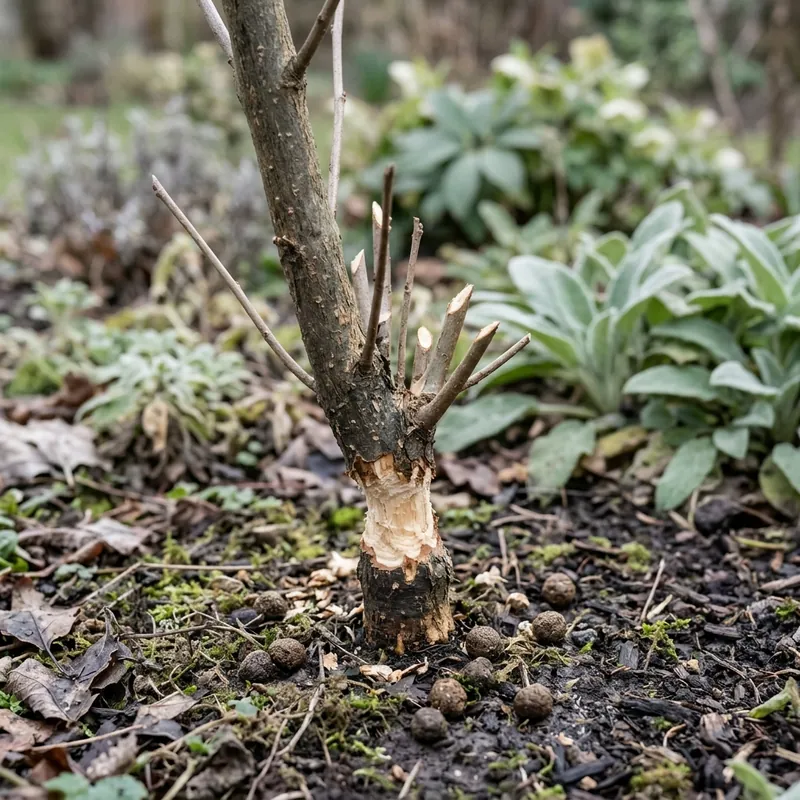
Short answer: Look at the height and the edges of the damage. Rabbits clip stems low down with a clean, slanted cut, while deer tear shoots raggedly and higher up. Protect young plants with rabbit fencing or wire guards, net fruit and cover new bulbs with mesh, and use a fence at least 6 feet tall for deer.
What it looks like
- Stems, buds and flower heads cut off cleanly at a slant, close to the ground
- Ragged, torn shoot tips and leaves higher up, often above about 2 feet
- Bark gnawed off the base of young trees and shrubs
- Freshly planted bulbs dug up, with small holes in the soil
- Fruit with peck marks or pieces missing
- Droppings nearby: small round pellets from rabbits, larger jellybean-shaped ones from deer
- Hoofprints about 2 to 3 inches long with a split down the middle
Is it animal damage or something else?
| Could also be | How to tell |
|---|---|
| Slugs and snails | Slugs and snails chew ragged holes in soft leaves and leave a silvery slime trail, mostly at night in damp weather. They don't bite through woody stems or take whole shoots. |
| Caterpillars | Caterpillars chew holes and edges in leaves and leave small dark droppings below. You can usually find them on the plant, often under the leaves. |
| Cutworms | Cutworms cut seedlings off at soil level overnight and leave the top lying beside the stump. Dig gently around the plant and you will find a fat caterpillar curled up in the soil. |
Why it happens
Gardens are full of soft, well-fed growth, which makes an easy meal. Rabbits feed close to the ground on vegetables, flowers, fruit plants and the thin bark of young trees, and can reach higher only when snow lifts them. Deer browse anything they can reach, and when wild food is short they eat even plants sold as deer-resistant.
Each animal has its habits. Deer feed mostly in the late evening and early morning, so you often see the damage before the animal. Squirrels and mice dig where soil has just been turned, which is why new bulb plantings get raided, and birds go for ripening fruit and young cabbage-family plants.
How to fix it
- Read the damage first. Note how high the damage is and whether the cuts are clean or torn. Look for droppings, tracks and dug soil. Clean, slanted cuts below about 2 feet point to rabbits, and ragged tears higher up point to deer.
- Guard young plants and trunks. For rabbits, put up chicken wire with holes no bigger than an inch, at least 2 feet high, with the bottom buried 6 to 10 inches. Wrap young trunks in a cylinder of wire mesh held away from the bark, and clear out leaves that collect inside it.
- Net fruit and cover new bulbs. Drape netting over fruit bushes and cabbage-family crops and pin the edges down so birds can't get underneath. Lay wire mesh over newly planted bulbs so squirrels can't dig them up.
- Fence deer out or grow plants they avoid. A deer fence needs to be at least 6 feet tall, and 7 to 8 feet where deer are common or the ground slopes. Keep the bottom tight to the ground, since deer will crawl under a gap. Otherwise choose plants deer like less, knowing they will still eat them when food is scarce.
Watch out: Rabbits leave clean, slanted cuts low down, while deer tear shoots raggedly higher up. Guard against the right animal, or the fence won't help.
How to prevent it
- Put guards on new trees and shrubs at planting time, before their first winter
- Clear brush piles and debris where rabbits hide
- Net fruit as soon as it starts to color
- Before planting a whole bed of something sold as deer-resistant, set out a potted one for a few days and see if it gets eaten
Plants it often affects
- Lettuce rabbits can clip young plants to the ground overnight
- Bean rabbits eat seedlings and young leaves
- Strawberry rabbits eat the plants and birds peck the ripening fruit
- Apple deer browse the shoots, and rabbits gnaw the bark of young trees
- Rose a deer favorite, with buds and shoot tips torn off
Questions people ask
How can I tell rabbit damage from deer damage?
Rabbits cut stems cleanly at an angle, as if with a knife, and usually stay below about 2 feet. Deer twist and pull, leaving ragged ends, often higher up. Droppings help too: rabbit pellets are small and round, while deer droppings are larger and shaped like jellybeans.
Do deer repellents work?
They can help for a while. Apply them before damage starts and again after rain, heavy dew or sprinklers. They often fail when food is scarce, so a fence is the most reliable answer.
Will a plant grow back after an animal eats it?
Most established perennials and shrubs regrow from lower buds once they are protected. A young tree with its bark gnawed all the way around the trunk often dies, so guard trunks before winter.

Not sure it's animal damage?
Take a photo in Liana and the health check names the problem and tells you what to do first. Liana also reminds you to check the soil, so watering mistakes don't start. Get Liana for iPhone.