Black vine weevil: how to find the grubs and stop them
Black vine weevil (called vine weevil in Britain) is a beetle whose adults chew notches around leaf edges at night. The worse damage happens out of sight, where its cream, C-shaped grubs eat the roots. Potted plants can look fine one week and collapse the next.
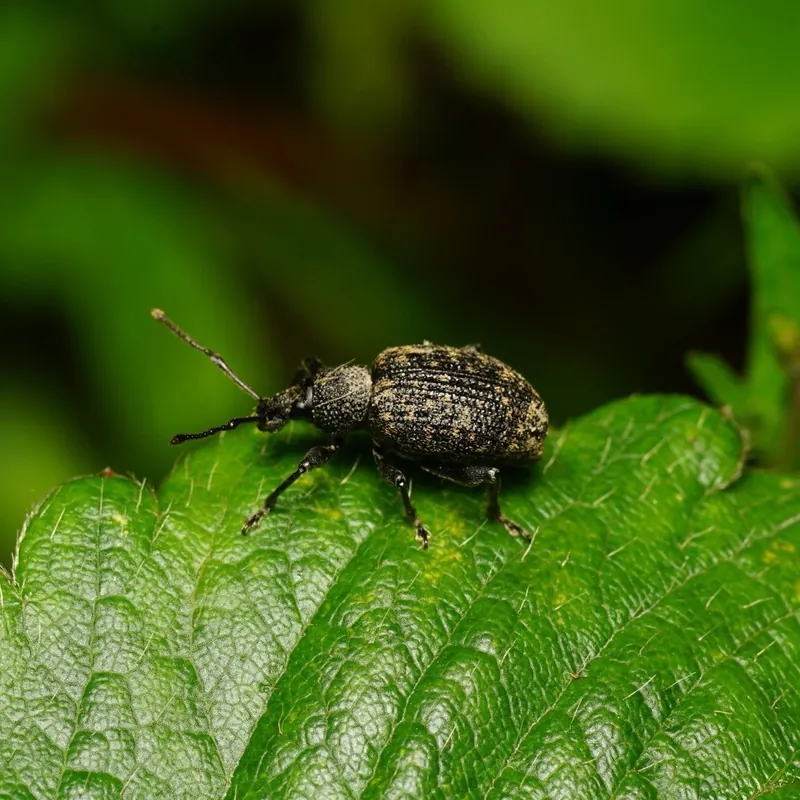
Short answer: Black vine weevils are dull black, flightless beetles that feed at night and leave neat notches in leaf edges. Their grubs live in the soil and eat roots, so a plant that wilts with moist soil may be full of them. Tip the plant out of its pot today, pick out every grub and repot it into fresh potting mix.
What it looks like
- Neat, curved notches chewed out of the leaf edges
- A potted plant that wilts or collapses even though the soil is moist
- Plump, cream, legless grubs curled in a C shape among the roots, with a light brown head
- Few roots left, or roots and tubers chewed away
- A plant that lifts easily out of the pot, or wobbles at the base
- Dull black beetles with a short snout on the plant after dark
Is it black vine weevil or something else?
| Could also be | How to tell |
|---|---|
| Root rot | Root rot leaves roots brown, soft and smelly, with no grubs. With vine weevil the roots are simply missing or chewed, and you'll find cream grubs in the soil. |
| Slugs and snails | Slugs chew ragged holes anywhere on the leaf and leave silvery slime. Vine weevil adults take neat, curved bites only from the edges. |
| Leafcutter bees | Leafcutter bees cut very neat, round or oval pieces from leaf edges, mostly roses, and the plant grows on as normal. Weevil notches are smaller and more irregular, and the plant may wilt from grubs below. |
Why it happens
Every adult black vine weevil is female, and each can lay several hundred tiny eggs in the soil in spring and summer without mating. The grubs hatch and feed on roots through autumn, winter and into spring, which is when most plants die.
Plants in pots suffer most, because the grubs are trapped with a small root ball and eat through it. Soft, open potting mix is easy for them to move through, and soil kept wet suits them.
Adults can't fly, so they arrive on new plants or walk in from nearby beds. They hide by day under pots, in leaf litter and in mulch, and climb up to feed at night from spring to late summer.
How to fix it
- Tip the plant out and pick out every grub. Slide the plant out of its pot over a sheet of newspaper and break up the soil gently with your fingers. Pick out every cream grub you find and destroy it. Check the neighboring pots too, since grubs are rarely in just one.
- Repot into fresh potting mix. Rinse what's left of the roots and repot into fresh potting mix in a clean pot. Throw the old soil away rather than reusing it, since it can still hold eggs and small grubs. Water lightly and let the plant recover in shade for a few days.
- Water in nematodes in late summer. Beneficial nematodes are tiny worms that hunt the grubs in soil. Water them into pots and beds in late summer, while the soil is still warm (above about 55°F) and the grubs are small. Follow the packet directions and keep the soil moist afterward.
- Check plants by flashlight and pick off the adults. On mild evenings from spring to late summer, look over plants with notched leaves after dark. Pick the adults off by hand, or shake shrubs over a sheet or open umbrella to catch them.
- Look under pots and in hiding places. By day, adults rest under pots, in saucers and in plant debris. Check these spots and clear away dead leaves and excess mulch around pots.
Watch out: Notched leaves mean grubs are probably in nearby pots. Check the roots before plants wilt, especially cyclamen, coral bells (heuchera) and primroses.
How to prevent it
- Tip new potted plants out and check the root ball before they join your collection.
- Check plants with notched leaves after dark in spring and summer, and remove the adults before they lay eggs.
- Water container plants when the top of the soil is dry, not on a schedule. Constantly wet soil suits the grubs.
- Treat pots of favorite hosts with nematodes each late summer if you've had weevils before.
Plants it often affects
- Strawberry grubs eat the roots, especially in pots and planters
- Cyclamen grubs bore into the tuber, and the plant collapses suddenly
- Coral bells heuchera in pots often lifts out with its roots eaten away
- Primrose a favorite of the grubs in pots and borders
- Rhododendron adults notch the leaf edges; grubs feed on roots below
- Fuchsia container plants wilt as the grubs eat the roots
Questions people ask
What are the white C-shaped grubs in my potted plant?
If they're cream, legless and curled in a C with a light brown head, they're very likely black vine weevil grubs. Lawn grubs and other beetle larvae have six small legs near the head. Pick them all out and repot into fresh potting mix.
Can a plant recover from vine weevil grubs?
Often, yes, if some roots are left. Remove the grubs, repot into fresh mix, keep it out of strong sun and water only when the top of the soil is dry. A plant with no roots left rarely recovers.
When should I use nematodes for vine weevil?
In late summer or early autumn, while the soil is still warm and the grubs are young and small. In cold soil the nematodes don't work well, so treating in winter usually fails.

Not sure it's black vine weevil?
Take a photo in Liana and the health check names the problem and tells you what to do first. Liana also reminds you to check the soil, so watering mistakes don't start. Get Liana for iPhone.
Sources
- Royal Horticultural Society, Vine weevil
- Ohio State University Extension, Black Vine Weevil (and Other Root Weevils)