Anthracnose on plants: how to spot it and stop the spread
Anthracnose on plants shows up as sunken, dark patches on leaves, stems or fruit. It is a fungal disease that spreads in splashing water and survives the winter in fallen leaves and dead twigs. It hits shade trees such as dogwood and sycamore, and vegetables such as beans, hardest in wet weather.
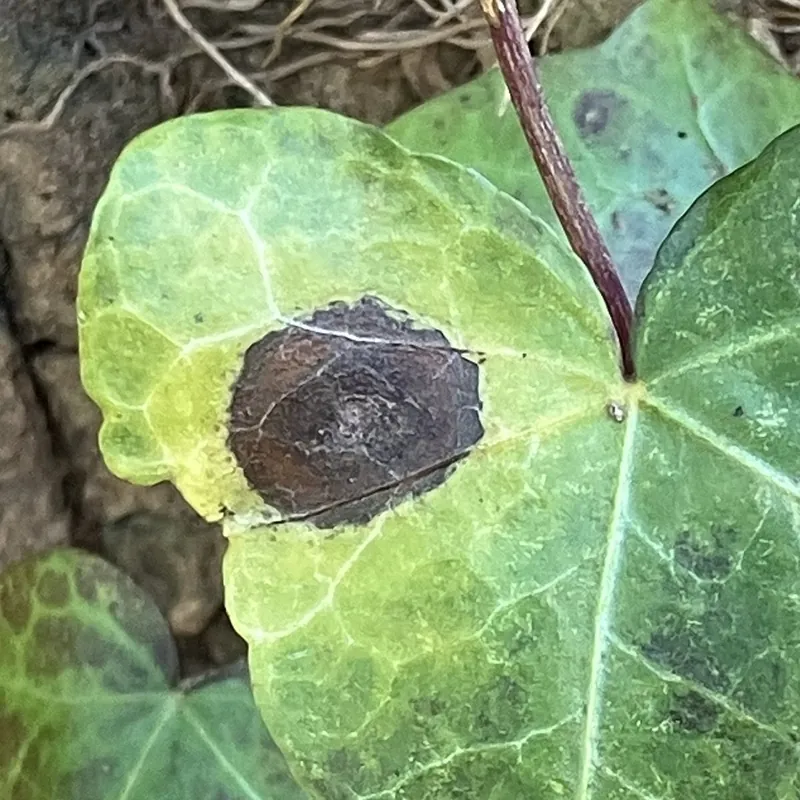
Short answer: Anthracnose is a group of fungal diseases that cause dark, sunken spots and patches on leaves, stems and fruit. In wet weather the spots often carry tiny pink or orange spore masses, which is the giveaway. Cut off the spotted parts and throw them away, then water only at the soil so the foliage stays dry.
What it looks like
- Dark brown or black patches on leaves, stems or fruit that look sunken compared with the healthy tissue around them
- Pink or orange, slightly slimy spore masses in the middle of the spots after rain
- On tree leaves, dead brown areas that follow the main veins, as on sycamore and oak
- Young leaves that curl or twist, with only part of the leaf dying
- Small dark spots or sunken cankers on twigs, and shoot tips that die back
- Trees that drop many leaves in a wet spring, often from the bottom up, leaving healthy leaves at the top
- On beans, dark sunken spots on pods and stems, and seedlings that collapse at the base
Is it anthracnose or something else?
| Could also be | How to tell |
|---|---|
| Leaf spot | Ordinary fungal leaf spots are flat and stay on the leaves. Anthracnose patches look sunken, also show up on stems and fruit, and often carry pink or orange spore masses in wet weather. |
| Bacterial blight | Bacterial blight starts as wet, greasy-looking patches that spread fast and may ooze or smell. Anthracnose spots are drier, sunken and spread more slowly. |
| Leaf scorch | Scorch browns the leaf edges and the tissue between the veins during hot, dry spells. Anthracnose follows wet weather and the dead areas tend to run along the veins. |
Why it happens
Several different fungi cause anthracnose, and most of them stick to their own group of plants. They spend the winter in infected twigs, fallen leaves and old plant debris. In spring, splashing rain or sprinkler water carries their spores onto fresh new growth.
These fungi need water to spread and infect, so a long, rainy spring right after the leaves open is when trees suffer most. Hot, dry weather slows the disease on deciduous trees. Crowded plants, dense canopies and sprinklers that wet the leaves all keep the foliage wet for longer.
On beans and other vegetables the fungus can also travel on seed, which is why seed saved from an infected crop brings the disease straight back the next year.
How to fix it
- Cut off spotted leaves, stems and fruit. On a dry day, snip off the spotted parts and put them in a bag in the trash. Pull up bean plants that are badly infected. Wipe your pruners clean when you finish.
- Water the soil, never overhead. Water at the base of the plant and keep sprinklers off the leaves. Indoors, stop misting. Stay out of the vegetable bed while the leaves are wet, since hands and clothes can carry spores.
- Clear fallen debris and give plants air. Rake up fallen leaves and twigs during the season and again in fall, and throw them away. Space plants so air can move between them. On trees, prune out dead and infected twigs in fall or winter, but avoid cutting large branches hard, which triggers weak, leafy shoots.
- Rotate vegetables and don't save seed. Grow beans and other affected crops in a different part of the garden for the next few years. Don't save seed from infected plants. Start with fresh seed from a supplier instead.
Watch out: Indoors, anthracnose often starts after misting or when water sits on the leaves. Keep the foliage dry and the spots usually stop spreading.
How to prevent it
- Water at the soil and keep leaves dry, especially in cool, wet springs
- Rake up and throw away fallen leaves and twigs from trees that had anthracnose
- Space plants and thin dense growth so leaves dry quickly after rain
- Choose resistant trees, and avoid very prone ones such as American sycamore in damp spots
- Buy disease-free bean seed and move beans to a new spot each year
Plants it often affects
- Bean dark, sunken spots on pods, stems and leaves; seedlings can be killed
- Flowering dogwood spotted, browned leaves and twig dieback after wet springs
- American sycamore very prone; dead patches along the leaf veins and heavy spring leaf drop
- Maple irregular dark blotches on the leaves in rainy springs
- Ash irregular brown patches and early leaf drop
- Oak brown areas along the main veins of the leaves
Questions people ask
Will my tree recover from anthracnose?
Usually the disease slows as soon as the weather turns warm and dry, and the tree carries on growing. Repeated wet springs are harder on it, since twig cankers and dieback can leave branches gnarled. Cleaning up fallen leaves and pruning out dead twigs reduces the spores waiting for next spring.
Why does anthracnose come back every spring?
The fungus spends the winter in infected twigs and in the leaves on the ground. When spring rain splashes onto the new leaves, it carries the spores with it. A dry spring often means little or no anthracnose that year.
Can I compost leaves with anthracnose?
It is safer to put them in the trash. The fungus survives in dead leaves and twigs, and a small home compost pile that never heats up won't kill it. Spreading that compost later can bring the disease back to your beds.

Not sure it's anthracnose?
Take a photo in Liana and the health check names the problem and tells you what to do first. Liana also reminds you to check the soil, so watering mistakes don't start. Get Liana for iPhone.
Sources
- University of California IPM, Anthracnose
- Iowa State University Extension, Common Problems of Green Beans in the Home Garden