Downy mildew: yellow patches with fuzz underneath
Downy mildew is a leaf disease that leaves yellow or pale patches on top of leaves and a gray, white or purple fuzz underneath. It loves cool, damp weather and wet leaves, and it can strip basil, lettuce, cucumbers, grapes and impatiens in a few weeks. Gardeners often take it for powdery mildew, which needs a different approach.
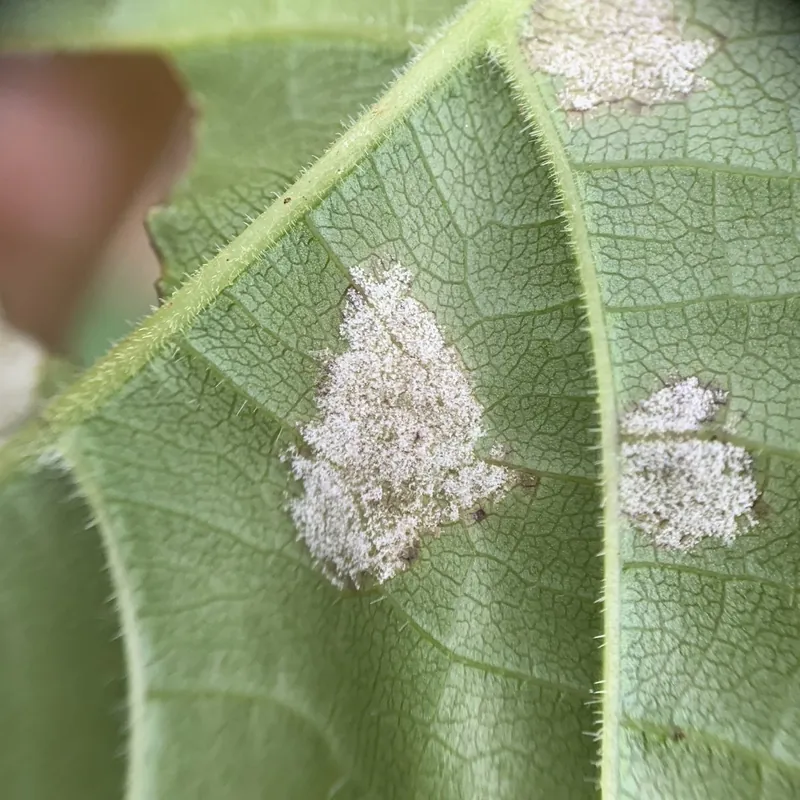
Short answer: Downy mildew is caused by a fungus-like water mold that infects leaves while they are wet. The giveaway is yellow or pale patches on the upper surface with fuzzy gray or purplish growth directly below them on the underside. Remove infected leaves and throw them out, then water the soil in the morning so the leaves stay dry.
What it looks like
- Yellow or pale green patches on the upper side of leaves, often angular because the leaf veins stop them spreading
- Gray, white or purplish fuzz on the underside of the leaf, right below the patches, most visible after a humid night
- Patches that turn brown and dry as they age
- Leaves that yellow, curl and drop, sometimes stripping a plant within weeks
- Stunted plants, and in impatiens whole plants that collapse in wet weather
- Trouble that flares in cool, wet spells and slows when the weather turns dry
Is it downy mildew or something else?
| Could also be | How to tell |
|---|---|
| Powdery mildew | Powdery mildew is a white, dusty coat on the top of the leaf that wipes off, and it does fine in dry weather. Downy mildew's fuzz grows underneath the leaf, below yellow patches, and needs wet leaves. |
| Nutrient deficiency | A deficiency yellows leaves in an even pattern, often all the older leaves or the areas between the veins, and there is nothing growing underneath. Turn a yellow leaf over: dark fuzz means downy mildew. |
| Leaf spot disease | Leaf spots are brown or black, often round with a darker edge or a yellow ring. Downy mildew starts as pale or yellow patches with fuzz below, and only turns brown later. |
Why it happens
Downy mildews are caused by water molds, organisms that behave like fungi but are more closely related to algae. Each kind attacks its own small group of plants: the one on basil won't infect grapes or impatiens. They are unrelated to powdery mildew despite the name.
They need water on the leaf for a long stretch to infect, so they are worst in cool, wet summers, after rainy spells and where leaves stay wet overnight. Rain splashes the spores from plant to plant, and wind can carry them a long way.
Some downy mildews leave tough resting spores in fallen leaves and soil, which can survive for up to five years and infect the next crop of the same plant grown there. Infected seedlings and transplants also bring it into gardens.
How to fix it
- Remove infected leaves and throw them out. Pick off every leaf with patches and fuzz, and pull up badly affected plants. Bag them for the trash rather than the compost, so the spores don't overwinter in your garden.
- Water the soil in the morning. Water at the base of the plant, never over the leaves, and do it early in the day. Leaves then dry quickly instead of staying wet through the night.
- Thin crowded plants. Pull out some plants from crowded rows and trim dense growth so air moves between them. Pull weeds around them too, since they trap damp air.
- Grow resistant varieties and rotate next year. Look for varieties labeled resistant to downy mildew, which exist for basil, lettuce, cucumbers and impatiens. Plant the same crop in a different spot so it doesn't pick up spores left in the soil.
Watch out: It is often mistaken for powdery mildew. Downy mildew's fuzz grows under the leaf, and it needs wet leaves to spread.
How to prevent it
- Water early in the day at soil level, and skip overhead sprinklers
- Space plants widely and grow them in full sun where they like it
- Turn leaves over every few days in cool, damp weather, so you spot the fuzz early
- Choose resistant varieties and buy healthy-looking transplants
- Clear away infected plants and fallen leaves at the end of the season
Plants it often affects
- Basil leaves yellow from the center with dark gray fuzz underneath; often mistaken for a nutrient problem
- Impatiens garden impatiens yellow, drop their leaves and collapse in wet summers
- Cucumber angular yellow patches between the veins and purplish gray fuzz below
- Lettuce pale patches on the outer leaves with white fuzz underneath
- Grape yellow oily-looking spots on top of leaves and white fuzz below, and shriveled young fruit
- Spinach yellow patches with grayish purple fuzz underneath in cool, wet weather
Questions people ask
What is the difference between downy mildew and powdery mildew?
Look where the growth is. Powdery mildew is a white powder on top of the leaf and likes dry weather. Downy mildew shows as yellow patches on top with gray or purple fuzz underneath, and it needs wet leaves.
Can I eat basil or lettuce with downy mildew?
Yes, it doesn't harm people. The leaves taste fine but look poor and spoil faster, so pick healthy leaves to eat and remove the infected ones.
Will downy mildew go away on its own?
It often slows down when the weather turns warm and dry, but leaves that are already infected won't recover. Remove them, keep foliage dry, and give the plant more air so new growth stays clean.

Not sure it's downy mildew?
Take a photo in Liana and the health check names the problem and tells you what to do first. Liana also reminds you to check the soil, so watering mistakes don't start. Get Liana for iPhone.
Sources
- Royal Horticultural Society, Downy mildews
- University of Wisconsin-Madison Plant Disease Diagnostics Clinic, Downy Mildew