Ants on plants: what they are telling you
Ants on plants are rarely the real problem. They climb stems to collect honeydew, the sugary waste of aphids, scale and mealybugs, and they guard those insects from their enemies. In a pot that stays dry, a colony may also move in among the roots.
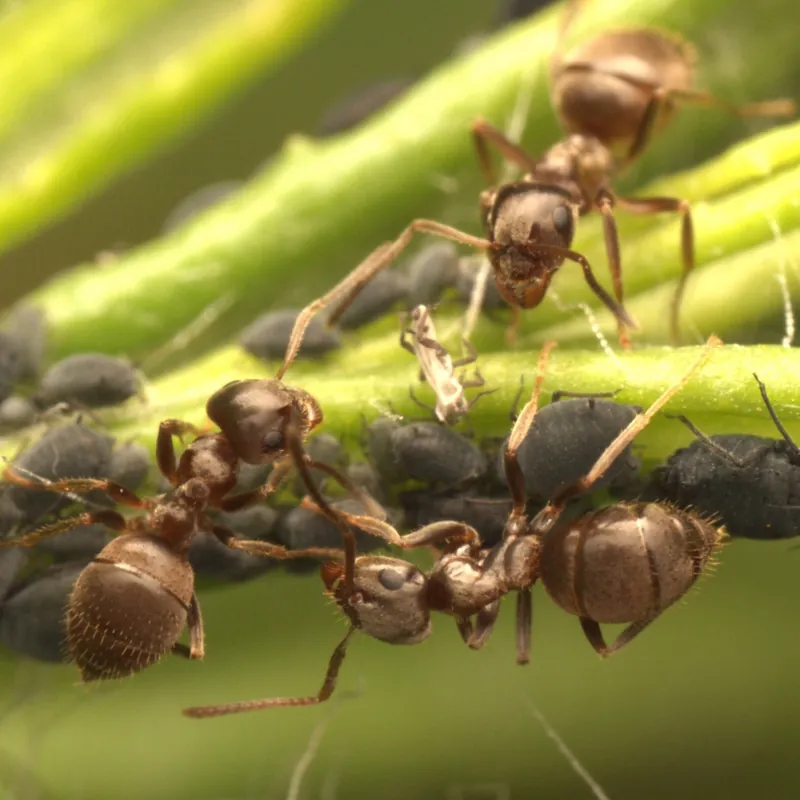
Short answer: Ants do little direct harm to plants. If you see them running up stems, look for aphids, scale or mealybugs, because the ants are tending them for their honeydew. Deal with those insects first. If ants are nesting inside a pot, shake out the old potting mix and repot in fresh mix.
What it looks like
- Lines of ants running up and down stems, often to the tips of new shoots or the undersides of leaves
- Aphids, scale or mealybugs clustered where the ants gather
- Sticky, shiny leaves, sometimes with black sooty mold growing on the sticky film
- Fine soil heaped on the surface of a pot or bed
- A potted plant that wilts quickly, with ants pouring out when you water it or lift it
- Low plants or seedlings buried or knocked over by soil from a nest
Is it ants or something else?
| Could also be | How to tell |
|---|---|
| Aphids | Aphids are small, soft insects, green, black or pink, sitting still in groups on shoots. Ants move fast and travel in lines. Often you have both, and the aphids are the ones doing the harm. |
| Springtails | Springtails are tiny, pale and jump when you water the pot. Ants walk instead of jumping, and they are often carrying something. |
| Sooty mold | A black coating that wipes off the leaves is sooty mold growing on honeydew. It shows sap-sucking insects are there, the same insects ants look after. |
Why it happens
Ants feed on honeydew, the sweet liquid that aphids, soft scale, mealybugs and whiteflies give off as they suck sap. In return, the ants chase off ladybugs and other predators, so the sap-suckers multiply faster than they would on their own. That is why a lot of ant traffic on a plant is usually followed by more aphids or scale.
In pots, ants look for warm, dry soil to nest in. Their tunnels among the roots leave air pockets, so the root ball dries out faster and the plant wilts. Out in the garden most ants are useful: they eat pests such as caterpillars and help break down dead matter.
How to fix it
- Find the insects the ants are tending. Follow the ants to where they stop. Check shoot tips, leaf undersides and stems for aphids, scale or mealybugs, and treat those first. A strong spray of water knocks aphids off, and insecticidal soap works on soft-bodied insects.
- Repot if ants nest in the pot. Take the plant outside, ease it out of the pot and shake or rinse the old mix off the roots. Repot in fresh potting mix in a clean pot, then water it thoroughly so the mix settles around the roots.
- Band the trunks of fruit trees. Wrap a sticky or grease band around the trunk to stop ants climbing up to aphid colonies. On young trees, put a collar of heavy paper or tape under the band. Trim branches that touch fences or other plants so the ants can't go around it, and clear debris off the band every week or two.
- Leave nests in beds alone. Ants in garden beds are mostly harmless and eat other pests. Act only if a nest is uprooting or burying seedlings, and then move the young plants or sow them somewhere else.
Watch out: Killing the ants alone won't help. As long as aphids or scale keep making honeydew, the ants keep coming back.
How to prevent it
- Check new shoots for aphids every week or so in spring and summer, and deal with small groups early
- Look houseplants over for scale and mealybugs before you bring them home
- Check the soil in outdoor pots often, since a pot left bone dry for weeks invites a nest
- Keep sticky bands on fruit trees clean and trim branches that touch other plants
Plants it often affects
- Rose ants climb to aphids on new shoots and flower buds
- Apple ants run up the trunk to aphid colonies on young leaves
- Ceanothus ants often guard aphids on the shoots
- Tomato ants follow aphids to shoot tips and leaf undersides
Questions people ask
Are ants bad for my plants?
Usually not directly. They don't eat healthy leaves. The trouble comes from the sap-sucking insects they protect and, in pots, from tunnels that make the roots dry out.
Why are there ants in my potted plant?
Either they are nesting in the soil, usually because it stays warm and dry, or they are visiting aphids or mealybugs on the plant. Check the leaves and stems first. If the ants pour out of the soil itself, repot in fresh mix.
Should I kill the ants in my garden?
Mostly no. Garden ants eat pests such as caterpillars, and getting rid of them outdoors isn't practical. Control the aphids or scale, band fruit trees, and leave nests in beds unless they disturb seedlings.

Not sure it's ants?
Take a photo in Liana and the health check names the problem and tells you what to do first. Liana also reminds you to check the soil, so watering mistakes don't start. Get Liana for iPhone.