Springtails in houseplant soil: tiny jumpers that mean it's too wet
Springtails in houseplant soil are tiny white or gray insects that leap off the surface when you water. They feed on mold and decaying matter and almost never harm plants. Large numbers are a sign the potting mix stays too wet, and letting it dry out is what clears them.
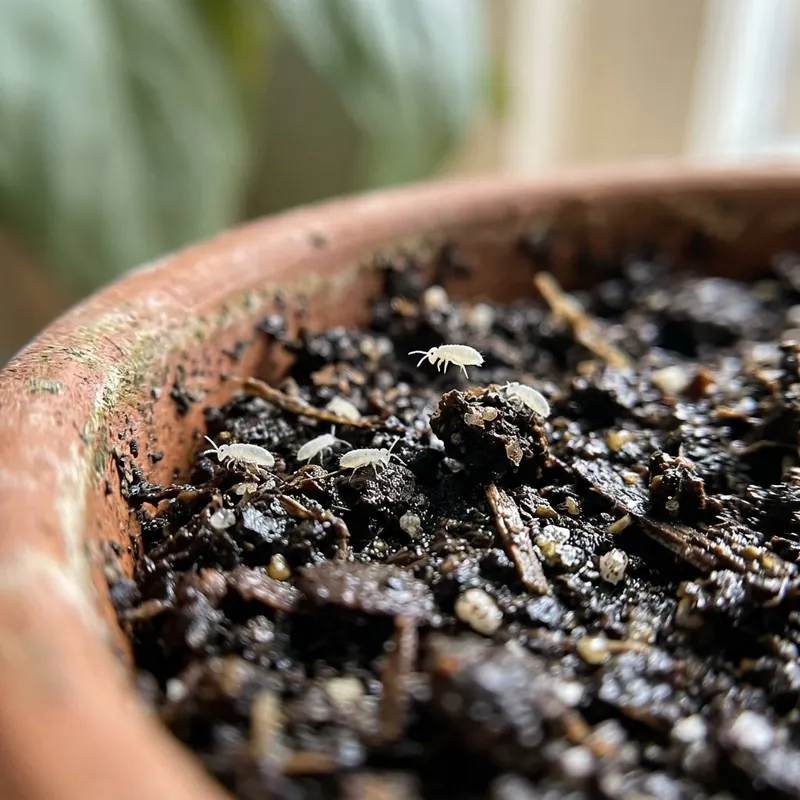
Short answer: Springtails are tiny wingless insects, about 1/16 inch long, that jump using a forked tail tucked under the body. You'll see them on the soil surface or in the saucer, usually right after watering. They're harmless scavengers. Let the top of the soil dry between waterings and empty the saucer, and their numbers drop.
What it looks like
- Tiny white, gray or dark specks that jump when you water or touch the soil
- Crowds of them on the soil surface or floating in the saucer after watering
- Potting mix that stays damp for days, sometimes with mold on the surface
- A plant that otherwise looks healthy, with no chewed leaves
- More of them in rich potting mix or around dead leaves lying on the soil
Is it springtails or something else?
| Could also be | How to tell |
|---|---|
| Fungus gnats | Fungus gnats are small, dark flies that rise from the soil when you move the pot, and their larvae can feed on roots. Springtails have no wings and jump instead of flying. |
| Mealybugs | Root mealybugs are white and waxy and cling to roots and the inside of the pot without moving much. Springtails are quick and spring away when you disturb them. |
| Soil mites | Soil mites are tiny, round, often brown crawlers that walk slowly over the soil and never jump. Springtails are slimmer and leap when touched. |
Why it happens
Springtails live wherever soil stays damp and there's mold and rotting plant matter to eat. Indoors that means potting mix that rarely dries out, saucers left full of water and dead leaves lying on the soil.
When a pot is watered again before the soil has dried, they have steady food and moisture, and their numbers build. Mixes rich in organic matter and fish emulsion fertilizers can encourage them too. Watering brings them up to the surface, which is when you notice them jumping.
They don't harm established plants. The one exception is seedlings: some kinds chew the roots and leaves of very young plants, which can wilt or die.
How to fix it
- Let the top of the soil dry out. Wait until the top inch or two of potting mix is dry before you water again. Push a finger into the soil to check instead of watering on a schedule.
- Empty the saucer. Tip out any water left standing in the saucer or decorative outer pot after watering, so the bottom of the pot can drain and dry.
- Clear dead leaves and mold off the soil. Pick off fallen leaves and scrape away any moldy layer on the surface. This takes away the food springtails live on.
- Repot into fresh mix if they swarm. If they keep swarming after the soil has had a chance to dry, repot into fresh, free-draining potting mix in a pot with drainage holes.
Watch out: Springtails themselves are harmless. Large numbers mean the potting mix stays too wet, so drier soil is what clears them.
How to prevent it
- Check the soil before watering, and water only when the top has dried.
- Use pots with drainage holes, and don't leave them standing in water.
- Keep the soil surface clear of dead leaves and thick layers of moss or mulch.
- Go easy on fish emulsion fertilizer and very rich, high-organic mixes indoors.
Plants it often affects
- Overwatered houseplants the usual case: potting mix that never dries out between waterings
- Pots standing in water water left in the saucer keeps the bottom of the pot wet
- Seedlings the one case where some springtails chew roots and young leaves
- Plants in rich, high-organic mix lots of decaying matter means more food for them
- Plants fed with fish emulsion this fertilizer can encourage them indoors
Questions people ask
Are springtails harmful to houseplants?
No. They feed on mold, algae and decaying matter, and they don't damage established plants. The only exception is very young seedlings, whose roots and leaves some kinds may chew.
Do I need to spray for springtails?
Usually not. Letting the soil dry between waterings, emptying the saucer and clearing debris from the surface brings their numbers down. Spraying doesn't fix the wet soil that lets them build up.
Why do I see springtails right after I water?
Watering brings them up from inside the pot to the surface, where you notice them jumping. If you see crowds every time, the mix is staying too wet between waterings.

Not sure it's springtails?
Take a photo in Liana and the health check names the problem and tells you what to do first. Liana also reminds you to check the soil, so watering mistakes don't start. Get Liana for iPhone.
Sources
- UC Statewide IPM Program, Springtails
- Colorado State University Extension, Managing Houseplant Pests