Spider mites on houseplants: how to spot and stop them
Spider mites on houseplants are tiny relatives of spiders that feed on the undersides of leaves. They're hard to see until there are a lot of them, and by then the leaves look speckled, dull or webbed. Caught early, they clear up with water, damp air and a little patience.
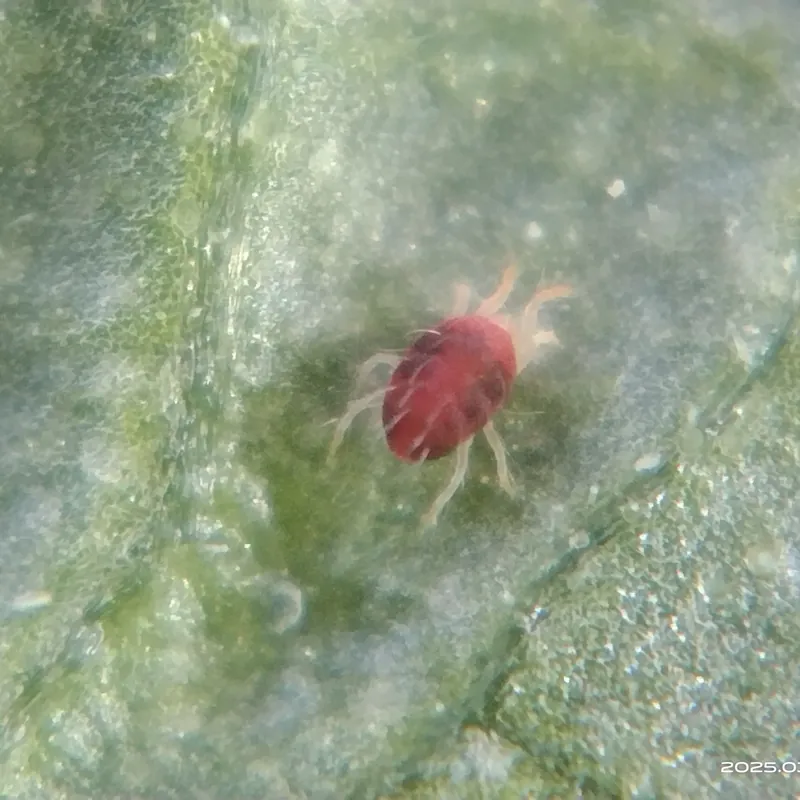
Short answer: Spider mites are tiny sap-feeding mites that live on the undersides of leaves. The giveaway is fine pale speckling on the leaves, often with thin, silky webbing between leaves and stems. Move the plant away from your other plants today, then rinse both sides of every leaf in the shower.
What it looks like
- Fine pale dots (stippling) on the leaves, often starting near the veins
- Thin, silky webbing on leaf undersides or where leaves meet the stem
- Leaves that look dusty, dull gray or bronzed
- Tiny specks that move on a white sheet of paper after you tap a leaf over it
- Leaves turning yellow or reddish, then drying out and dropping
- Slower growth on a plant that seemed healthy a few weeks ago
Is it spider mites or something else?
| Could also be | How to tell |
|---|---|
| Dust | Dust sits on top of the leaf and wipes off, leaving clean green underneath. Mite speckling is in the leaf itself and stays after wiping, and you'll find the mites or their webbing on the underside. |
| Low humidity | Dry air turns leaf tips and edges brown and crisp while the rest of the leaf stays clean. Mites speckle the whole leaf surface. |
| Too much light | Sun scorch makes bleached or brown patches, mostly on the side facing the window. Mite damage is made of many tiny dots and shows up on shaded leaves too. |
Why it happens
Spider mites thrive in warm, dry, dusty conditions. Indoors that often means a plant near a heater, in a hot sunny window or in a room with very dry air. Plants that have been left too dry for too long are hit hardest.
They breed fast. In warm weather a new generation can develop in under a week, so a handful of mites can become a webbed plant before you notice anything. Their eggs sit on the leaf undersides and keep hatching after you've cleaned the plant, which is why one rinse rarely ends it.
Mites usually arrive on a new plant or walk across from an infested neighbor where leaves touch.
How to fix it
- Isolate the plant today. Move it to a different room, away from your other plants. Mites spread fast, and they cross easily wherever leaves touch. Look over the plants that stood next to it for speckling and webbing.
- Rinse both sides of every leaf. Take the plant to the shower or sink and spray the leaves with lukewarm water, tops and undersides. A firm spray breaks up the webbing and knocks off mites and eggs. Cover the soil with a plastic bag first so it doesn't wash out.
- Raise the humidity around the plant. Mites do best in dry air. Run a humidifier nearby or stand the pot on a tray of wet pebbles, keeping the bottom of the pot above the water. Keep the plant away from heaters and warm air vents.
- Check again in five days. Look at the leaf undersides and repeat the paper test. Eggs hatch after the first rinse, so rinse again whenever you find mites, and keep checking until several checks in a row come up clean.
- Try insecticidal soap or horticultural oil if rinsing isn't enough. Spray the leaf undersides thoroughly, because these products only kill the mites they touch. Test on a few leaves first, and never spray a plant that's dry and wilting.
Watch out: Spider mites are easy to mistake for dust. Hold a white sheet of paper under a leaf and tap the leaf. If the paper collects tiny specks that start to move, you have mites.
How to prevent it
- Look at the undersides of a few leaves now and then, with a magnifying glass if you have one.
- Keep new plants apart from the rest for at least three weeks and check them before they join the others.
- Wipe or rinse dusty leaves from time to time. Mites like dust.
- Keep plants away from heaters and hot, dry drafts.
Plants it often affects
- Fiddle-leaf fig figs are a common host; look for dull, speckled patches under the big leaves
- Corn plant dracaenas often get mites; check along the leaf undersides
- Parlor palm fronds turn grayish and speckled in dry indoor air
- Pepper a frequent target in hot, dry weather, indoors and out
- Cucumber leaves turn speckled, then yellow, during hot, dry spells
Questions people ask
Can spider mites spread to other houseplants?
Yes. They crawl from plant to plant where leaves touch, and they can travel on hands and tools. Moving the infested plant away right away limits the spread. Check its neighbors for speckling and webbing over the next week or two.
How long does it take to get rid of spider mites?
Expect it to take several weeks. New mites keep hatching from eggs after each cleaning, so you'll need to rinse and check every few days until you stop finding them.
Should I throw away a plant with spider mites?
Usually not. Most plants recover with repeated rinsing and damper air. If a plant is covered in webbing, has lost most of its leaves and is easy to replace, throwing it out protects the rest of your plants.

Not sure it's spider mites?
Take a photo in Liana and the health check names the problem and tells you what to do first. Liana also reminds you to check the soil, so watering mistakes don't start. Get Liana for iPhone.
Sources
- UC Statewide IPM Program, Spider Mites
- Colorado State University Extension, Managing Houseplant Pests