Sooty mold on plants: where the black film comes from
Sooty mold on plants is a black, sooty film that sits on top of leaves and stems. British gardeners call it sooty mould. It doesn't infect the plant, but it grows on the sticky honeydew that sap-sucking insects leave behind, and a thick coat shades the leaves from the light they need.
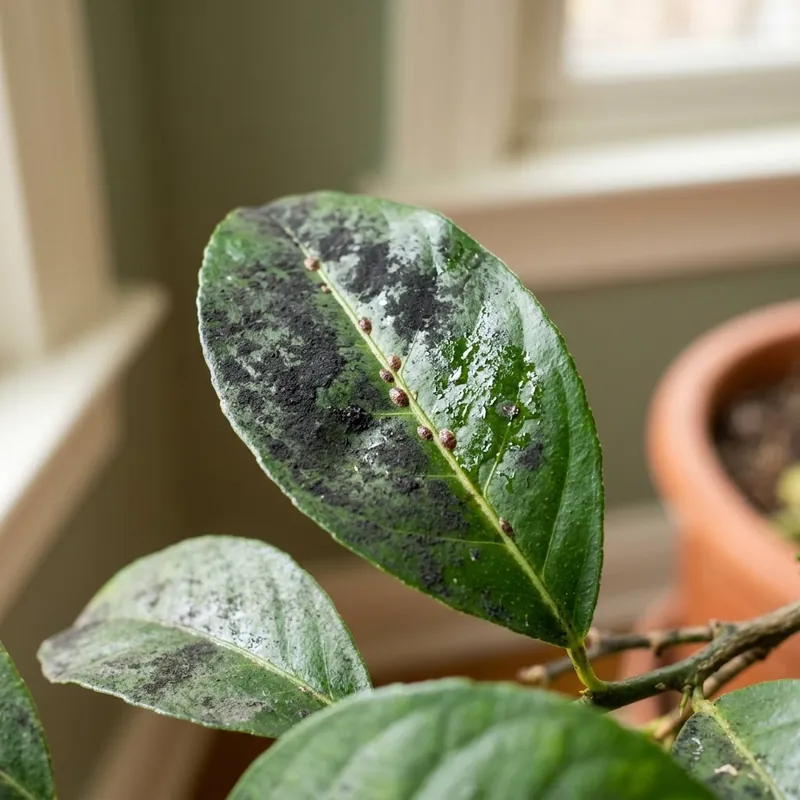
Short answer: Sooty mold is a black fungus that grows on honeydew, the sugary waste of aphids, scale, whiteflies and mealybugs. The giveaway is that it wipes or peels off the leaf, which is often sticky underneath. Find and deal with the insects first, then wash the leaves with a soft cloth and warm soapy water.
What it looks like
- A black or dark gray film on top of leaves that wipes off with a damp cloth, leaving green leaf underneath
- Leaves, stems or the surfaces below the plant that feel sticky or look shiny
- Black coating heaviest on leaves directly under a colony of insects
- Small insects on the undersides of leaves or along stems: aphids, scale bumps, whiteflies or white fluffy mealybugs
- Ants running up and down the stems
- Dull, slow-growing leaves on heavily coated plants, and some leaves yellowing and dropping early
Is it sooty mold or something else?
| Could also be | How to tell |
|---|---|
| Leaf spot disease | Leaf spots are part of the leaf itself: they don't wipe off, and the tissue inside them is dead. Sooty mold sits on the surface and comes away, showing healthy green underneath. |
| Cold damage | Cold-damaged leaves turn dark and soft or papery because the leaf tissue has died. Nothing rubs off, and the damage shows up soon after a cold night or a spot by a chilly window. |
| Dust or grime | Dust is gray or brown and dry, settles evenly on every upward-facing leaf and has no sticky film under it. Sooty mold is black, often patchy, and almost always comes with stickiness and insects. |
Why it happens
Sooty mold starts with insects. Aphids, soft scales, whiteflies, mealybugs and similar sap-feeders drink more sugary sap than they can use and pass the rest as honeydew. The honeydew drips onto the leaves below, and the dark fungi that live on it move in.
The mold itself doesn't feed on the plant. The harm comes from shade: a thick black coat blocks sunlight, so the leaf makes less food, and badly covered leaves can age and drop early. Fruit with sooty mold on it is still fine to eat once washed.
Ants make the problem last. They feed on honeydew and guard the insects that make it, chasing off the ladybugs and tiny wasps that would otherwise eat them. A plant with a steady trail of ants usually has an insect colony somewhere up top.
How to fix it
- Find the insects making the honeydew. Look on the undersides of leaves, along stems and on soft new growth above the blackest leaves. You are looking for aphids, scale bumps, whiteflies or white fluffy mealybugs.
- Deal with those insects. Knock aphids and whiteflies off with a strong spray of water, wipe off scale and mealybugs with a cotton swab dipped in rubbing alcohol, or use insecticidal soap. Repeat over the next few weeks until no new insects appear.
- Wipe the leaves clean. Wash coated leaves gently with a soft cloth and warm soapy water, supporting each leaf from below. Rinse with plain water afterward so no soap is left on the leaf.
- Hose down outdoor plants. Rinse shrubs and trees with a hose to wash off honeydew and loose mold. Once the insects are gone, rain clears the rest over the following weeks.
- Keep ants off the plant. On shrubs and small trees, a band of sticky barrier around the trunk stops ants climbing up, and trimming branches that touch walls or fences removes their bridges. Without ants guarding them, natural enemies thin out the sap-feeders.
Watch out: Cleaning the leaves alone won't last. As long as the insects keep feeding, the mold comes right back.
How to prevent it
- Check new shoots and leaf undersides every week or two, since sap-feeders prefer soft new growth
- Inspect new plants for insects before you bring them home or put them near others
- Go easy on fertilizer, because lush, soft growth attracts aphids and other sap-feeders
- Watch for ant trails on stems and follow them up to find colonies early
- Leave ladybugs and other natural enemies alone outdoors so they can keep insect numbers down
Plants it often affects
- Lemon scale, mealybugs and whiteflies on citrus leave leaves black and sticky, indoors and out
- Orange the same citrus pests, with black film on leaves and sometimes on the fruit
- Camellia scale insects under the leaves drip honeydew onto the glossy leaves below
- Gardenia whiteflies, aphids and soft scales often leave a black coat on the leaves
- Linden aphids in the canopy drip honeydew onto lower leaves and anything parked underneath
Questions people ask
Is sooty mold harmful to plants?
Not directly, because it doesn't infect the leaf. A thick coat does block light, which slows growth and can make leaves drop early. The insects making the honeydew are the bigger worry, since they weaken the plant by feeding on it.
How do I get rid of sooty mold on leaves?
Wipe it off with a soft cloth and warm soapy water, then rinse. Outdoors, a strong spray from the hose works, and rain does the rest over time. It only stays gone if you also get rid of the insects making the honeydew.
Why are my plant's leaves sticky?
Sticky leaves almost always mean honeydew from sap-sucking insects such as aphids, scale, whiteflies or mealybugs. Look on the leaves and stems directly above the sticky ones. If you leave it, sooty mold usually follows.

Not sure it's sooty mold?
Take a photo in Liana and the health check names the problem and tells you what to do first. Liana also reminds you to check the soil, so watering mistakes don't start. Get Liana for iPhone.
Sources
- University of California IPM, Sooty Mold
- Clemson Cooperative Extension, Home & Garden Information Center, Citrus Insects & Related Pests