Aphids on plants: how to spot and get rid of them
Aphids on plants gather in clusters on soft new shoots and flower buds, sucking sap. A few do little harm, but large colonies curl and distort leaves and leave everything sticky. They're also one of the easiest pests to wash off.
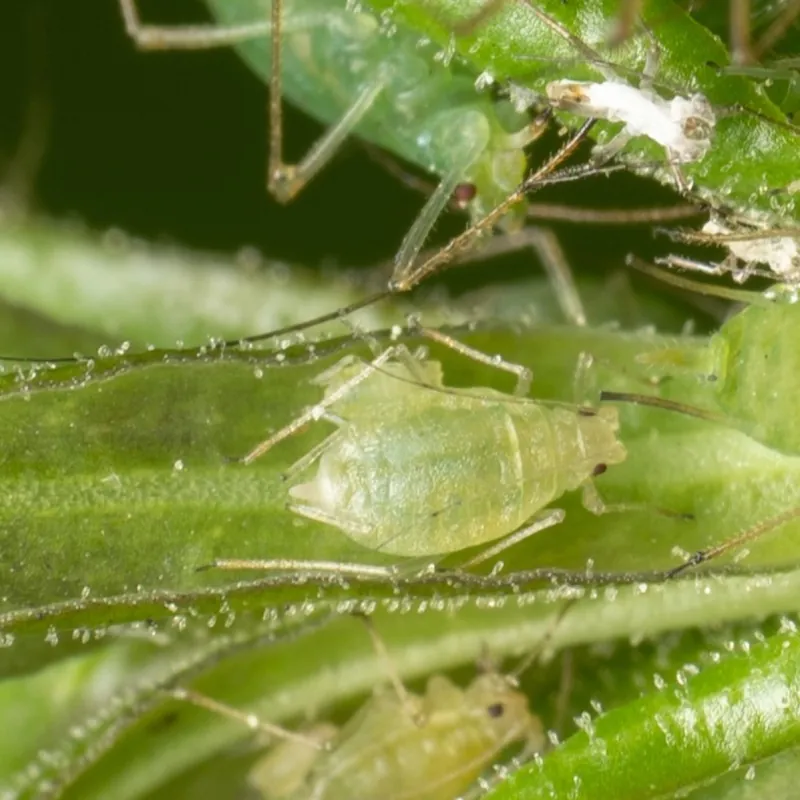
Short answer: Aphids are small, soft, pear-shaped insects in green, black, pink and other colors. Look for clusters on new growth and buds, along with curled leaves and a sticky film. Knock them off with a strong spray of water, then wipe any that remain with soapy water.
What it looks like
- Clusters of small, soft insects on shoot tips, flower buds and leaf undersides
- Curled, twisted or puckered new leaves
- Sticky, shiny residue on leaves, sometimes with black sooty mold on it
- Ants running up and down the stems
- Puffy tan or golden-brown aphids that don't move (killed by tiny parasitic wasps)
- Yellowing leaves and stunted shoots
Is it aphids or something else?
| Could also be | How to tell |
|---|---|
| Whiteflies | Whiteflies are tiny white winged insects that fly up in a cloud when you brush the plant. Aphids mostly stay put in clusters, and only some of them have wings. |
| Mosaic virus | A virus mottles leaves with light and dark patches and distorts them with no insects in sight. Some aphids spread plant viruses, so keep an eye on a plant that had them. |
| Mealybugs | Mealybugs are covered in white, cottony wax and tuck into leaf joints. Most aphids are bare and colored and cluster on tips and buds, though a few kinds look woolly. |
Why it happens
Aphids feed on fast-growing, tender tissue, so they gather on new shoots and buds. They multiply quickly, and when a colony gets crowded, winged ones appear and fly off to new plants.
Plants given a lot of high-nitrogen fertilizer grow soft, lush shoots that help aphids multiply. Outdoors, ants make things worse by guarding aphid colonies from the insects that eat them.
Indoors there are no predators to keep them in check, so aphids that arrive on a new plant can build up fast.
How to fix it
- Blast them off with water. Spray the clusters with a strong stream from a hose, faucet or shower. Do it early in the day so the leaves dry quickly. Hold soft shoots with your other hand so the spray doesn't snap them.
- Wipe off what's left with soapy water. Wipe the remaining clusters with a soft cloth dipped in mild soapy water, or squash them between your fingers. Insecticidal soap works too, but only on the aphids it touches.
- Check new growth every few days. Look at shoot tips, buds and the undersides of young leaves every few days. Spray again whenever you see new clusters.
- Outdoors, let the predators do the work. Ladybugs, lacewing larvae, hoverfly larvae and tiny parasitic wasps all feed on aphids. Most established plants outgrow the damage, and colonies often shrink on their own, so skip broad-spectrum sprays that would kill these helpers.
- Go easy on fertilizer. Hold back on high-nitrogen feeds while aphids are around. Soft, lush growth helps them multiply.
How to prevent it
- Check shoot tips and buds when you look over your plants, so colonies are caught while small.
- Feed lightly and avoid heavy use of high-nitrogen fertilizer.
- Outdoors, avoid broad-spectrum insecticides, which kill the ladybugs and other insects that keep aphids down.
- Keep ants away from garden plants, since they protect aphids.
Plants it often affects
- Tomato colonies on shoot tips and under the leaves, often with ants nearby
- Rose clusters on new shoots and flower buds
- Pepper under the leaves and on new growth, indoors and out
- Cucumber curled leaves and sticky residue on the vines
- Strawberry on young leaves and flower stalks
- Sunflower on the stems and the backs of the flower heads
Questions people ask
Do aphids kill plants?
Rarely. Low or moderate numbers do little harm to established plants, which usually outgrow the damage. Heavy colonies can yellow leaves and stunt shoots, and some aphids spread plant viruses, so it's worth washing off large clusters.
Does soapy water kill aphids?
Yes, when it touches them. Soapy water and insecticidal soap kill the aphids they coat but leave nothing behind for ones that arrive later, so you may need to repeat it. Don't use it on a plant that's dry and wilting or in strong heat.
Why are there ants on my plant with aphids?
Ants feed on the sweet honeydew aphids release, and in return they protect the aphids from predators. Keeping ants off the plant lets ladybugs and other predators do their job.

Not sure it's aphids?
Take a photo in Liana and the health check names the problem and tells you what to do first. Liana also reminds you to check the soil, so watering mistakes don't start. Get Liana for iPhone.
Sources
- UC Statewide IPM Program, Aphids
- Colorado State University Extension, Managing Houseplant Pests