Mealybugs on plants: how to find and remove them
Mealybugs on plants look like small tufts of white cotton tucked into leaf joints and along stems. They're soft insects that suck sap, and a heavy infestation weakens the plant and leaves it sticky. Because they hide so well, clearing them takes a few rounds.
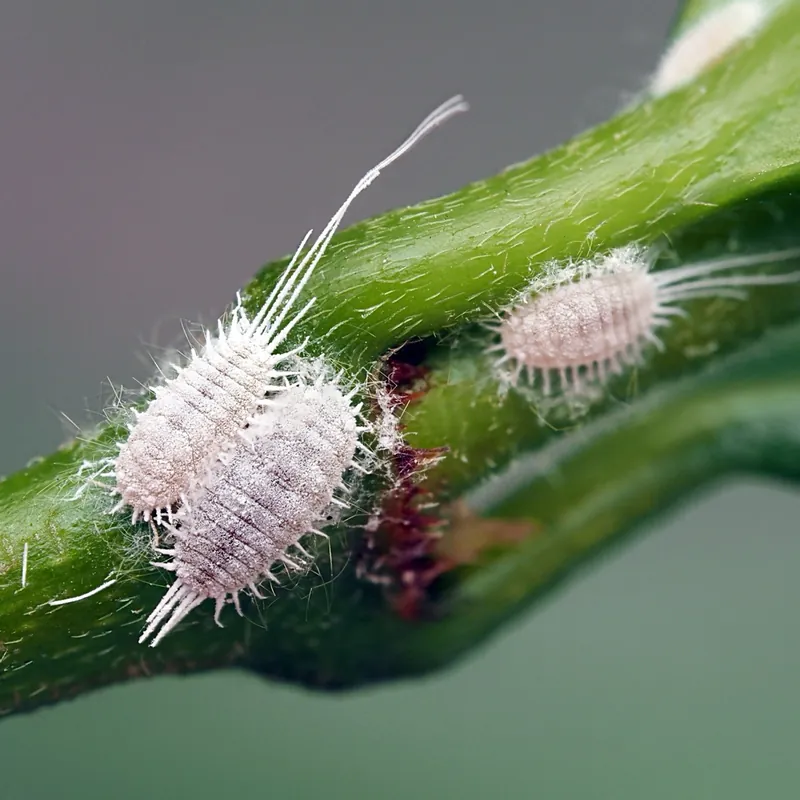
Short answer: Mealybugs are small, soft insects covered in white, waxy fluff. Look for cottony clumps where leaves meet the stem and a sticky film on the leaves below. Isolate the plant, then dab each one with a cotton swab dipped in rubbing alcohol.
What it looks like
- White, cottony clumps in leaf joints, along stems and under leaves
- Small oval insects coated in white wax when you look closely
- Sticky, shiny residue (honeydew) on leaves or on the surface under the plant
- Black, sooty patches growing on the sticky residue
- Yellowing leaves, leaf drop and slow growth
- White fluff on the roots or around the drainage holes when you lift the plant from its pot
Is it mealybugs or something else?
| Could also be | How to tell |
|---|---|
| Powdery mildew | Mildew is a flat, dusty coating spread across the leaf surface. Mealybugs are raised, cottony clumps that gather in joints, with a small insect under the wax. |
| Scale insects | Most scale insects are smooth brown bumps fixed to the stem with no white fluff. If you see cotton, mealybugs are more likely. |
| Spider mite webbing | Spider mite webbing is fine and silky, like a thin cobweb, with tiny moving specks in it. Mealybug fluff is thicker and bunched into tufts. |
Why it happens
Mealybugs almost always come in on a new or gifted plant. They're easy to miss at the store because they tuck into tight spots: leaf joints, the crown of the plant, the folds of new leaves and stems near the soil.
Once they're in, the young ones (called crawlers) move to new spots before they settle and cover themselves in wax. That coating also shields them from sprays. Some kinds live in the soil and feed on roots, so a plant can look clean above ground and still be infested.
How to fix it
- Isolate the plant. Move it well away from your other plants today. Check its neighbors too, especially leaf joints and the undersides of leaves.
- Dab each mealybug with rubbing alcohol. Dip a cotton swab in rubbing alcohol and touch it to every mealybug and cottony egg mass you can find. The alcohol cuts through the wax and kills the insect. Try it on one leaf first and wait a day, because some plants are sensitive to alcohol.
- Wipe down stems and leaf joints. Go over the stems, leaf joints and leaf undersides with a damp cloth or swab to pick up the ones that are too small to see well. Check the pot rim, any stakes and the saucer too, since mealybugs and their eggs hide there.
- Check every week for a month. Look the plant over once a week and treat new ones the same way. They hide in the soil too, so if they keep coming back, slide the plant out of its pot and look at the roots.
- Use insecticidal soap for the young ones. If you keep finding small, new mealybugs, a spray of insecticidal soap can help. It works best on young ones before their wax builds up and has little effect on the fluffy adults.
- Let go of a badly infested plant. A plant covered in mealybugs, especially one that's easy to replace, is often better thrown away than nursed back. That keeps them from spreading to the rest of your plants.
How to prevent it
- Look closely at plants before you buy them: leaf joints, the crown and under the leaves.
- Keep new plants apart from the others for at least three weeks, then check them again.
- Clean pots, stakes and saucers before you reuse them.
- Glance at leaf joints whenever you check the soil. Small infestations are much easier to clear.
Plants it often affects
- Jade plant a common host; they hide where the fleshy leaves meet the stems
- Moth orchid they tuck into the base of the leaves, where they're hard to spot
- Pothos look along the vines where each leaf joins the stem
- Heartleaf philodendron cottony clumps in the leaf joints along trailing stems
- String of pearls fluff between the beads and on stems near the soil
Questions people ask
Can mealybugs live in the soil?
Yes. Some kinds live in the potting mix and feed on roots, and you only see them when you take the plant out of its pot. Look for white, cottony patches on the roots or the inside of the pot. They're harder to clear than the ones on leaves, so a badly infested plant is often best replaced.
Does rubbing alcohol hurt plants?
It can. Some plants get burned leaves from alcohol, so test it on one leaf and wait a day before you treat the whole plant. Dab the insects with a cotton swab instead of soaking the leaves.
Where do mealybugs come from?
They usually arrive on a new or gifted plant. They're small and hide in tight spots, so they're easy to miss when you buy it. Keeping new plants apart for a few weeks gives you time to spot them before they reach your other plants.

Not sure it's mealybugs?
Take a photo in Liana and the health check names the problem and tells you what to do first. Liana also reminds you to check the soil, so watering mistakes don't start. Get Liana for iPhone.
Sources
- UC Statewide IPM Program, Mealybugs
- Colorado State University Extension, Managing Houseplant Pests