Scale insects on plants: how to spot and remove them
Scale insects on plants look like small brown bumps along stems and leaf veins, and many people take them for part of the plant. They stay in one place under a protective shell, sucking sap. Left alone, they slowly weaken the plant and leave sticky residue behind.
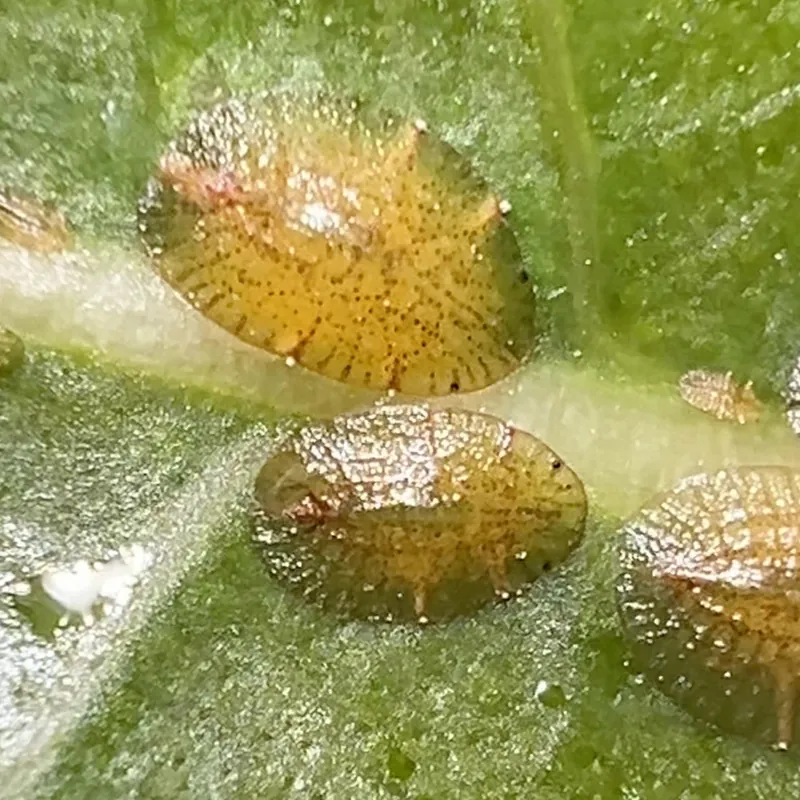
Short answer: Scale insects are small sap-feeding insects that live under a shell, so they look like brown, tan or whitish bumps stuck to stems and leaf veins. The giveaway is that a bump lifts off with a fingernail, while the plant's own tissue doesn't. Scrape them off, wipe the area with soapy water and repeat every week.
What it looks like
- Small brown, tan or grayish bumps along stems and the veins on leaf undersides
- Bumps that come away when you scrape them with a fingernail
- Sticky, shiny residue on leaves or on the floor or table under the plant
- Black sooty mold growing on the sticky spots
- Yellowing leaves and leaf drop
- Slow, stunted growth or stem tips dying back
Is it scale insects or something else?
| Could also be | How to tell |
|---|---|
| Fern spore dots | Many ferns carry neat rows of brown dots on the undersides of their fronds. These are spore cases and sit in an even pattern. Scale sits in no particular order, often along the stems and midribs. |
| Mealybugs | Mealybugs are covered in white, cottony wax and can move slowly. Scale insects sit still under a smooth shell with no fluff. |
| Leaf spot | Leaf-spot is a flat brown or black patch in the leaf itself, often with a yellow ring, and it can't be scraped off. A scale insect is a raised bump that comes away from the leaf. |
Why it happens
Scale usually comes in on a new plant. The adults barely move, so they spread through their young, called crawlers: tiny, mobile insects that walk to a fresh spot, settle within a day or two and start building a shell.
There are two main kinds. Soft scales are rounder and drip sticky honeydew, which feeds black sooty mold. Armored scales are smaller and flatter, make no honeydew and are harder to kill once their cover forms. On houseplants, soft scales are the more common sight.
Crawlers hatch in waves, so a plant you cleaned last week can carry a new crop of tiny scales.
How to fix it
- Scrape them off. Use a fingernail, a soft old toothbrush or a blunt knife to lift each bump off the stems and leaves. Work gently along the veins on the leaf undersides, where they cluster. Lay a sheet of paper under the plant to catch them.
- Wipe the area with soapy water. Wipe stems and both sides of the leaves with a soft cloth dipped in mild soapy water. This clears the sticky residue and the young crawlers that are too small to see.
- Repeat every week. New crawlers hatch in waves, so one cleaning won't catch them all. Go over the whole plant again each week, looking for new tiny bumps.
- Keep it apart until it stays clean. Keep the plant away from your others until you've gone three weeks without finding any scale. After that, check the stems now and then.
- Use horticultural oil for a stubborn case. If scale keeps coming back, spray the stems and both sides of the leaves with horticultural oil, covering every surface. Test it on a few leaves first, and don't spray in strong heat or on a plant that's dry and wilting.
How to prevent it
- Check the stems and leaf undersides of new plants before you bring them home, and keep them apart for at least three weeks.
- Wipe glossy leaves from time to time. It removes dust and catches young scale early.
- Look into sticky spots on leaves or furniture right away. They often show up before you notice the scale.
- Outdoors, keep ants off infested plants, since they guard scale from the insects that eat it.
Plants it often affects
- Rubber plant bumps along the stems and leaf midribs; sticky leaves are often the first clue
- English ivy a common host; look along the stems and under the leaves
- Dwarf umbrella tree scale clusters on stems and along the leaf veins
- Kentia palm check the frond stems and the undersides of the leaflets
- Boston fern the brown spore dots under the fronds are normal; scale sits on the stems
Questions people ask
Can scale insects kill a plant?
A light infestation rarely does. A heavy one left for months can yellow the leaves, make them drop and kill back stems. Clearing them early and checking every week keeps the damage small.
Why do scale insects keep coming back?
The young crawlers are too small to see easily, and they hatch in waves. That means you need several weekly rounds of scraping and wiping. If they still return, a horticultural oil spray reaches the ones you miss.
Is the sticky stuff on my plant from scale?
It often is. Soft scale, mealybugs and aphids all release a sugary liquid called honeydew, which makes leaves shiny and sticky and can grow black sooty mold. Check the stems and leaf veins for small bumps to find out which one you have.

Not sure it's scale insects?
Take a photo in Liana and the health check names the problem and tells you what to do first. Liana also reminds you to check the soil, so watering mistakes don't start. Get Liana for iPhone.
Sources
- UC Statewide IPM Program, Scales
- Colorado State University Extension, Managing Houseplant Pests