Mosaic virus in plants: how to recognize it and stop it spreading
Mosaic virus in plants shows up as leaves mottled with light and dark patches, often with puckered or twisted new growth. Several different viruses cause it, and between them they infect a long list of vegetables, fruit and ornamentals. There is no cure, so the goal is to keep it from reaching your other plants.
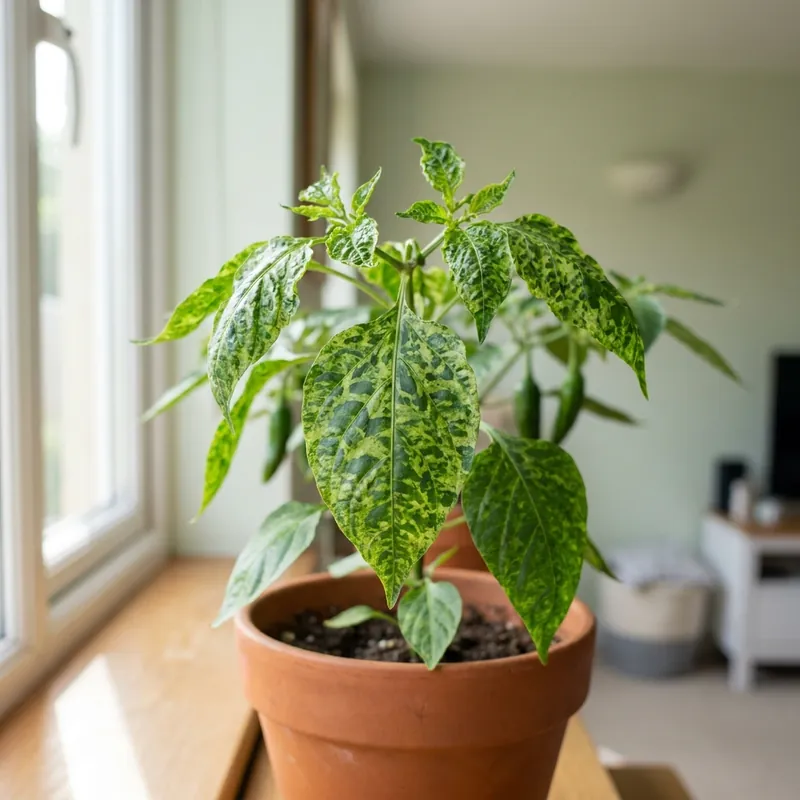
Short answer: Mosaic virus is a plant infection that causes an irregular mottle of light green, yellow and dark green on the leaves, usually with distorted or stunted growth. It is spread by sap-sucking insects such as aphids and by sap on hands and tools. Isolate the plant, wash your hands and clean your tools, and since it can't be cured, dispose of it to protect the rest.
What it looks like
- An irregular patchwork of light green or yellow and dark green on the leaves
- New leaves that come out puckered, cupped, crinkled or narrow and strap-like
- A plant that stays small and grows slowly compared with its neighbors
- Yellow rings, streaks or spots on leaves
- Mottled, bumpy or misshapen fruit on vegetables like cucumbers
- Symptoms that get worse as the season goes on instead of clearing up
Is it mosaic virus or something else?
| Could also be | How to tell |
|---|---|
| Natural variegation | Variegation is a pattern the plant is bred for, and it repeats in a regular, even way on healthy, normally shaped leaves. Viral mottling is irregular and comes with distorted growth. |
| Nutrient deficiency | A deficiency usually yellows leaves in a tidy pattern, such as between the veins, and follows the same pattern on similar leaves. Mosaic is blotchy and patchy and usually twists the new leaves too. |
| Spider mites | Mites leave fine pale speckles across the leaf, often with tiny webs underneath. A mosaic pattern is made of larger patches, and you won't find any pests on the leaf. |
Why it happens
Mosaic is caused by viruses that live inside the plant's sap. Cucumber mosaic virus alone can infect more than 1,200 kinds of plants, and over 80 species of aphids can carry it from plant to plant as they feed. Other mosaic viruses, such as tobacco mosaic, don't need insects at all.
Tobacco mosaic and its relatives spread on sap: on hands, clothing and tools, and in cuttings taken from an infected plant. They can survive for a while in dried sap on surfaces, and tobacco products can carry them too.
Weeds and perennial plants can hold the virus over winter, and some mosaic viruses also travel in seed. That is why the same garden can see the problem year after year if infected plants and weeds stay put.
How to fix it
- Isolate the plant. Move a potted plant well away from your other plants today. In the garden, stop touching it while you work among healthy plants.
- Wash your hands and clean your tools. Wash your hands with soap and water after handling the plant and before you touch any other. Disinfect scissors, stakes and pots that touched it, and wash your gardening gloves or clothes.
- Dispose of the plant. There is no cure, and an infected plant keeps acting as a source for the virus. Bag it, roots and all, and put it in the trash instead of the compost.
- Keep aphids off your other plants. Check the undersides of leaves on nearby plants and knock aphids off with a strong spray of water. Floating row covers keep them off young vegetables. Sprays alone often act too slowly to stop aphids passing the virus on.
- Clear weeds around the garden. Pull weeds near your beds and pots, since they can carry the virus and the aphids that spread it.
Watch out: Variegation is patterned and symmetrical. Viral mottling is irregular and comes with distorted growth.
How to prevent it
- Buy healthy plants and certified virus-free seed or seed potatoes where you can
- Choose varieties labeled as resistant to mosaic viruses, especially for cucumbers, beans and tomatoes
- Take cuttings only from plants that look completely healthy
- Wash your hands before working with plants, especially after using tobacco products
- Keep weeds down and check new growth regularly for aphids
Plants it often affects
- Cucumber cucumber mosaic stunts plants and leaves mottled, warty fruit
- Bean mottled, puckered leaves and fewer pods
- Potato viruses carry over in seed potatoes, so mottled leaves come back each year
- Raspberry mottled, puckered leaves and weaker canes
- Hosta mottled, puckered leaves; the virus spreads on tools and hands when dividing clumps
Questions people ask
Can a plant recover from mosaic virus?
No. The virus lives throughout the plant, and no product can cure it. Some plants keep growing with mild symptoms, but they remain a source of infection for everything around them.
Can I eat vegetables from a plant with mosaic virus?
Plant viruses don't infect people, and pods or fruit with only minor symptoms are fine to eat. Badly affected produce may be small, mottled or misshapen. Once symptoms reach the fruit or pods, remove the whole plant.
Does mosaic virus stay in the soil?
Mosaic viruses mostly carry over in living plants: infected perennials, roots left in the ground, weeds and seed. Tobacco mosaic can also last in dried sap and plant debris. Clear out the old plant and its roots, pull nearby weeds and clean your tools before replanting.

Not sure it's mosaic virus?
Take a photo in Liana and the health check names the problem and tells you what to do first. Liana also reminds you to check the soil, so watering mistakes don't start. Get Liana for iPhone.
Sources
- University of Wisconsin-Madison Division of Extension, Cucumber Mosaic
- Penn State Extension, Tobacco Mosaic Virus (TMV)