Apple scab: how to spot it and keep it in check
Apple scab is a fungal disease that marks apple leaves with olive green to black blotches and covers the fruit in dark, corky scabs. Pears get a close relative called pear scab, and British gardeners often call the pair apple and pear scab. It is worst after wet springs, and the fruit is still safe to eat.
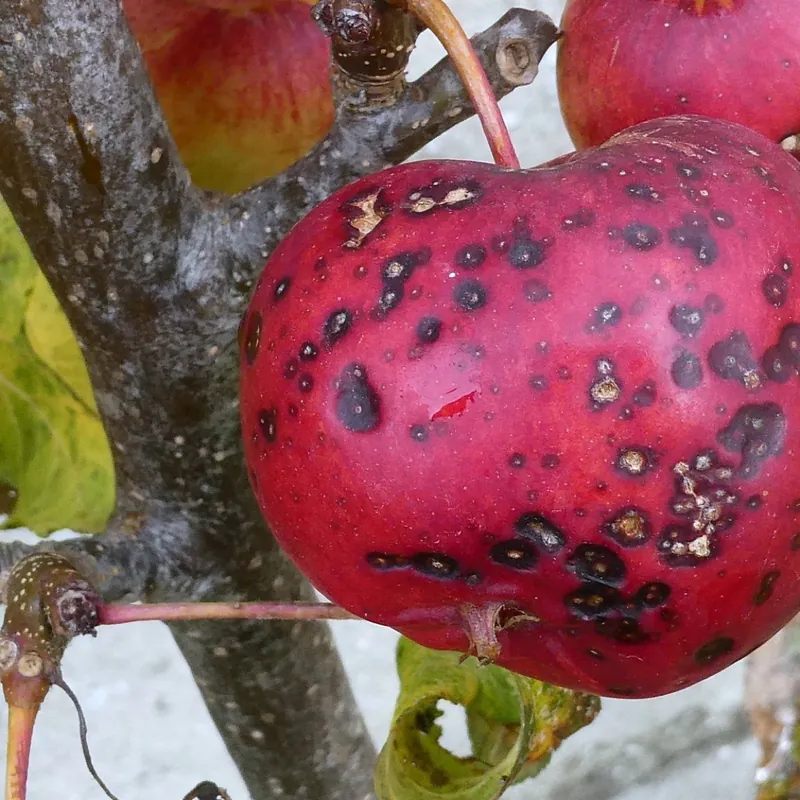
Short answer: Apple scab is a fungus that causes olive green, velvety spots on leaves that darken to black, and dark, scabby patches on the fruit, which may crack. It spends the winter in fallen leaves, so the first spring rains start it again. Pick off badly scabbed fruit, rake up fallen leaves in fall and prune the tree open in winter.
What it looks like
- Olive green spots on the leaves that look velvety at first, then darken to brown or black
- Leaves that curl, pucker, turn yellow and drop early when the infection is heavy
- Dark, corky, scabby patches on the fruit
- Fruit that cracks, grows misshapen or stays small where scabs spread across it
- Blistered, scabby patches on young twigs
- Dark scab spots that appear on apples after picking, from infections late in the season
Is it apple and pear scab or something else?
| Could also be | How to tell |
|---|---|
| Rust | Cedar apple rust makes bright yellow to orange spots on apple leaves. Scab spots are olive green to black and never orange. |
| Leaf spot | Other leaf spots are usually small, round and brown with a defined edge, and they leave the fruit alone. Scab blotches are olive and velvety and show up on fruit as well as leaves. |
| Sooty blotch | Sooty blotch leaves smudgy gray marks that sit on the apple skin and can be rubbed off. Scab is rough and corky, part of the skin itself, and can make the fruit crack. |
Why it happens
The scab fungus lives through winter in infected leaves on the ground and in scabby twigs that were never pruned out. In spring, rain releases its spores, and wind and splashing water carry them up to the new leaves and young fruit.
Cool, wet springs are when it does most damage. The main infections happen from the time the buds break until a week or two after the petals fall, whenever leaves stay wet. After that, spots on the leaves keep making new spores, so the disease carries on through the summer in rainy spells.
Pear scab is caused by a related fungus and only affects pears. It behaves the same way, so the same cleanup works on both trees.
How to fix it
- Pick off badly scabbed fruit. Remove fruit that is heavily scabbed or cracked and put it in the trash. Lightly marked fruit can stay on the tree; the blemishes are only skin deep. Cracked fruit rots easily and won't keep in storage.
- Rake up fallen leaves in fall. Once the leaves drop, rake them up and bag them for the trash. If raking every leaf isn't possible, run a mower over them to shred them so they break down faster over winter.
- Prune in winter to open the tree. While the tree is bare, cut out shoots with scabby, blistered bark and thin crowded branches. An open crown lets sun and air in, so leaves and fruit dry faster after rain.
- Keep sprinklers off the tree. Water at the base of the tree when the soil is dry, and aim lawn sprinklers away from the leaves. Wet leaves give the spores the time they need to infect.
- Choose resistant varieties for new trees. When you plant a new apple, pick a scab-resistant variety such as Liberty, Freedom, Enterprise, GoldRush, Pristine or Redfree. Garden centers usually note scab resistance on the label.
Watch out: The fungus survives the winter on fallen leaves. If you leave them under the tree, the first spring rain starts the infection all over again.
How to prevent it
- Clear or shred fallen leaves every fall
- Prune each winter so the crown stays open and dries quickly
- Plant scab-resistant apple varieties in an open, sunny spot
- Keep sprinkler water off the leaves
- Remove scabby twigs and fruit as you see them
Plants it often affects
- Apple olive spots on leaves and dark, cracked scabs on the fruit
- Crabapple spotted leaves that yellow and drop early in wet years
- Pear gets pear scab, with dark blotches on leaves and corky, cracked fruit
- Ornamental pear can get pear scab on its leaves too
- Firethorn can get scab on its leaves and berries
Questions people ask
Are apples with scab safe to eat?
Yes. Scab only marks the skin, and lightly scabbed apples taste the same. Peel or cut away the rough patches if you like. Cracked fruit spoils quickly, so eat it soon instead of storing it.
Can I compost leaves with apple scab?
It is safer to put them in the trash, because the fungus survives the winter in those leaves. If you have too many to bag, shred them with a mower in fall so they rot down before spring.
When does apple scab infect the tree?
Most infection happens in spring, from the time the buds open until a week or two after the blossoms drop, whenever leaves stay wet. Spots that form then keep spreading spores in rainy weather through the summer. Dry springs usually mean much less scab.

Not sure it's apple and pear scab?
Take a photo in Liana and the health check names the problem and tells you what to do first. Liana also reminds you to check the soil, so watering mistakes don't start. Get Liana for iPhone.
Sources
- University of New Hampshire Extension, Apple Scab [fact sheet]
- Royal Horticultural Society, Apple scab and pear scab