Aster yellows: why flowers turn green and what to do
Aster yellows is a disease that yellows leaves, bunches up shoots and turns flowers green and misshapen. It is caused by a phytoplasma, a tiny bacteria-like organism that lives inside the plant's sap. It is common on coneflowers, black-eyed Susans, zinnias and carrots, leafhoppers spread it, and there is no cure.
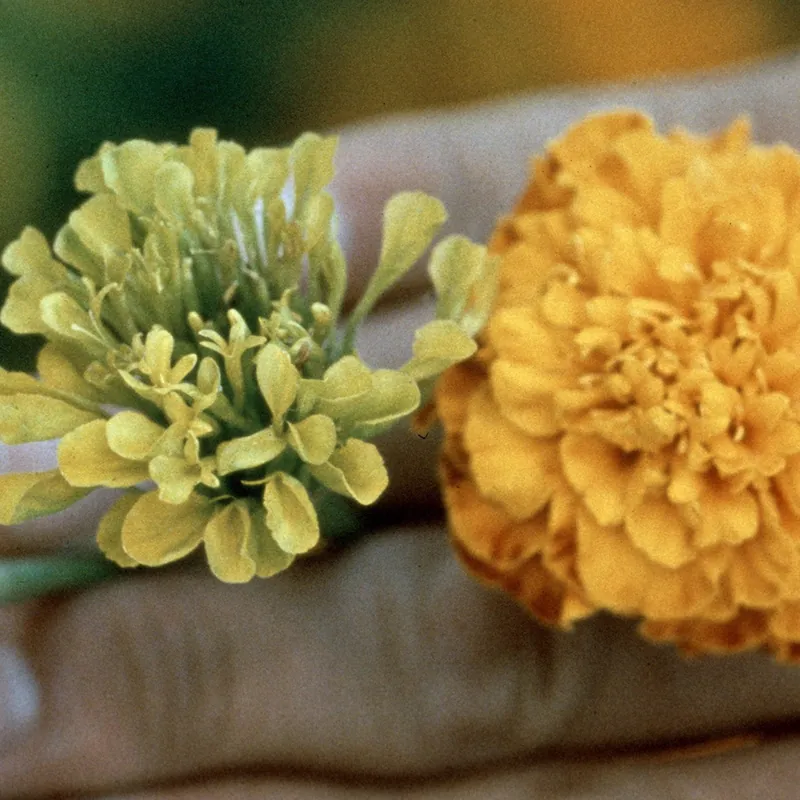
Short answer: Aster yellows is spread by leafhoppers feeding from plant to plant. The giveaway is flowers with green, leafy, twisted petals, often with little tufts of leaves sprouting from coneflower heads, on a yellowed, stunted plant. There is no cure: pull up affected plants today and put them in the trash, not the compost.
What it looks like
- Flowers that stay green or turn partly green, with twisted, leafy petals
- Small tufts of leaves or extra flower heads sprouting from coneflower centers
- Yellowed leaves and pale, stunted growth
- Many thin, upright shoots bunched together from one point (a witches' broom)
- Carrots with reddish purple tops and roots covered in fine white hairs that taste bitter
- Plants that fail to set seed
- Symptoms that spread to the whole plant over time
Is it aster yellows or something else?
| Could also be | How to tell |
|---|---|
| Weedkiller damage | Weedkiller twists and narrows new leaves, often on several kinds of plants near where spraying happened. Flowers that turn green and leafy point to aster yellows instead. |
| Coneflower mites | Microscopic mites feeding in coneflower heads can also distort the flowers, and the two are hard to tell apart by eye. Mite damage doesn't call for removing the plant, so have a sample checked by your local extension clinic if you are unsure. |
Why it happens
Aster yellows is caused by a phytoplasma that lives in the sap-carrying tissue of plants. The aster leafhopper, a small olive green to tan insect about 1/8 inch long, picks it up while feeding on an infected plant and then carries it to healthy ones.
It infects more than 300 kinds of plants, mostly soft-stemmed flowers and vegetables. Weeds such as dandelions can carry both the disease and the leafhoppers without obvious symptoms.
The disease rarely kills perennials quickly, so an infected coneflower can sit in a border for years, giving leafhoppers a steady supply to spread. Once the plant dies, the phytoplasma dies with it.
How to fix it
- Pull up affected plants today. Dig out the whole plant, bag it and put it in the trash. Don't compost it, since leafhoppers can feed on it there and carry the disease on.
- Pull weeds that carry it. Remove dandelions, plantain and other broadleaf weeds in and around your beds. They can harbor both the disease and the leafhoppers.
- Cover carrots and lettuce with fine mesh. Fine insect mesh or row cover keeps leafhoppers off vegetable crops. Put it on at sowing and seal the edges.
- Check coneflowers and asters weekly in summer. Look for green, tufted or twisted flowers and yellowing plants. Removing a sick plant early protects the rest of the border.
Watch out: Cutting off the green flowers doesn't help. The whole plant stays infected, and leafhoppers carry the disease to the rest of the border.
How to prevent it
- Remove infected plants as soon as you see symptoms
- Keep beds and edges free of dandelions and other weeds
- Grow carrots and lettuce under fine mesh where leafhoppers are common
- Plant geraniums, impatiens or shrubs in spots where aster yellows keeps returning, since they don't get it
- Check new perennials for green or distorted flowers before planting
Plants it often affects
- Purple coneflower green, tufted flower heads with leafy sprouts from the center
- Black-eyed Susan one of the most common hosts, with green, twisted blooms
- Zinnia frequently infected; flowers stay green and misshapen
- Marigold flowers turn leafy and muddy green-orange
- Carrot bunched reddish tops and bitter, hairy roots
- China aster the plant the disease is named after; yellowed, stunted growth
Questions people ask
Can a plant recover from aster yellows?
No. There is no known cure, and the plant stays infected for life. Removing it is the only way to stop leafhoppers from spreading it to the rest of your garden.
Are carrots with aster yellows safe to eat?
The disease doesn't harm people, but affected carrots are hairy and bitter, so most people don't want to eat them. Covering the crop with fine mesh keeps leafhoppers off.
Should I spray for leafhoppers to stop aster yellows?
In a home garden, spraying for leafhoppers usually doesn't stop the disease. Removing infected plants, controlling weeds and covering vegetable crops work better.

Not sure it's aster yellows?
Take a photo in Liana and the health check names the problem and tells you what to do first. Liana also reminds you to check the soil, so watering mistakes don't start. Get Liana for iPhone.
Sources
- University of Wisconsin-Madison Extension, Aster Yellows
- Clemson Cooperative Extension, Home & Garden Information Center, Aster Yellows