Herbicide damage on plants: twisted leaves on tomatoes and beans
Herbicide damage on tomatoes, beans and potatoes makes new leaves curl, cup and twist, or grow narrow and fern-like. In Britain it is usually called weedkiller damage. Spray drifting on the wind can do it, and so can manure, compost or soil carrying residues of weedkillers such as aminopyralid, which can pass through animals and survive composting.
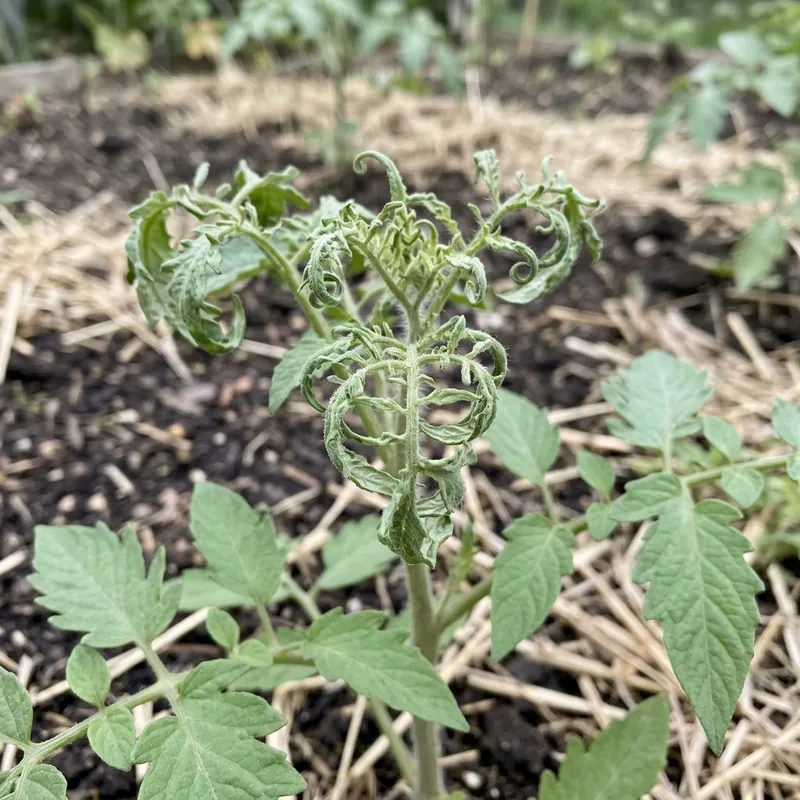
Short answer: If the newest leaves on tomatoes, beans or potatoes are cupped, twisted or narrow and fern-like, and you recently added manure, compost or new soil, suspect herbicide residues. Stop using the material you suspect, pull up badly twisted plants and put them in the trash, and test any new manure by sowing beans in a pot of it before it goes on the garden.
What it looks like
- New leaves curling, cupping or twisting, often on several plants at once
- Narrow, fern-like leaves and pale, distorted shoot tips
- Leaf stalks twisted, and veins standing out or running parallel
- Stunted plants that stop growing well
- Misshapen tomatoes, sometimes hollow inside
- Damage on sensitive crops in beds that got manure or compost, while radishes and grasses nearby look fine
Is it herbicide damage or something else?
| Could also be | How to tell |
|---|---|
| Mosaic virus | Mosaic virus mottles leaves with light and dark patches and usually appears on scattered plants. Herbicide residues twist every sensitive plant in the treated bed in a similar way. |
| Aphids | Aphids curl leaves too, but you can find the insects clustered under the leaves and on shoot tips, often with sticky honeydew. |
| Heat stress | Tomato leaves roll upward in hot weather, but they stay normal in shape and new growth is unaffected. Herbicide damage makes new leaves narrow, cupped or fern-like. |
Why it happens
Some weedkillers used on grassland, such as aminopyralid and clopyralid, act like plant hormones and affect broad-leaved plants at very low levels. When animals eat hay or grass from treated fields, the residues pass through them unchanged and end up in the manure. The RHS notes that residues in piles of manure can last two years or more, and lawn clippings from treated lawns can carry them into compost too.
Spray drift is the other common cause. Fine droplets from a neighbor's lawn, field or path treatment can blow a long way on a breezy day. Tomatoes, potatoes, beans, peas and roses are especially sensitive, so they often show damage when other plants nearby look fine.
How to fix it
- Stop using the manure, compost or soil you suspect. Don't spread any more of it, and rake up any loose manure mulch from the surface. Keep the rest aside and, if you can, return it to the supplier.
- Pull up badly twisted plants and put them in the trash. Bag them for the trash, not the compost pile. Residues survive composting, so composting them spreads the problem.
- Test new manure first by sowing fava beans in a pot of it. Fill one pot with the manure or compost and another with plain potting mix, and sow fava beans (broad beans) in both. If the beans in the manure grow twisted, cupped leaves and those in plain mix don't, the manure is contaminated.
- Ask suppliers where the manure came from. Ask whether the animals grazed on grass, hay or silage that was treated with weedkiller. Stables and farms that can't say are a risk for vegetable beds.
- Help lightly affected plants grow out of it. Water deeply when the soil is dry and mulch permanent plantings. Trees, shrubs and established perennials usually survive, and many plants grow out of mild damage as the residues break down.
Watch out: Residues pass through animals and survive composting. Putting affected plants or manure on the compost pile spreads the problem across the garden.
How to prevent it
- Test every new load of manure or bulk compost with a pot of beans before using it on vegetables
- Buy manure only from sources that can tell you what the animals ate
- Don't compost grass clippings from lawns treated with weedkiller
- Keep tomatoes, beans and potatoes away from fence lines next to sprayed lawns or fields
- Retest manure that has been stored, even after a year or two
Plants it often affects
- Tomato one of the most sensitive, with cupped leaves and misshapen fruit
- Potato curled, narrow leaves and stunted plants
- Bean twisted, cupped leaves, which is why beans are used to test manure
- Pea distorted leaves and poor growth in treated beds
- Pepper curled, narrow new leaves
- Rose twisted leaf stalks and narrow, cupped leaves from drift
Questions people ask
How long does herbicide stay in manure?
It can take more than a year to break down in manure, and in piles or stacks residues can last two years or more. Test stored manure with a pot of beans before you use it, even if it is old.
Can plants recover from herbicide damage?
Many can. Trees, shrubs and established perennials usually survive and grow out of it as the residues break down. Badly twisted vegetables rarely crop well, so pull those up and plant again once you have tested the soil.
How long before I can plant tomatoes in the bed again?
Dig the soil over several times to mix in and break up the manure, then test it with a pot of beans before planting. The RHS notes that ground can be safe to replant within a year, but a test tells you for sure.

Not sure it's herbicide damage?
Take a photo in Liana and the health check names the problem and tells you what to do first. Liana also reminds you to check the soil, so watering mistakes don't start. Get Liana for iPhone.
Sources
- Royal Horticultural Society, Weedkiller in manure
- Royal Horticultural Society, Weedkiller damage