Bacterial canker on cherry and plum trees: how to spot it and prune safely
Bacterial canker on cherry and plum trees spots and holes the leaves and kills patches of bark, and branches above a canker wilt and die. Peaches, apricots and almonds get it too. Most gardeners first notice amber gum on the bark, or a branch that leafs out in spring and then collapses.
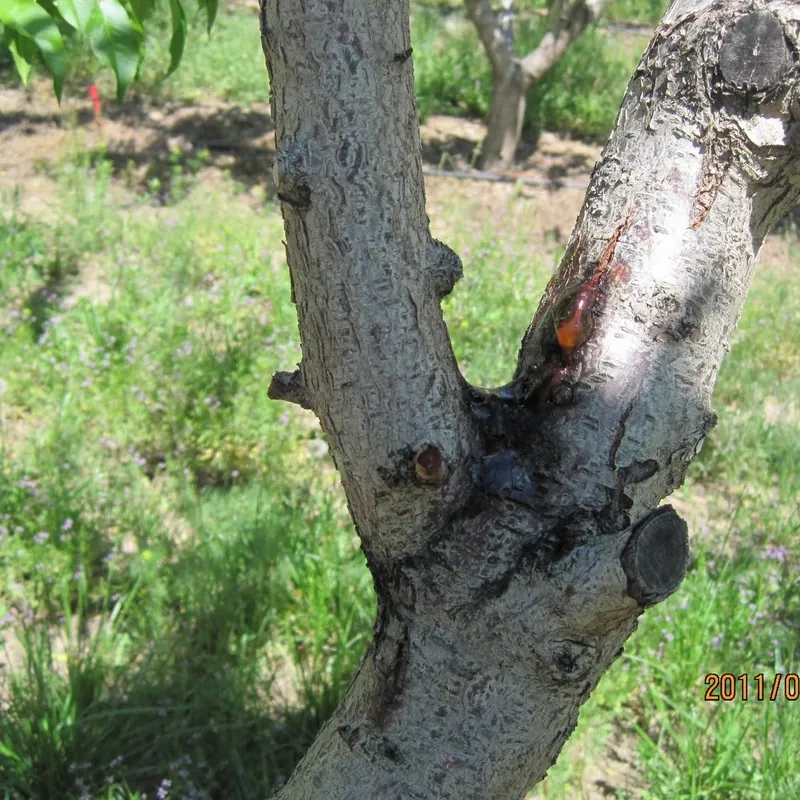
Short answer: Bacterial canker shows as sunken, dead patches of bark that ooze amber gum, small brown leaf spots that drop out and leave holes, and branches that die back above the canker. Cut out dead and cankered branches back to healthy wood, during dry weather in summer, when the tree resists infection best. Disinfect your pruners between cuts and throw the prunings away.
What it looks like
- Sunken, dead patches of bark on branches or the trunk, often oozing amber gum
- Small brown spots on the leaves that fall out and leave round holes
- Branches above a canker that wilt, yellow and die back
- Shoots that fail to leaf out in spring, or leaf out and then wither
- Brown, dead tissue under the bark when you peel back the edge of a canker
- Flowers that turn brown and shrivel but stay on the tree after a cold, wet spring
- A thin, sparse crown after a wet year
Is it bacterial canker or something else?
| Could also be | How to tell |
|---|---|
| Gum from stress or a wound | Cherries and plums often ooze gum after an injury, drought or other stress. If the bark around the gum is firm and alive, it is not canker. Canker shows as sunken, dead bark around the oozing patch. |
| Leaf spot | Fungal leaf spots can also pepper stone fruit leaves. Look at the branches too: sunken, gummy bark and shoots dying back on the same tree point to bacterial canker. |
| Fire blight | Fire blight attacks apples, pears and their relatives, and its shoot tips blacken and bend over like a shepherd's crook. Bacterial canker is a problem of cherries, plums and other stone fruit. |
Why it happens
Bacterial canker is caused by Pseudomonas syringae bacteria, which live on the surface of leaves and bark. In wet weather in spring and early summer they get into the leaves through their pores and cause the spots that later fall out as holes.
Cankers start when the bacteria enter through wounds, pruning cuts and the scars left as leaves fall in autumn. They stay mostly quiet through summer, autumn and winter, then spread fast in spring and kill the bark. Once a canker circles a branch, everything above it dies.
Cool, wet springs, frost injury and splashing rain all help it spread, and infected nursery trees can bring it into a garden. Sweet cherries suffer most.
How to fix it
- Cut out dead and cankered branches. Cut each damaged branch back to healthy wood, a few inches below the edge of the dead bark. If the wood under the bark at your cut is still brown, cut lower. Wait for dry weather to do it (see the next step).
- Prune cherries and plums only in summer, in dry weather. Trees resist infection best in summer, and the bacteria do worst when it is warm and dry. Cuts made in winter or a wet spring give them an easy way in, so save all pruning of stone fruit for a dry spell in summer, ideally after you have picked the fruit.
- Disinfect your pruners and throw away the prunings. Wipe the blades with rubbing alcohol after each cut so you don't carry bacteria to healthy wood. Put the prunings in the trash, or burn them where that is allowed. Don't compost them or use them as mulch.
- Clear fallen infected leaves in autumn. Rake up spotted leaves from under the tree as they fall and bag them with the trash, so less of the infection is left near the tree for next spring.
- Keep the leaves and bark dry. Water at the base of the tree and avoid sprinklers that wet the leaves and trunk, since splashing water spreads the bacteria.
Watch out: Amber gum alone can come from stress or a wound. Canker shows as sunken, dead bark around the oozing patch.
How to prevent it
- Prune cherries, plums and other stone fruit only in summer, during dry weather
- Choose varieties with some resistance when you plant a new cherry or plum
- Buy young trees from a good nursery and check the bark before you plant
- Protect young trunks from winter sunscald and other injuries that give the bacteria a way in
Plants it often affects
- Sweet cherry hit hardest; gummy cankers and dying branches are common
- Plum shot holes in the leaves and sunken bark on branches
- Apricot cankers on the limbs and flowers that brown in cold, wet springs
- Peach leaf spots and gum oozing from dead bark
- Almond branch cankers and dieback after wet weather
- Flowering cherry ornamental cherries get the same holes and gummy cankers
Questions people ask
Can a cherry tree recover from bacterial canker?
Often, yes, if the cankers are on branches you can cut out. Remove them in summer and the rest of the tree can keep growing well. A canker that circles the main trunk kills everything above it, so a badly affected young tree may not be worth saving.
Is there a spray for bacterial canker?
Home gardeners have no spray that cures it. Copper products are used in some orchards, but Oregon State University Extension reports they have not worked well in cool, moist weather. Pruning in summer with clean tools does more.
Why is my cherry tree oozing sap?
Cherries and plums ooze amber gum after many kinds of stress, such as wounds, insect damage, frost or drought. Look at the bark around the gum. Firm, living bark points to stress or an injury, while sunken, dead bark points to bacterial canker.

Not sure it's bacterial canker?
Take a photo in Liana and the health check names the problem and tells you what to do first. Liana also reminds you to check the soil, so watering mistakes don't start. Get Liana for iPhone.
Sources
- Royal Horticultural Society, Bacterial canker: Causes, Symptoms & Control
- Oregon State University Extension, Bacterial Canker and Blossom Blast of Stone Fruit