Cold damage on plants: how to help a chilled plant recover
Cold damage on plants shows up as blackened, translucent or mushy patches after the plant gets too cold. It often comes from a drafty window, a cold car ride home or one night left outside. The damaged leaves won't heal, but a plant that is otherwise healthy can grow back from it.
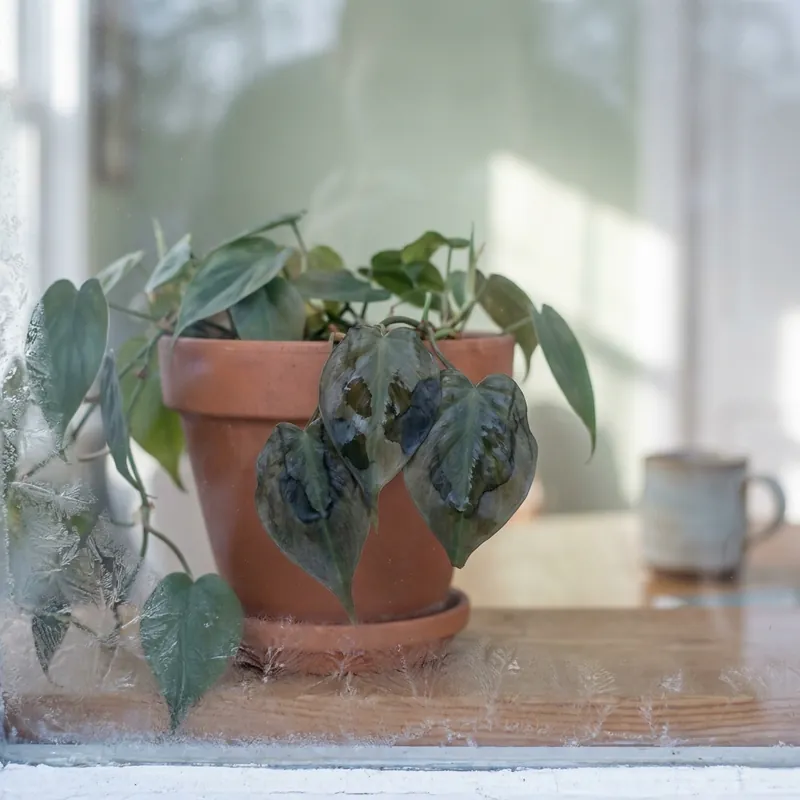
Short answer: Cold damage happens when a plant is exposed to temperatures it can't handle, and tropical houseplants can be hurt well above freezing. The giveaway is leaves that look water-soaked, glassy or wilted and then turn black, often only on the side that faced the cold. Move the plant somewhere warm and steady, then wait before cutting anything off.
What it looks like
- Leaves or patches that look water-soaked, glassy or translucent
- Damaged areas that turn dark or black within hours or a few days
- Soft, mushy spots on thick leaves and stems, such as on succulents
- Leaves that wilt or droop even though the soil is moist
- Damage concentrated on the side of the plant facing a window, door or outside wall
- Leaves that yellow and drop over the following week
- Brown edges or tips on leaves that touched cold glass
Is it cold damage or something else?
| Could also be | How to tell |
|---|---|
| Overwatering | Overwatering makes a plant soft and yellow slowly, over weeks, and the soil stays wet. Cold damage appears suddenly after a chill and is often worst on one side. |
| Bacterial blight | Both look dark and water-soaked. Cold damage stops spreading once the plant is warm, while bacterial blight keeps moving into healthy leaves and may smell unpleasant. |
| Too much light | Sunburn leaves dry, bleached or crispy patches on the leaves facing the sun. Cold-damaged tissue is dark and soft at first. |
Why it happens
Freezing temperatures form ice inside the plant's cells and rupture them, which is why frozen leaves turn mushy and black. Many tropical plants get chilling injury even when the temperature stays above 32°F, and most common houseplants are happiest kept above 50°F.
Indoors, the usual culprit is a window. Glass gets much colder than the room on winter nights, so leaves pressed against it can be damaged even in a warm house. Drafts from doors and leaky windows do the same, as can carrying a plant home from the store on a cold day.
Outdoors, it happens when tender plants go out too early in spring, stay out too late in fall, or get caught by a sudden cold night. Damage sometimes keeps showing for days after the cold has passed.
How to fix it
- Move it somewhere warm and stable. Bring the plant indoors or move it away from cold glass, outside doors and drafts. Pick a spot with a steady temperature, away from heating vents and radiators as well.
- Don't water to perk it up. A cold-damaged plant may droop, but watering won't revive wilted, chilled leaves. Check the soil with your finger and water only when it is dry.
- Remove damaged leaves once they have clearly died. Give it a week or so, because more damage can appear after the cold has passed. Then cut off leaves and stems that are black, mushy or completely dry, using clean scissors.
- Don't fertilize a stressed plant. Hold off on fertilizer until the plant is putting out healthy new growth again. Feeding now only adds stress to damaged roots and leaves.
- Wait and watch the new growth. Judge recovery by what grows next. Damaged leaves won't turn green again, but fresh, healthy leaves from the center or the stem tips show the plant is on its way back.
Watch out: Leaves touching a cold windowpane get damaged even in a warm room.
How to prevent it
- Keep leaves from touching window glass in winter, and pull plants back from the sill on very cold nights
- Keep tropical houseplants away from outside doors and drafty windows
- Wrap new plants for the trip home in cold weather
- Bring tender outdoor plants inside before cold nights in fall, and wait for warm nights before moving them out in spring
- Group outdoor pots together against a wall and cover them on frosty nights
Plants it often affects
- Snake plant leaves turn soft and translucent where the cold hit, then collapse
- Zz plant leaves yellow or blacken and stems can go soft after a chill
- Aloe leaves look glassy and turn mushy, often from the tips
- Chinese evergreen a tropical plant that shows dark, water-soaked patches after drafts
- Pepper plants set out too early stall, and leaves blacken after a cold night
Questions people ask
What temperature is too cold for houseplants?
Most common houseplants come from warm climates and do best kept above 50°F. Many tropical plants can be injured by chilling well above freezing, so a cold windowsill at night can harm them even if it never frosts.
Should I cut off cold-damaged leaves right away?
No, wait. Damage can keep appearing for several days, and it is easier to see what is truly dead after a week or so. Remove leaves once they are clearly black, mushy or dry.
Can a plant come back after cold damage?
Often, yes, if the roots and the growing points survived. Keep it warm, water only when the soil is dry and skip fertilizer, then look for new leaves over the following weeks. If the whole stem or base has gone soft, the plant is unlikely to recover.

Not sure it's cold damage?
Take a photo in Liana and the health check names the problem and tells you what to do first. Liana also reminds you to check the soil, so watering mistakes don't start. Get Liana for iPhone.
Sources
- Clemson Cooperative Extension, Home & Garden Information Center, Cold Damage
- University of Maryland Extension, Diagnose Indoor Plant Problems